

- Ethereum’s MVRV Z-Score has dropped into a rare undervalued zone last seen near major cycle lows.
- Exchange flow data remains mixed, showing long-term accumulation but some short-term selling pressure.
- Fading social attention could point to exhaustion, though ETH still needs stronger confirmation before a recovery looks secure.
Ethereum is flashing one of its rarest on-chain signals in years, and traders are starting to pay attention. The asset’s MVRV Z-Score has fallen to its lowest reading since December 2018, sliding deep into the undervalued zone that has historically appeared during long accumulation periods. ETH is still trading near $1,684 after a small daily rebound, but the bigger picture remains heavy, especially with the price sitting far below its January high.
The current setup does not guarantee that Ethereum has already bottomed. Markets rarely make it that easy. Still, the combination of weak valuation, uneven exchange flows, and fading social activity is beginning to look like a classic late-stage downtrend profile. It is not loud or dramatic, and maybe that is the point.
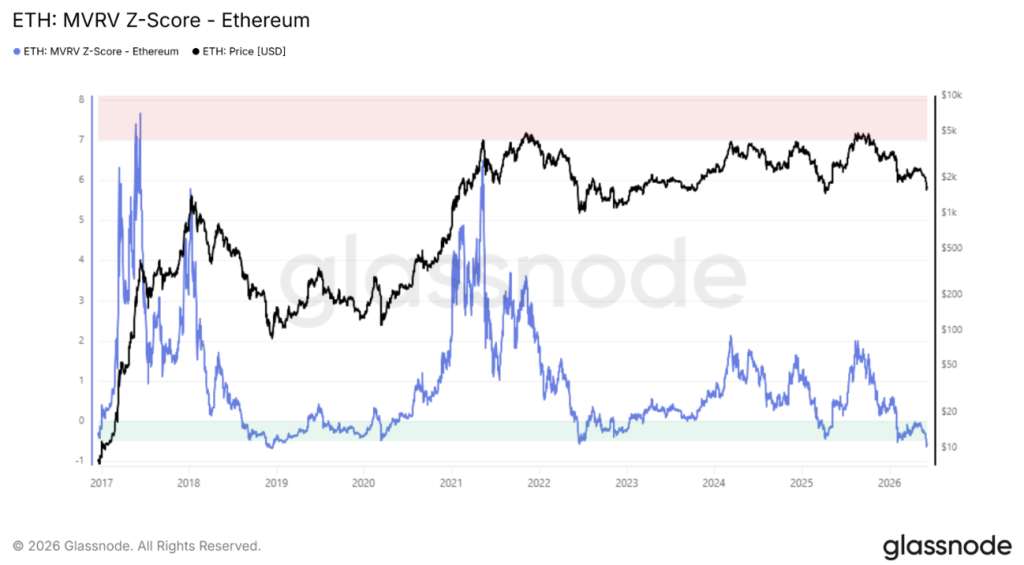
Ethereum’s MVRV Z-Score Sends a Rare Signal
The MVRV Z-Score compares Ethereum’s market value with the average cost basis of its holders, then adjusts that gap based on historical volatility. When the reading turns negative, it usually means the market price has fallen below what the average holder paid. In simpler terms, many ETH investors are underwater, and the asset starts to look cheap from an on-chain valuation perspective.
Ethereum’s score has now fallen near -0.7, placing it inside the green undervalued band. That level has only appeared a few times before, including late 2018 and mid-2022. Both periods came before major recoveries, although ETH did not bounce immediately. The metric stayed weak for months before price action finally turned around.
That detail matters. A low MVRV Z-Score can highlight value, but it is not a perfect timing tool. For a stronger bullish signal, analysts would likely want to see the score move back above zero, which would suggest Ethereum is leaving the deep undervaluation zone and returning toward a more neutral market structure.
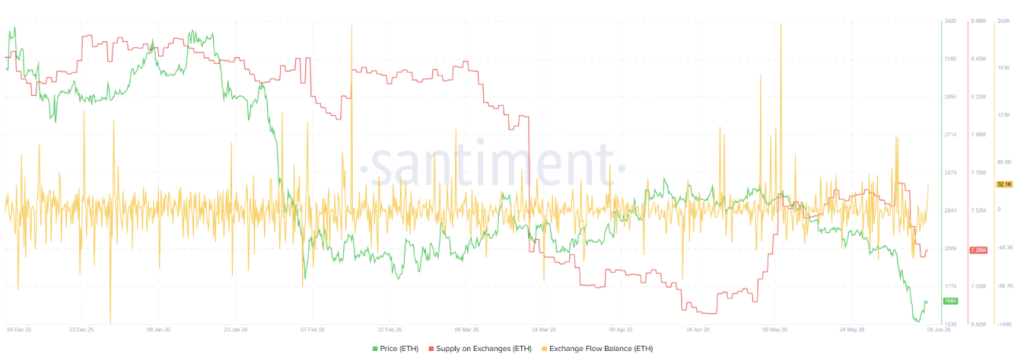
Exchange Flows Remain Mixed
While Ethereum looks cheap on-chain, exchange balance data tells a more cautious story. Earlier this year, ETH supply on exchanges declined from around 8.5 million in December to roughly 6.82 million by late April. That drop suggested accumulation, as investors moved coins away from trading platforms and into private wallets or longer-term storage.
The trend weakened during the May selloff. Exchange balances climbed back toward 7.7 million ETH before easing to about 7.28 million. That rebound suggests some holders returned coins to exchanges, possibly preparing to sell or manage risk during the market downturn.
The current exchange flow balance shows a mild positive inflow of around 32,100 ETH. That is not a huge number, but it does show that buyers have not fully taken control yet. In other words, the longer-term accumulation trend still exists, but short-term distribution is clearly making the picture a bit messy.
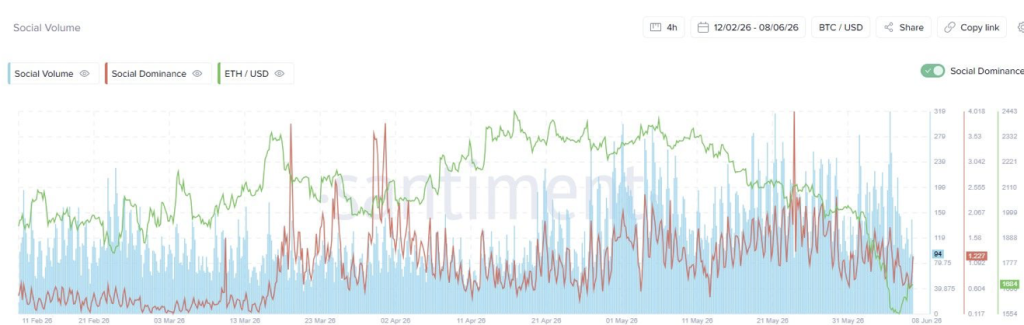
Social Attention Fades Near the Lows
Ethereum’s social metrics add another interesting layer. Public attention did not peak near the current lows. Instead, social dominance spiked near 4.0 in early April, closer to the local top, before dropping to about 1.227. Social volume also cooled sharply, falling to 94 after several capitulation-style spikes in late May.
That fading attention can be important. When an asset becomes cheap while the crowd stops talking about it, the market may be moving from panic into exhaustion. It is not always bullish right away, but it often means emotional selling pressure is starting to fade.
There is also a familiar pattern here. Whales and long-term buyers often accumulate while retail traders lose interest. This split has appeared near the later stages of past downtrends, though again, it does not promise an instant recovery.
ETH Needs Confirmation Before Bulls Can Relax
Ethereum may be sitting at its cheapest valuation level in seven years, but the market still needs confirmation. A sustained decline in exchange supply would show stronger accumulation. A move in the MVRV Z-Score back above zero would also help confirm that ETH is shifting out of deep undervaluation.
For now, the signal is promising but incomplete. Ethereum looks historically cheap, social attention has faded, and some larger buyers may be stepping in while the crowd looks elsewhere. Still, sellers have not disappeared completely. The next major move likely depends on whether accumulation strengthens, or whether another wave of exchange inflows puts pressure back on the price.