

- Institutional investors and sovereign wealth funds continue accumulating Bitcoin despite the sharp correction.
- Bitcoin ETFs still hold roughly $100 billion in exposure, indicating strong long-term investor conviction.
- Regulatory progress and continued institutional buying suggest confidence remains intact even as prices struggle.
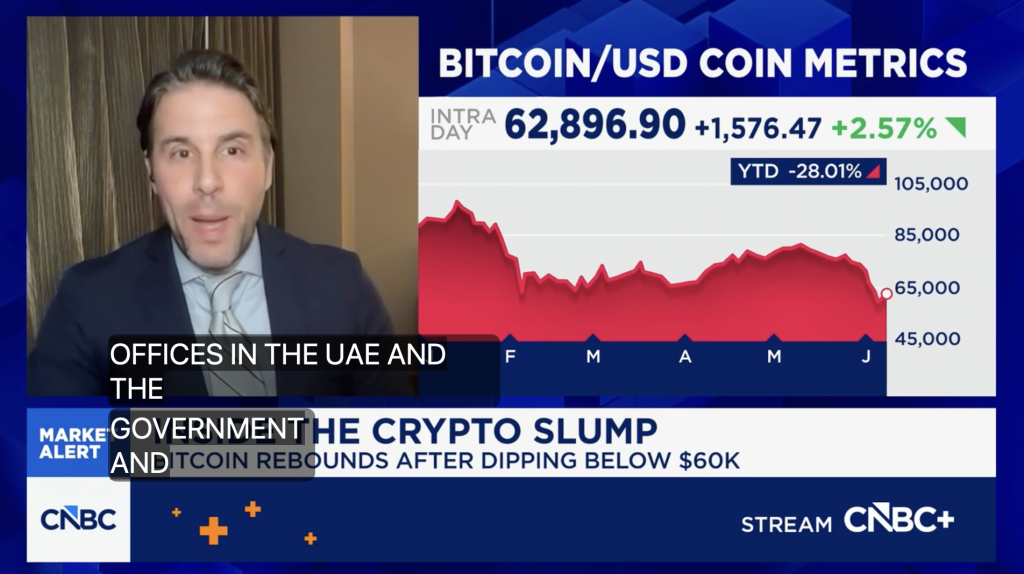
Bitcoin tumbled below the $60,000 mark on Monday, touching a low of $59,099 and reaching its weakest level since October 2024. The move represents a decline of more than 50% from the cryptocurrency’s all-time high near $126,000. While that kind of drop would normally trigger widespread concern across financial markets, some of the largest and most sophisticated investors appear to be taking a very different view.
According to John D’Agostino, Coinbase’s head of institutional strategy, the pullback is being welcomed by major institutional buyers rather than feared. Speaking on CNBC’s Squawk Box, D’Agostino said sovereign wealth funds, family offices, and government-backed investment entities continue to see Bitcoin as a long-term opportunity. In fact, many are using the lower prices to increase their exposure. After recently returning from the Middle East, he noted that investors in the UAE were far from discouraged by the correction and were happy to acquire Bitcoin at what they view as discounted levels.
Institutional Buyers Continue Accumulating
Recent filings appear to support that narrative. Abu Dhabi’s Mubadala Investment Company, one of the world’s largest sovereign wealth funds with roughly $330 billion under management, reported holding 14.7 million shares of BlackRock’s iShares Bitcoin Trust (IBIT) as of March 31, 2026. That position increased by 16% from the previous quarter, marking four straight quarters of accumulation despite Bitcoin losing roughly 40% from its peak during that period.
The continued buying activity suggests that large institutions remain focused on Bitcoin’s long-term potential rather than short-term price swings. While retail investors often react emotionally during major corrections, institutional capital tends to move more slowly and strategically. For many of these funds, a sharp decline simply creates a better entry point.
Bitcoin ETFs Show Strong Investor Conviction
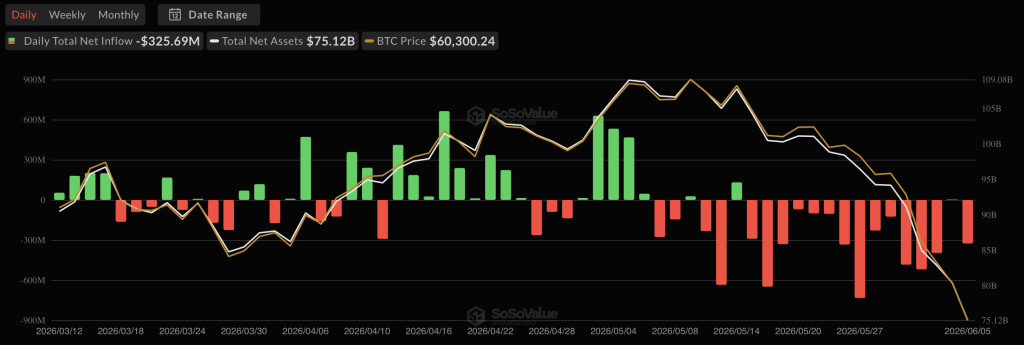
D’Agostino also pointed to Bitcoin ETF holdings as evidence that investor confidence remains surprisingly resilient. Even after Bitcoin’s nearly 50% decline from its record high, spot Bitcoin ETFs still collectively hold around $100 billion in exposure. That figure, he argued, shows that investors are largely staying committed instead of rushing for the exits.
He highlighted that retail participation has only seen a relatively modest decline compared to Bitcoin’s price drop. According to D’Agostino, while the asset itself has lost nearly half its value from peak levels, retail interest has only fallen by roughly 15%. That disconnect suggests many investors still view Bitcoin as a long-term holding rather than a short-term trade. BlackRock’s IBIT remains the dominant player in the sector, managing approximately $51.9 billion in assets and accounting for nearly 45% of all spot Bitcoin ETF holdings.
What’s Driving Bitcoin’s Recent Weakness?
When discussing the causes behind Bitcoin’s prolonged downturn, D’Agostino pointed to a combination of macroeconomic and market-specific pressures. Risk-off sentiment has pushed many investors toward safer and more liquid assets, while higher interest rates have weakened Bitcoin’s appeal as a hedge against currency debasement. At the same time, regulatory uncertainty in the United States continues to hang over the market, creating hesitation among some participants.
Another notable factor was Strategy founder Michael Saylor’s decision to sell a small portion of the company’s Bitcoin holdings. Between May 26 and May 31, Strategy sold 32 BTC for roughly $2.5 million. Although the sale represented only a tiny fraction of the company’s more than 843,000 Bitcoin holdings, it carried symbolic weight because Saylor had long promoted a “never sell” philosophy. The market reacted negatively, helping push Bitcoin below $72,000 before broader selling pressure accelerated.
D’Agostino also referenced geopolitical tensions, including the ongoing conflict involving Iran and disruptions surrounding the Strait of Hormuz, as factors weighing on risk assets globally. Interestingly, oil prices have remained below $100 per barrel despite the turmoil, highlighting how markets can behave in unexpected ways during complex macroeconomic environments.
Regulatory Progress Could Strengthen the Market
Despite current uncertainty, progress is being made on the legislative front. D’Agostino highlighted the advancement of the Digital Asset Market Clarity Act, commonly known as the CLARITY Act. The bill cleared the Senate Banking Committee in May 2026 with a 15-9 vote, becoming one of the most significant crypto regulatory proposals to advance through Congress.
A separate proposal, the PARITY Act, which focuses on cryptocurrency taxation, is also gaining bipartisan support. If passed, both pieces of legislation could provide greater regulatory certainty and strengthen the institutional framework supporting digital assets in the United States.
No Signs of Institutional Panic
One of the more reassuring observations from D’Agostino was the apparent absence of widespread institutional stress. When asked about the possibility of forced liquidations or margin calls among large investors, he said he was not seeing evidence of major institutions carrying dangerous levels of leverage at current prices.
Instead, many professional investors appear to be focused on finding efficient ways to raise capital and expand their Bitcoin exposure. As D’Agostino put it, investors who were enthusiastic about Bitcoin at $125,000 remain interested at $100,000 and are even more attracted to the asset at current levels.
That mindset was reinforced on Monday when Strategy disclosed the purchase of an additional 1,550 BTC worth approximately $101 million. The acquisition was made at an average price near $65,000 per coin, demonstrating that at least some major players continue to view the correction as a buying opportunity rather than a reason to retreat.