
- XRP has fallen more than 71% from its 2025 all-time high of $3.65 and is hovering near the critical $1 support level.
- Rising inflation, geopolitical uncertainty, and expectations of higher interest rates continue weighing on the broader crypto market.
- A break below $1 could trigger additional selling, while holding support may provide a foundation for a recovery.
XRP has experienced a dramatic reversal over the past year. After soaring to a record high of $3.65 in July 2025, Ripple’s native token has surrendered more than 70% of those gains, falling back toward the psychologically important $1 level.
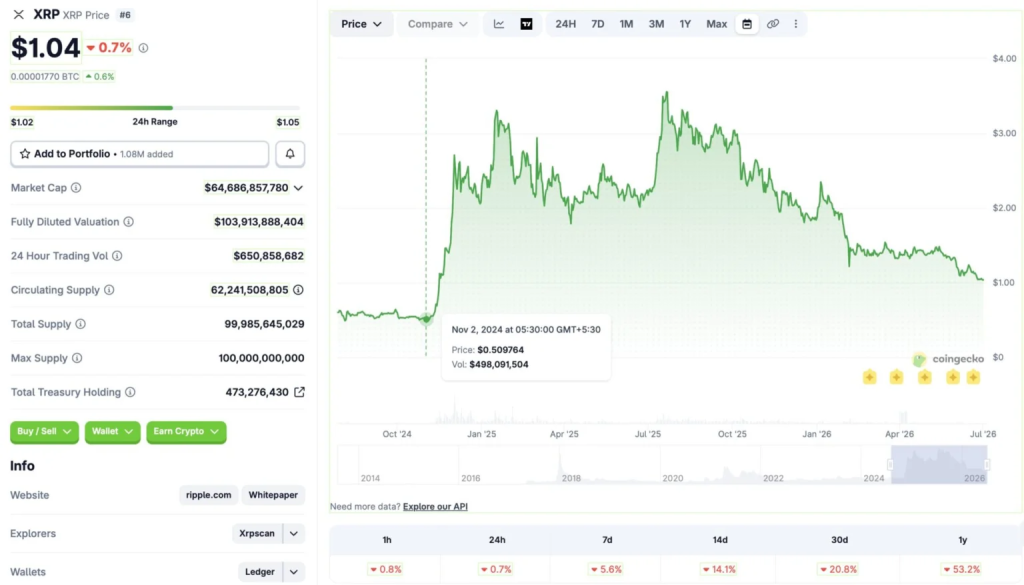
According to CoinGecko data, XRP briefly dropped to around $1.01 in late June before stabilizing. While buyers have defended the area so far, investors are closely watching whether the token can hold this key support or face another leg lower.
Why XRP Has Fallen So Sharply
XRP’s historic rally began in late 2024 after Ripple secured a major legal victory in its long-running battle with the U.S. Securities and Exchange Commission.
The court ruled that XRP sales to retail investors did not constitute securities transactions, significantly improving market sentiment and fueling a wave of buying that carried the token to its all-time high.
However, the rally proved difficult to sustain.
As macroeconomic conditions deteriorated and geopolitical tensions increased, cryptocurrencies broadly came under pressure. Like many digital assets, XRP eventually gave back much of its previous gains as investors shifted away from higher-risk assets.
Can XRP Hold the $1 Support?
The $1 price level has become one of the most important technical areas for XRP.
If buyers continue defending this zone, the token could establish a base for a gradual recovery once broader market conditions improve. Strong support levels often become turning points when selling pressure begins to fade.
On the other hand, a decisive break below $1 could increase downside momentum. The next major historical support sits near the $0.50 region, a level XRP last traded around in late 2024 before its breakout rally began.
Whether XRP holds or loses this support may largely depend on overall sentiment across the cryptocurrency market rather than XRP-specific developments.
Macro Conditions Remain the Biggest Risk
The broader economic backdrop continues to weigh on digital assets.
Inflation remains elevated in the United States, and the Federal Reserve has kept interest rates unchanged while signaling that additional policy tightening remains possible. Many analysts believe further rate hikes later this year could reduce liquidity and pressure speculative assets, including cryptocurrencies.
Higher interest rates generally encourage investors to rotate toward lower-risk investments, making it more difficult for crypto markets to sustain strong rallies.
What Comes Next?
XRP still benefits from a large global community, expanding blockchain infrastructure, and Ripple’s continued focus on cross-border payments. Those long-term fundamentals remain intact despite recent price weakness.
In the short term, however, macroeconomic conditions are likely to remain the dominant driver. If Bitcoin and the broader crypto market recover, XRP could rebound alongside them. If market sentiment deteriorates further, the $1 support level will remain the critical price area to watch.
For now, XRP finds itself at a crossroads, with its next major move likely depending as much on the global economy as on developments within the Ripple ecosystem.