
- Binance will restrict transactions involving HTX, EXMO and nine other crypto platforms beginning August 23.
- Users who attempt to send or receive funds involving restricted platforms could have transactions held for compliance review.
- Binance says the restrictions are part of its broader regulatory compliance and user asset protection measures.
Binance is tightening its compliance controls by blocking transactions connected to 11 cryptocurrency platforms, including HTX and EXMO, beginning August 23.
The restrictions will also apply to Rapira, Aifory Pro, ABCeX, WhiteBird, NoOnecrypto, Tradex, Monease, BitPapa and Exnode/Exnode Pay.
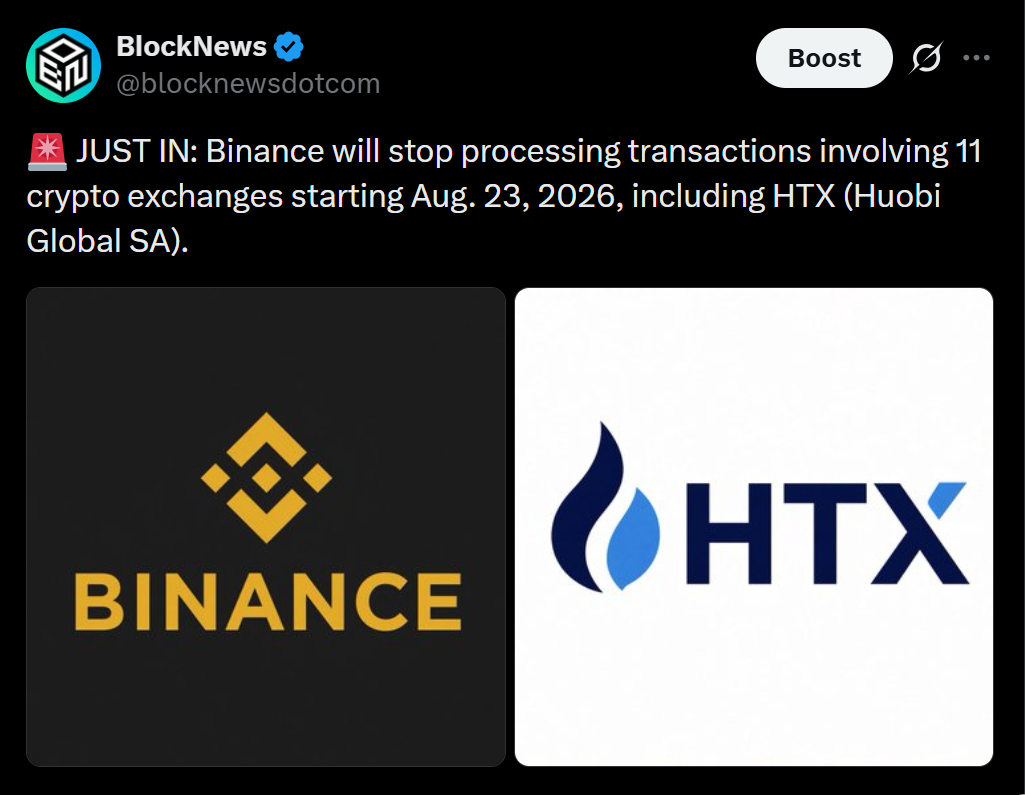
The move expands restrictions introduced earlier this month against Shelbit, Aban Tether Exchange, A7 Nigeria, A7 Africa and PilotFinance.
Binance Warns Users About Restricted Transactions
Binance is advising customers not to send funds to or receive assets from any affected platforms once the restrictions become active.
Transactions attempted after the deadline could be held while Binance conducts compliance reviews. Restrictions may also be placed on impacted wallets during the review process.
The exchange warned that transactions involving listed entities could potentially violate its Terms of Use, making it important for users to check where funds are coming from or being sent before initiating transfers.
Compliance Rules Drive Binance Restrictions
Binance said the decision reflects regulatory requirements across the different jurisdictions where it operates.
Crypto exchanges have faced growing pressure to strengthen anti-money laundering controls, transaction monitoring and screening of counterparties as regulators increase oversight of digital asset transfers.
For Binance users, the immediate impact is relatively straightforward. After August 23, transfers involving HTX, EXMO and the other newly listed platforms could trigger restrictions or compliance reviews.
Binance says the measures are intended to strengthen regulatory compliance while protecting user assets as its global compliance framework continues to evolve.