
- XRP Ledger activity fell 61%, though analysts believe the drop reflects normalization rather than declining adoption.
- XRP remains below key moving averages, keeping the broader technical outlook bearish.
- Exchange balances continue to decline, suggesting some investors are accumulating despite ongoing market weakness.
Activity on the XRP Ledger cooled dramatically over the past 24 hours, with active accounts falling from nearly 20,000 to roughly 7,800 according to on-chain data. The sharp 61% decline arrived as XRP hovered around $1.16 following another difficult stretch for the broader cryptocurrency market. Naturally, the sudden drop caught the attention of traders looking for clues about where the asset might head next.
At first glance, the numbers may seem alarming. A collapse in network activity often raises concerns about fading interest or weakening demand. However, several analysts argue that this particular decline tells a different story. Rather than signaling a mass exodus from XRP, the slowdown may simply reflect the end of an unusually active trading period that was driven by arbitrage opportunities, large token movements, and short-term market inefficiencies.
XRP Ledger Activity Returns to Normal
Over the previous weeks, XRP Ledger activity had surged well above typical levels. Much of that increase was tied to traders taking advantage of arbitrage opportunities across exchanges, along with transactions linked to token releases and other market events. These types of spikes can temporarily inflate network usage without necessarily indicating a meaningful increase in long-term adoption.
As those opportunities began to fade, transaction volumes naturally cooled. The result was a sharp drop in active accounts, though not necessarily a decline in investor interest. In fact, analysts note that blockchain activity often becomes exaggerated during periods of volatility before settling back into more sustainable patterns once markets stabilize.
That’s why many observers view the recent decline as normalization rather than deterioration. The network appears to be returning to its baseline level of activity after a brief burst of elevated usage.
XRP Price Continues Facing Technical Pressure
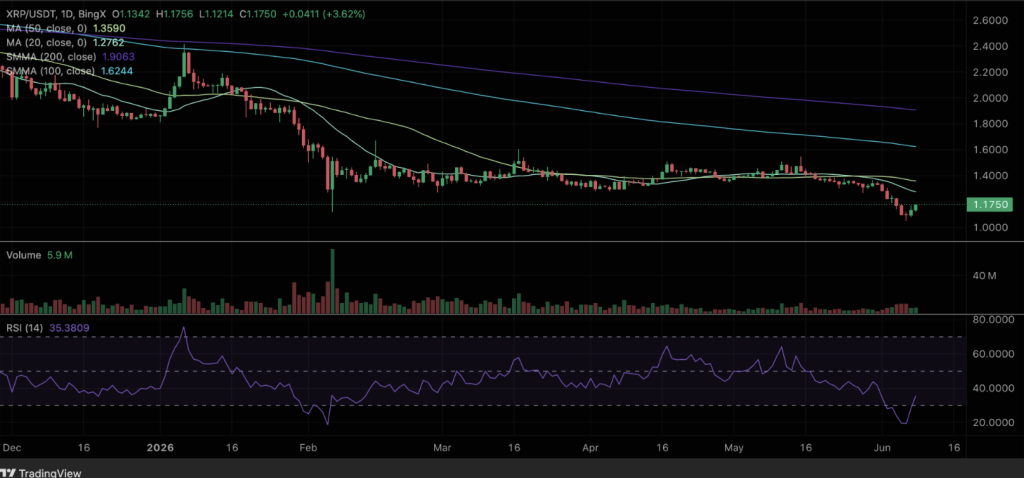
While network activity may be stabilizing, XRP’s price chart remains under pressure. The cryptocurrency recently bounced from lows near $1.12 and has managed to recover slightly, trading around $1.17. Even so, bulls have yet to regain meaningful control of the trend.
Several key technical indicators continue to paint a cautious picture. XRP remains below its major moving averages, which often serve as important markers for momentum traders. The 20-day moving average sits near $1.28, while the 50-day average hovers around $1.36. Longer-term averages are positioned even higher, reinforcing the bearish structure that has developed over recent months.
There is one modestly encouraging signal. The Relative Strength Index recently rebounded from oversold territory and climbed to around 33. That suggests the intense selling pressure seen earlier may be easing. However, the indicator remains well below levels typically associated with strong bullish momentum, meaning buyers still have work to do.
Exchange Data Suggests Investors Are Holding
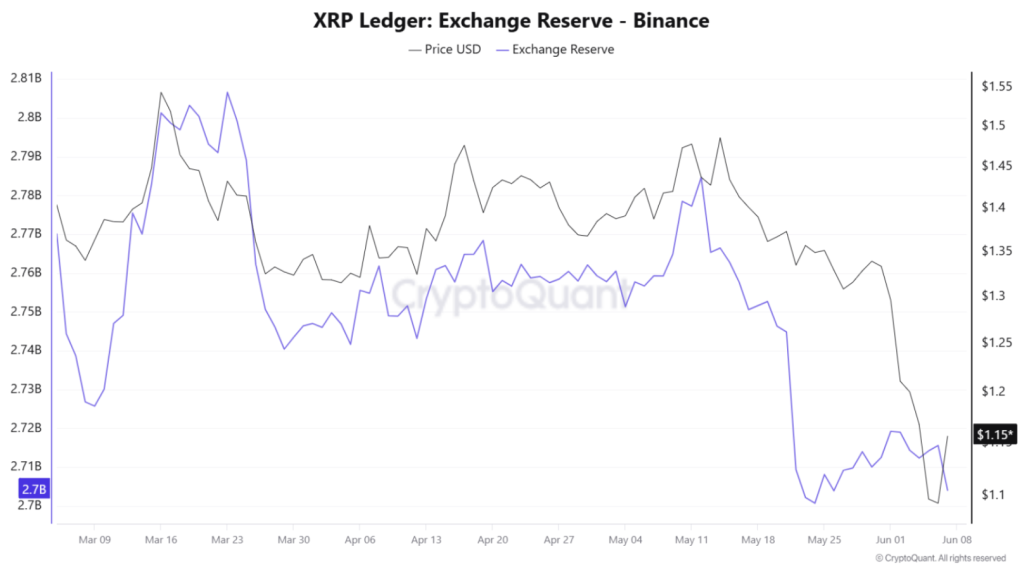
Despite the weak price action, some on-chain data hints that investor behavior may be more constructive than many realize. Crypto analyst Greg Miller recently pointed to XRP balances on Binance, noting that exchange holdings have fallen to their lowest level in three months.
According to Miller, Binance currently holds around 2.7 billion XRP tokens, down roughly 66 million since March. His interpretation was straightforward: investors continued withdrawing XRP from exchanges even as prices declined.
That distinction matters. During periods of panic selling, assets usually flow onto exchanges as traders prepare to sell. The opposite appears to be happening here. Coins are leaving trading platforms and moving into private wallets, a trend often associated with long-term holding strategies rather than immediate liquidation.
Accumulation Narrative Gains Strength
Data from CryptoQuant supports that observation. XRP balances on Binance declined from approximately 2.75 billion tokens to around 2.70 billion by late May, despite persistent weakness in the market. The reduction suggests that many investors chose to remove their holdings from exchanges during a period when fear and uncertainty remained elevated.
Market participants often view declining exchange balances as a sign of accumulation. While the signal is not foolproof, it generally indicates that holders are moving assets into storage rather than keeping them readily available for sale.
For XRP, that creates an interesting contrast. On one hand, network activity has fallen sharply and technical indicators remain weak. On the other, investors appear to be steadily withdrawing tokens from exchanges, suggesting confidence among at least a portion of the market.
What Comes Next for XRP?
The coming weeks may determine which narrative ultimately wins out. If XRP can build momentum and reclaim important resistance levels, the accumulation trend could provide a foundation for a stronger recovery. If broader market conditions deteriorate, however, sellers may continue to dominate despite the ongoing decline in exchange balances.
For now, the XRP Ledger slowdown appears less dramatic than the headline numbers suggest. Activity has cooled, but investors are still pulling coins off exchanges and many long-term holders remain committed. Whether that conviction translates into higher prices is another question entirely, and one the market will answer soon enough.