
- XRP and Dogecoin have both declined sharply, reflecting broader weakness across the crypto market.
- Dogecoin faces ongoing supply inflation and relies heavily on sentiment, while XRP has clearer utility in payments.
- From a risk-reward perspective, XRP appears structurally stronger for long-term investors compared to meme-driven alternatives.
Crypto markets have been sliding again. Not selectively. Broadly. Bitcoin cooled off, altcoins followed, and speculative names have taken the hardest hits. If you’re buying dips right now, you’d better be careful where you step.
What makes it more confusing is the backdrop. The U.S. government floated plans for a Strategic Bitcoin Reserve. Lawmakers advanced the Genius Act to create a regulatory framework for stablecoins. On paper, that sounds like fuel for a major bull run. Instead, prices rolled over after summer highs. Over the past 12 months, XRP is down roughly 37%, while Dogecoin has dropped around 52%. Volatility cuts both ways — and lately, it’s been cutting down.
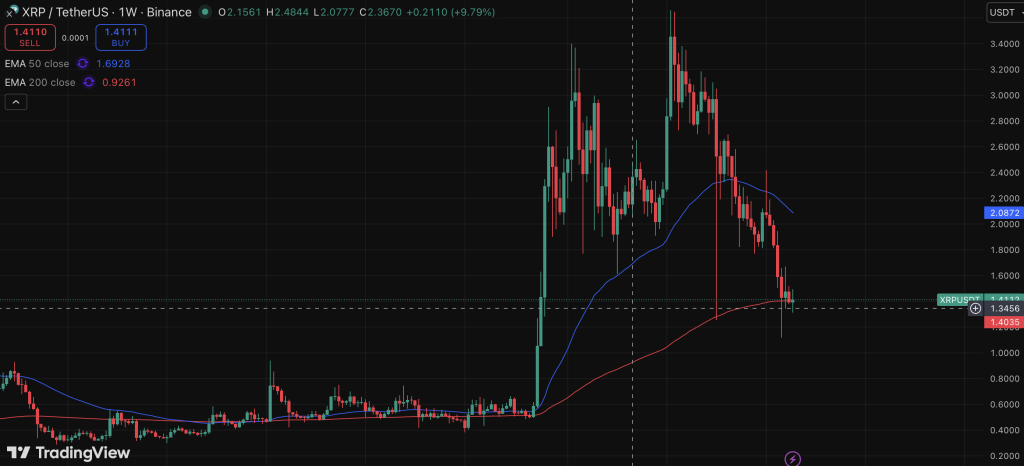
What Actually Drives XRP and Dogecoin?
First, it helps to remember what crypto is — and isn’t. These tokens don’t produce cash flow. They aren’t physical commodities. Their value isn’t tied to earnings reports or rental income. Prices mostly reflect supply mechanics and investor demand. That’s it.
And supply matters more than people like to admit.
Dogecoin mints 5 billion new tokens every year. There’s no hard cap. That constant expansion creates ongoing dilution pressure, especially if demand slows. XRP is different structurally — small amounts are burned with each transaction — but its circulating supply has still trended higher over time. When supply rises faster than interest, prices struggle. Simple math.
Then there’s utility. XRP is designed for cross-border payments via the XRP Ledger. Dogecoin? It started as a meme. It thrives on community energy, social buzz, and cultural relevance. That difference becomes critical when markets shift from speculation to fundamentals.
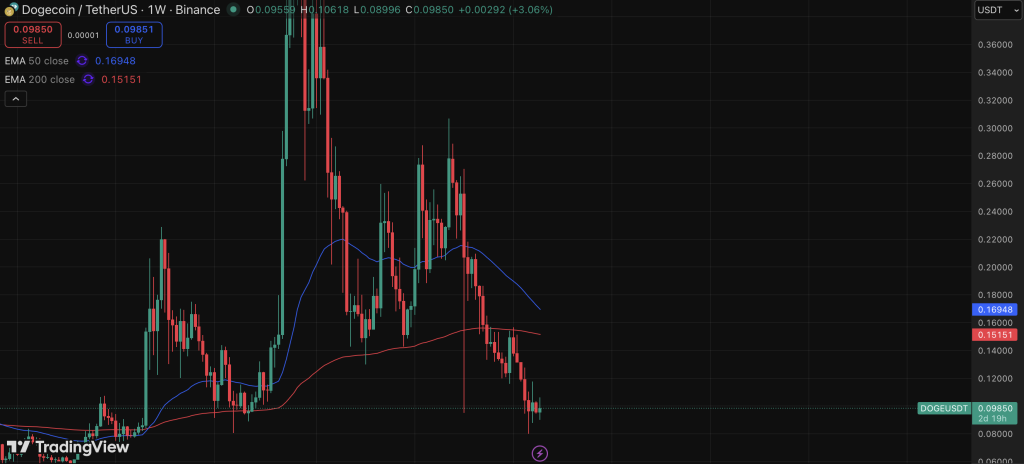
Why XRP’s Risk/Reward Looks Stronger
XRP arguably has more defined long-term use cases. The XRP Ledger aims to streamline international transfers, competing with legacy systems like SWIFT. Transactions are faster. Fees are lower. And with Ripple’s prolonged legal battle with U.S. regulators largely behind it, institutional adoption becomes easier to imagine.
Ripple even launched its own stablecoin in late 2024, potentially positioning itself to benefit from clearer regulatory frameworks like the Genius Act. If compliance improves and enterprise adoption expands, XRP has a narrative beyond hype cycles.
Dogecoin, by contrast, depends heavily on staying culturally relevant. Meme tokens can explode upward during speculative frenzies. They can also deflate quickly when attention shifts. And because creating new meme coins is easy, competition for investor capital is constant. Add an expanding supply on top of that, and maintaining price momentum becomes harder over time.
Volatility Isn’t the Same as Value
None of this means XRP can’t fall further. It absolutely can. Crypto remains one of the most volatile asset classes available. But when comparing structural foundations, XRP appears to have more built-in durability.
Dogecoin thrives in risk-on environments where enthusiasm dominates. XRP has at least some anchor in financial infrastructure ambitions. That doesn’t guarantee success — plenty of ambitious projects fail — but it provides a clearer long-term thesis.
In a market that’s turning more selective and less euphoric, narratives backed by utility tend to hold up better than pure momentum plays. Meme coins can be fun. They can even be profitable. But when evaluating risk versus reward over several years, XRP currently looks like the more grounded bet.
That doesn’t make it safe. Just… relatively sturdier. And in crypto, sometimes sturdier is enough.