
- XRP Ledger climbed to fourth place on the RWA.xyz rankings as institutional tokenization activity accelerated.
- XRPL now supports tokenized assets including U.S. Treasuries, money market funds, and structured credit products.
- Rising RLUSD activity and growing network usage suggest expanding demand across the XRP Ledger ecosystem.
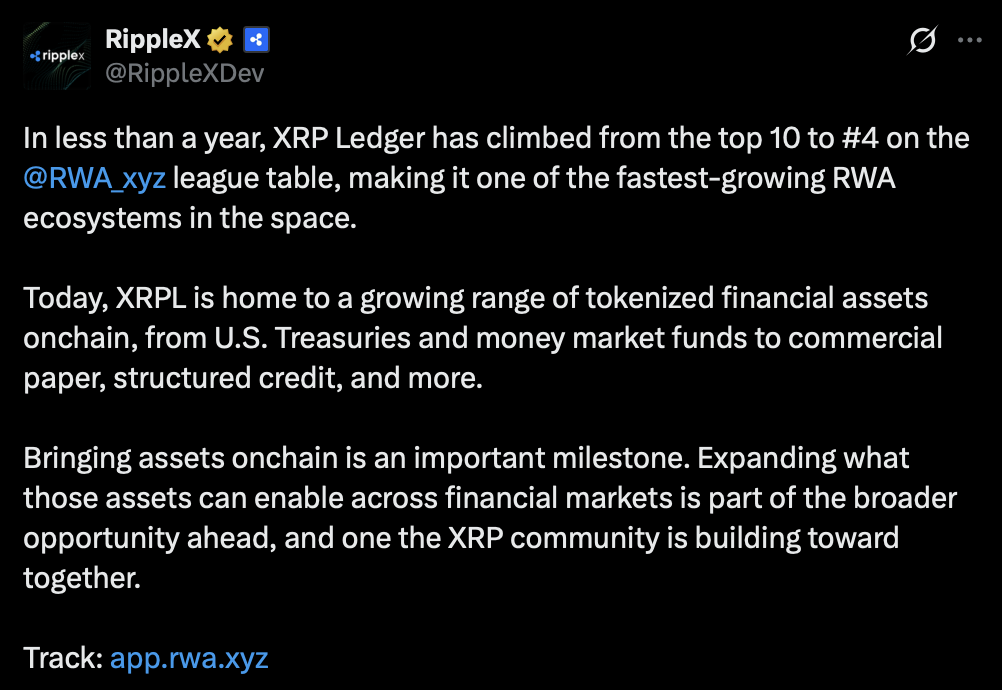
The XRP Ledger is quietly transforming into something much bigger than a payments-focused blockchain, and the market is starting to notice. Over the past year, XRPL has steadily climbed the ranks inside the growing real-world asset tokenization sector, recently jumping from the top 10 all the way to fourth place on the RWA.xyz leaderboard.
That move matters more than it might look at first glance.
This isn’t just another temporary crypto narrative fueled by hype cycles and speculative trading. What’s happening around XRPL feels more structural — a sign that parts of traditional finance are seriously beginning to move onchain, and XRP Ledger is positioning itself directly in the middle of that transition.
Institutions Are Using XRPL for Real Financial Products
One of the biggest reasons XRPL is gaining traction comes down to practicality. Financial institutions, fintech firms, liquidity providers, and asset issuers increasingly want faster settlement systems, lower transaction costs, and smoother capital movement than traditional infrastructure can provide. XRPL happens to check a lot of those boxes.
The network now supports a growing list of tokenized real-world assets including U.S. Treasuries, money market funds, commercial paper, and structured credit products. And importantly, these aren’t experimental meme-style crypto assets floating around inside isolated DeFi ecosystems. These are regulated, yield-generating financial instruments connected directly to traditional markets.
That distinction changes the conversation quite a bit.
The real power behind tokenization isn’t simply turning assets into digital representations on a blockchain. It’s what those assets become capable of once they move onchain. Tokenized financial products can potentially be used as collateral inside lending systems, transferred globally in near real-time, integrated into automated settlement networks, or connected directly into liquidity protocols that remove friction from cross-border finance.
That’s the bigger picture institutions are increasingly paying attention to.
XRPL’s Infrastructure Fits the Institutional Narrative
XRPL’s technical structure also gives it an advantage in areas where scalability and transaction efficiency matter heavily. The network offers fast settlement times, relatively low fees, and built-in tokenization functionality without the congestion problems and expensive gas costs that sometimes hit larger blockchain ecosystems during periods of heavy activity.
For institutions experimenting with tokenized finance, predictability matters almost as much as innovation. Nobody wants settlement infrastructure becoming unusable because transaction fees suddenly spike during market volatility. XRPL’s architecture has made it increasingly attractive for firms looking for blockchain infrastructure that feels stable enough for larger-scale financial use cases.
And momentum around the ecosystem keeps broadening too.
Ripple’s participation in initiatives like SwissHacks 2026 is helping push more developers toward building applications tied to payments, foreign exchange, lending markets, credit systems, and even AI-driven financial agents. That wider ecosystem growth matters because institutional adoption usually accelerates faster when developers actively build around the infrastructure rather than simply holding tokens speculatively.
RLUSD Growth and Rising Network Activity Add Fuel
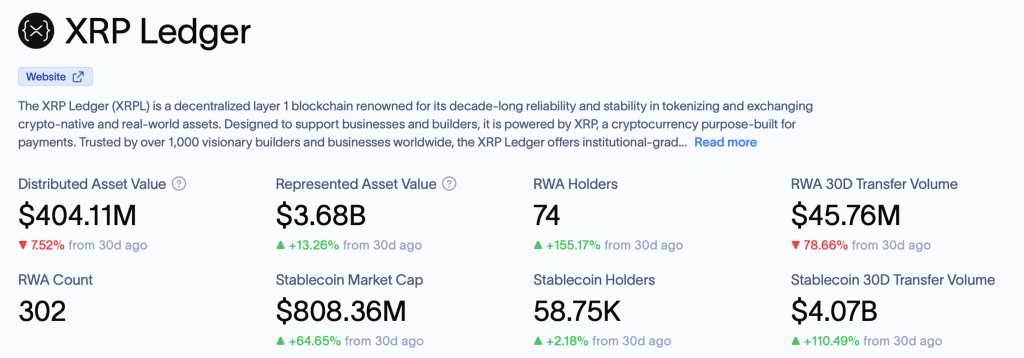
Another signal traders are watching closely is the growth happening around RLUSD, Ripple’s stablecoin ecosystem. Recently, RLUSD recorded its largest mint yet on the XRP Ledger, suggesting rising demand for stable liquidity inside the network itself.
That’s actually a pretty important detail because stablecoin liquidity often acts as the financial plumbing underneath larger blockchain ecosystems. When stable liquidity grows, it usually supports deeper trading activity, settlement flows, and broader application usage over time.
XRPL network activity is also beginning to accelerate again. Usage recently climbed to a two-month high as newer tokenization projects tied to energy-backed assets and other emerging real-world financial products gained traction across the ecosystem.
And honestly, this feels like where the story starts becoming more serious.
XRPL Is Positioning for the Institutional Finance Shift
For years, crypto markets mostly focused on speculative trading, memecoins, and retail-driven narratives. But tokenization is increasingly pulling blockchain technology toward actual financial infrastructure — and XRPL appears determined to position itself directly at the center of that shift.
As global markets slowly move toward tokenizing traditional financial assets at scale, XRPL is no longer operating quietly on the edges of the conversation. It’s becoming part of the core infrastructure discussion around how blockchain-based finance could eventually function in the institutional world.
Whether XRP itself fully captures the value of that transition long term is still something markets continue debating. But one thing feels increasingly clear: the XRP Ledger ecosystem is evolving far beyond its original payments-only identity.
And institutions seem to be paying closer attention now than ever before.