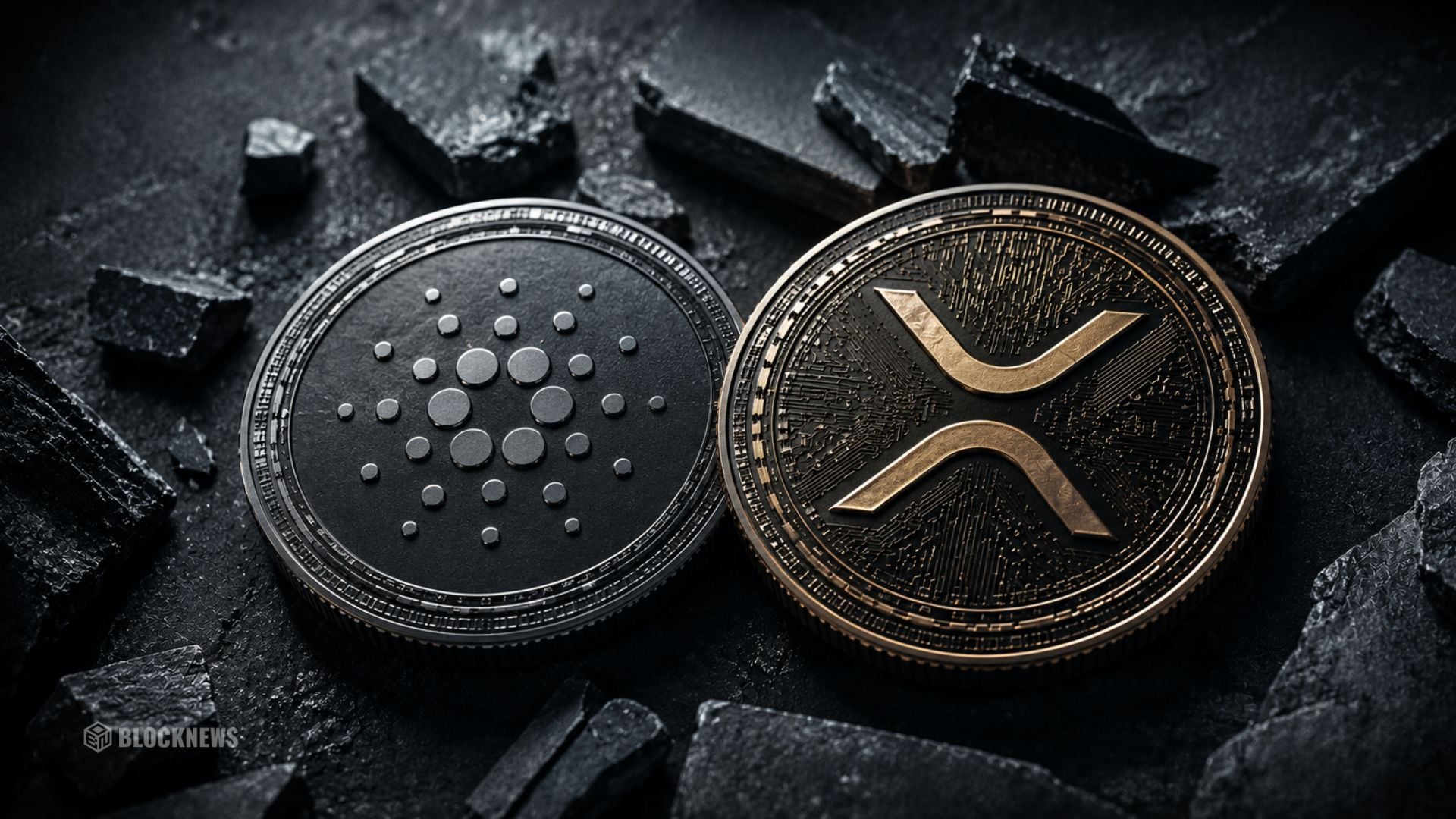
- XRP is seeing renewed institutional inflows, wallet growth, and expanded trading infrastructure partnerships.
- Cardano is focusing heavily on Bitcoin DeFi expansion while facing growing governance and funding tensions.
- Both XRP and ADA remain stuck in major consolidation ranges without confirmed breakout momentum yet.
XRP and Cardano are both stuck in frustrating consolidation phases right now, but the stories driving each ecosystem couldn’t feel more different. On one side, XRP keeps pulling in institutional attention, expanding wallet growth, and strengthening its role inside professional trading infrastructure. On the other, Cardano is trying to reinvent itself through Bitcoin DeFi while simultaneously battling governance drama and internal funding disputes.
So if someone had $5,000 sitting on the sidelines in 2026 and had to choose between XRP and ADA today, the answer probably depends less on charts alone and more on what kind of crypto narrative they actually believe has the better future.
XRP Is Quietly Rebuilding Institutional Momentum
The XRP price hasn’t exploded higher yet, but behind the scenes, institutional activity around the ecosystem has definitely picked up. Over the past week alone, XRP-related investment products reportedly attracted around $42 million in inflows. That happened during the same period Bitcoin ETFs saw more than $1.27 billion leave the market.
That rotation stood out to traders pretty quickly.
A lot of investors interpreted it as early signs that some capital may be shifting away from Bitcoin and back into large-cap altcoins with stronger institutional infrastructure stories. XRP also continues expanding its network activity. The XRP Ledger recently added more than 4,300 new wallets in a single day — one of the largest daily wallet growth spikes the network has seen this year.
Ripple’s institutional partnerships also continue expanding. Ripple Prime recently partnered with EDX Markets and EDX International, allowing institutional participants to access both spot and perpetual futures trading through Ripple-linked infrastructure. None of this guarantees the XRP price suddenly enters a huge breakout tomorrow, obviously. But it does show the ecosystem remains active and relevant even while price action stays stuck in a range.
XRP Price Still Hasn’t Escaped Consolidation
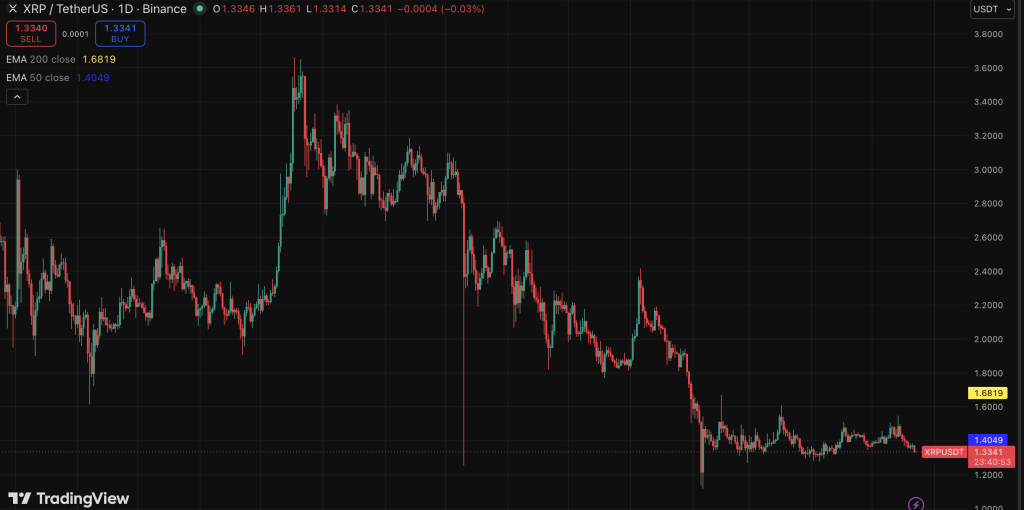
Technically though, XRP still looks messy. The chart has spent months bouncing between roughly $1.30 and $1.55 without establishing any convincing breakout structure. Every rally toward the upper boundary keeps running directly into heavy selling pressure.
One important level traders are watching closely now is the 100-period simple moving average near $1.4162. XRP continues trading below it, which keeps short-term momentum leaning slightly bearish for now. Support remains clustered around the $1.34–$1.35 region, and if that breaks, the market likely starts focusing on $1.30 again.
At the same time, RSI indicators are beginning to flash mild bullish divergence signals once more. That could support another short-term recovery attempt if broader market conditions stabilize. Still, bulls probably need a strong reclaim above $1.42 first — and eventually a breakout above $1.55 — before traders start treating XRP as truly bullish again instead of just range-bound.
Cardano Is Betting Big on Bitcoin DeFi
Cardano’s story looks completely different right now. Charles Hoskinson has spent much of the year pushing the ecosystem deeper into Bitcoin DeFi, or BTCFi, with the idea that Cardano could eventually become part of a much larger Bitcoin liquidity and smart contract economy.
Earlier this year, Cardano successfully completed its first native BTC-ADA atomic swap directly on mainnet. That was actually a pretty meaningful milestone because it showed Bitcoin and Cardano liquidity interacting without relying on centralized intermediaries.
But while Cardano pushes toward BTCFi expansion, internal governance tensions have become harder to ignore. A major proposal requesting 32.9 million ADA for core research funding is currently facing intense community resistance, with around 81% of participating stake voting against it so far.
Hoskinson warned the proposal’s failure could damage Cardano’s research ecosystem and weaken one of the project’s defining identities as a research-driven blockchain. Meanwhile, another important governance vote tied to the Van Rossum hard fork is approaching on May 29. That upgrade would improve smart contract performance and reduce execution costs across the network if approved.
So Cardano right now feels like a blockchain trying to build aggressively for the future while simultaneously arguing internally about how it should evolve.
ADA Price Also Remains Trapped
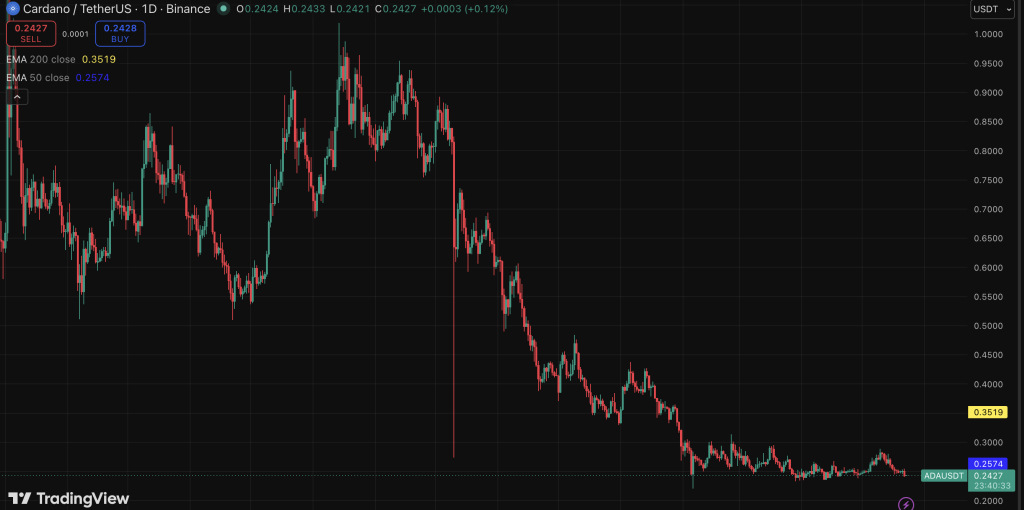
Technically, ADA’s chart looks surprisingly similar to XRP’s. The ADA price has remained locked between roughly $0.235 and $0.29 for months, with repeated breakout attempts failing near the upper boundary.
The 100-period SMA around $0.2628 currently acts as resistance. As long as ADA trades below that level, short-term pressure still favors sellers slightly. Immediate support sits near $0.245–$0.25, while stronger demand likely appears closer to $0.235 if bearish momentum returns again.
Momentum indicators are also cooling after the last rejection, though RSI divergence signals suggest the current selloff may slowly be losing steam underneath the surface. For bulls, the important technical trigger remains a clean reclaim above $0.263 and eventually a stronger breakout beyond $0.27 before confidence really improves again.
So Which Looks Smarter Right Now?
Honestly, the answer probably depends on risk tolerance more than anything else.
XRP currently looks stronger from an institutional adoption perspective. Investment inflows remain positive, Ripple keeps expanding partnerships, and wallet growth continues accelerating even during sideways price action. It feels more mature and structurally stable in the near term.
Cardano, meanwhile, probably offers the bigger speculative upside if its Bitcoin DeFi ambitions actually succeed over the next few years. But it also carries more uncertainty because governance fights, funding disputes, and ecosystem execution risks have become increasingly central to the ADA narrative.
Right now, neither asset has technically broken into a confirmed bullish trend yet. Both XRP and ADA remain trapped inside larger consolidation structures waiting for a real catalyst. But if choosing purely based on current momentum and institutional demand, XRP probably holds the slightly stronger position today — while ADA remains more of a long-term ecosystem bet tied heavily to BTCFi adoption and future execution.