

- US producer prices surged 6% in April, the hottest annual reading since 2022
- Wholesale inflation sharply exceeded economist expectations as energy costs continued rising
- Markets are increasingly pricing in the possibility of another Federal Reserve rate hike by year-end
US inflation fears intensified again Wednesday after producer prices posted their strongest annual increase since 2022, adding fresh pressure on markets already rattled by this week’s hot consumer inflation data.
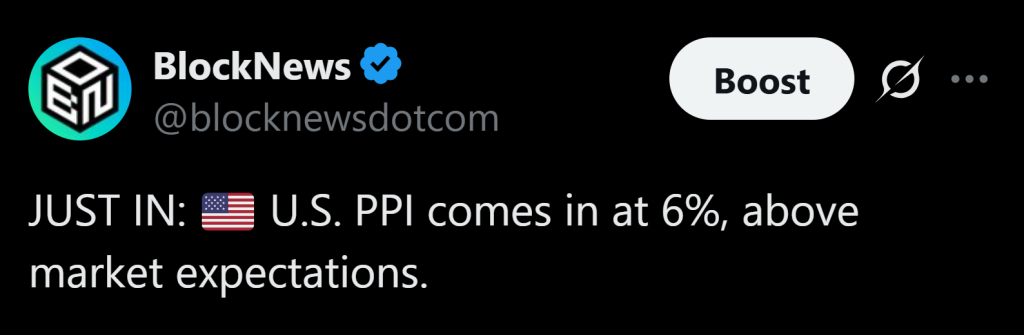
According to the Bureau of Labor Statistics, the Producer Price Index jumped 6% year over year in April, accelerating sharply from March’s revised 4.3% reading and easily beating economist expectations of 4.9%.
The report marked the hottest annual wholesale inflation print since December 2022.
Energy Prices Are Driving Inflation Higher
Much of the latest inflation pressure appears tied to the ongoing Strait of Hormuz energy shock, which continues feeding through supply chains and wholesale pricing across the economy.
On a monthly basis, producer prices surged 1.4%, massively exceeding both the previous 0.7% increase and consensus forecasts expecting only a 0.5% rise.
Even excluding volatile food and energy components, inflation remained uncomfortably high. Core PPI accelerated from a revised 4% annual pace to 5.2%, again coming in well above analyst expectations. That also represented the strongest core reading since late 2022.
The Fed’s Problem Just Got Harder
The inflation data arrives only one day after consumer inflation also surprised to the upside with a 3.8% CPI reading, reinforcing concerns that price pressures may remain far stickier than policymakers hoped earlier this year.
Markets are now increasingly questioning whether the Federal Reserve will be able to cut interest rates at all during 2026. In fact, ahead of Wednesday’s report, Fed futures markets were already pricing nearly a 50% chance of another rate hike by December.
The hotter PPI data will likely strengthen those expectations further.
Stocks And Risk Assets Could Stay Under Pressure
Higher producer prices also create fresh worries about corporate profit margins, especially for companies already struggling with elevated borrowing costs and slowing consumer demand.
Growth stocks, AI-related companies, and other risk-sensitive sectors have already shown signs of weakness this week as traders adjust to the possibility of prolonged restrictive monetary policy.
Crypto markets may also face additional volatility if higher inflation keeps financial conditions tight longer than expected. Lower interest rate hopes had been one of the biggest drivers behind recent rallies across both stocks and digital assets.
Inflation Is Becoming The Market’s Main Story Again
For much of early 2026, investors believed inflation was gradually moving back under control. This week’s CPI and PPI reports are forcing markets to reconsider that assumption quickly.
And honestly, the combination of rising energy prices, geopolitical instability, and stubborn inflation is starting to create a much more uncomfortable environment for the Federal Reserve than traders were pricing in just a few months ago.