- Charles Schwab plans to introduce spot Solana trading in the coming months, expanding direct SOL access across its investment platforms.
- Solana approved three major economic proposals covering a new constitution, faster disinflation and significantly higher transaction-fee burns.
- SOL has gained 46.33% over the past month and was trading around $108 following the developments.
Solana is seeing major developments on both the institutional and network fronts, with Charles Schwab preparing to offer direct SOL trading while the blockchain moves forward with significant changes to its token economics.
Charles Schwab, which manages more than $13 trillion in client assets, announced plans to add spot Solana trading in the coming months.
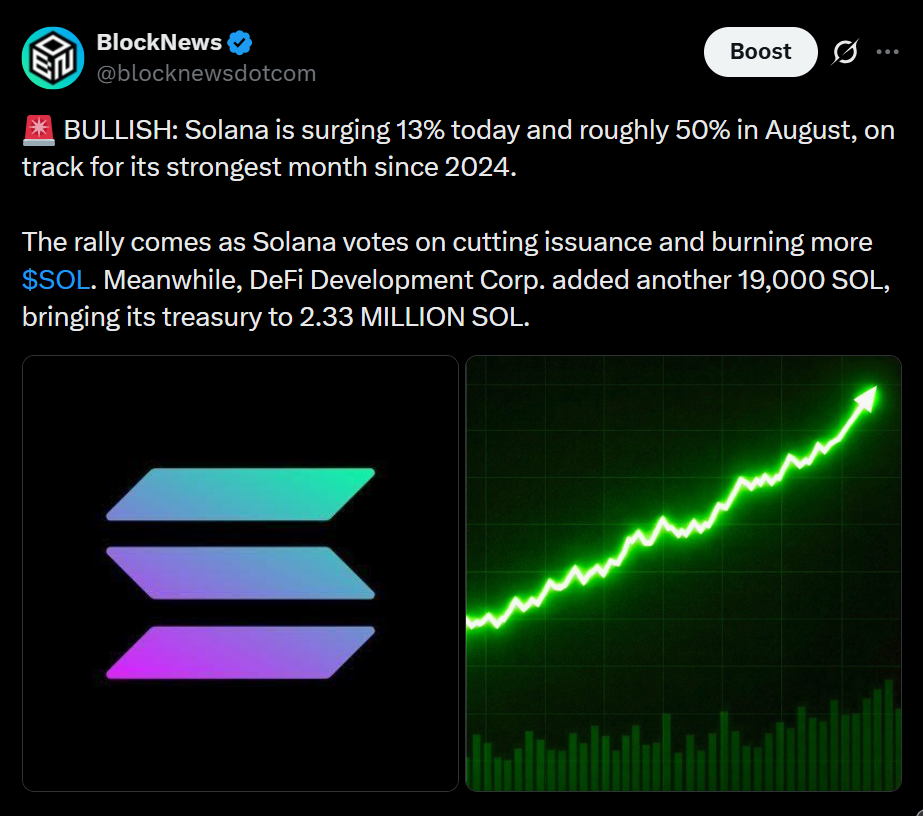
The brokerage launched direct crypto trading in May with Bitcoin and Ethereum before introducing 24/7 futures trading for Solana and XRP in June.
Schwab’s upcoming expansion will bring its spot crypto lineup to five assets, with Avalanche and Chainlink scheduled to join SOL, BTC and ETH.
Crypto trades will carry a flat 0.75% fee based on transaction value and will be available through Schwab’s website, mobile app and thinkorswim platform. Schwab Crypto accounts are available across the U.S. except New York and Louisiana.
Solana Approves Major Economic Changes
Alongside Schwab’s announcement, the Solana ecosystem successfully passed three major economic proposals during Epoch 1023.
The first establishes a new constitution for the network.
The second accelerates Solana’s disinflation schedule by increasing its annual disinflation rate by 30%. Analysts estimate the change could reduce SOL emissions by approximately 18.9 million tokens over the next six years.
It would also move forward the estimated date for Solana to reach its terminal inflation rate of 1.5% from 2032 to 2029.
Solana Token Burns Could Increase Up to 14x
The third proposal introduces another significant change to SOL’s token economics by burning 100% of resource-based transaction fees while providing validators with a baseline fee.
Once implemented, daily SOL burns are estimated to increase from roughly 600–800 SOL to between 7,500 and 9,000 SOL.
That would represent approximately a 12x to 14x increase in the network’s token burn rate.
However, the proposals have faced opposition from some institutional participants concerned that declining SOL issuance could gradually reduce staking yields. Critics argue lower yields could affect institutional staking demand and place additional pressure on smaller validators.
Developers are expected to integrate the approved changes through upcoming technical releases.
SOL Climbs 46% Over the Past Month
The developments arrive during a strong recovery for Solana.
SOL has gained 46.33% over the past month and was trading around $108 at the time of reporting.
The combination of wider access through one of America’s largest investment firms and more aggressive changes to Solana’s token economics could become important catalysts for the network as institutional participation continues expanding.