

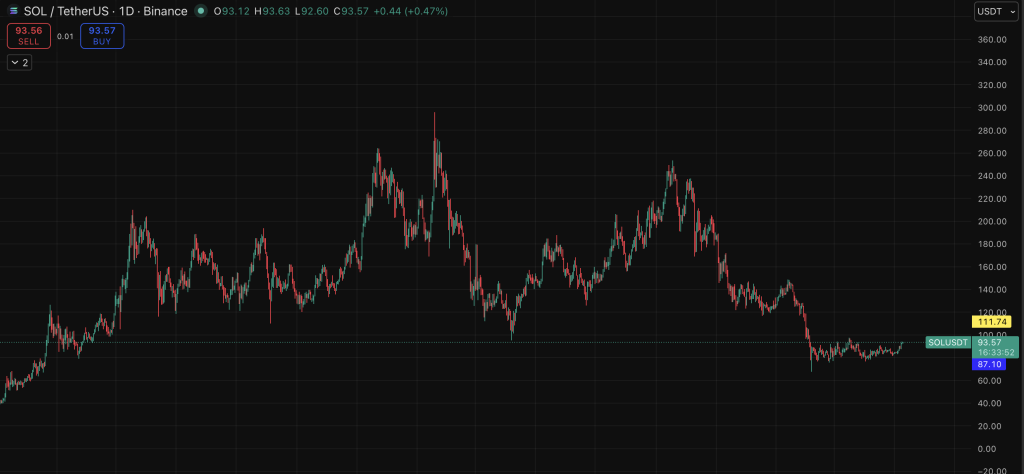
- Solana has lost nearly 48% of its value over the past six months.
- Legal and reputational concerns surrounding Pump.fun continue pressuring sentiment.
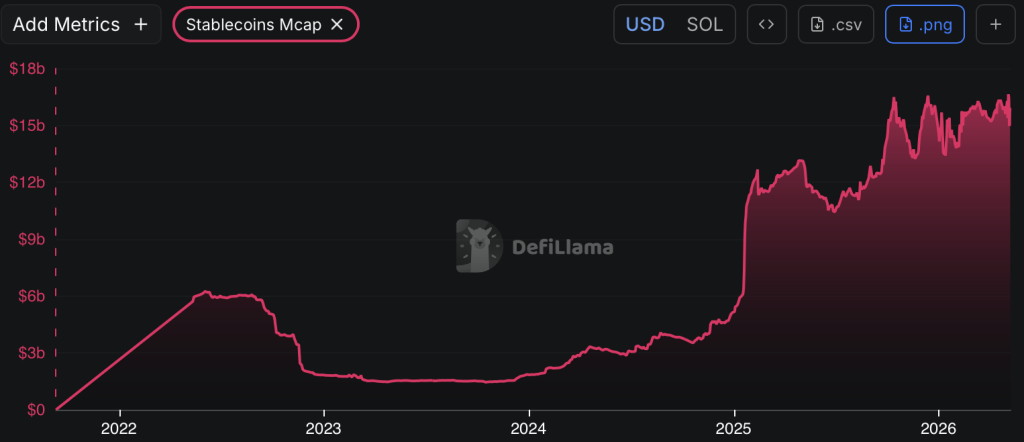
- Despite market weakness, firms like Western Union and J.P. Morgan are still building on Solana.
Solana has taken a brutal hit over the last six months, losing nearly half its value as the broader crypto market slid deeper into correction territory. The token that once benefited heavily from meme coin mania is now dealing with the darker side of that same trend, as projects tied to speculative token launches continue creating legal and reputational headaches for the network.
Still, despite all the negativity surrounding SOL lately, writing the blockchain off completely may be a mistake. Underneath the ugly price action and ongoing controversy, Solana’s infrastructure development and institutional partnerships are quietly telling a much more complicated story.
Meme Coin Frenzy Turned Into a Major Liability
A large part of Solana’s recent problems can be traced back to Pump.fun, the meme coin launchpad that quickly became one of the network’s most recognizable products during the speculative frenzy of 2024 and 2025.
Since launching, Pump.fun reportedly helped create more than 11.9 million meme tokens. The problem is that according to blockchain analytics firm Solidus Labs, roughly 98.6% of those projects displayed rug-pull behavior, where developers drained liquidity and left investors holding essentially worthless coins.
That statistic alone badly damaged Solana’s reputation across broader financial markets. But the situation became even more serious after a federal court approved a class-action lawsuit involving Pump.fun, Solana Labs, and several related projects. The lawsuit alleges market manipulation tied to activities occurring on the network itself.
Now Solana isn’t just fighting weak price action, it’s also dealing with long-term legal uncertainty and growing skepticism from institutional investors who prefer stable ecosystems over speculative chaos.
Those concerns have already started showing up in the numbers too. Spot Solana ETFs, which launched in late 2025, saw total net assets peak above $1.2 billion in January before falling sharply. By May 8, assets had only partially recovered to around $937.8 million.
Meanwhile, decentralized finance activity on Solana also weakened noticeably. Total value locked across the network fell from roughly $13 billion during its September 2025 peak to around $5.5 billion today. When a blockchain becomes heavily associated with scams and failed speculative projects, serious capital tends to pull back pretty fast.
Solana’s Technology Still Attracts Major Institutions
At the same time though, Solana’s underlying infrastructure hasn’t collapsed alongside its reputation. In some ways, the technology itself is actually improving, and that’s continuing to attract serious businesses despite the ongoing controversy surrounding meme coins.
One of the more notable developments came from Western Union, which is reportedly preparing to launch a dollar-backed stablecoin directly on Solana’s blockchain. That’s a pretty significant signal considering Western Union operates inside global payment infrastructure rather than speculative crypto trading culture.
J.P. Morgan’s asset management division is also reportedly working on stablecoin reserve infrastructure tied to Solana. Moves like that suggest large institutions still see long-term value in the network’s speed, scalability, and settlement capabilities despite the current market turbulence.
And honestly, that’s the part many traders seem torn on right now.
On one side, Solana still carries real risks. The legal fallout tied to Pump.fun could take years to fully resolve, and recent price action has reminded investors just how volatile SOL can become during broader market downturns.
Is Solana Still Worth Watching?
For investors trying to evaluate crypto opportunities long term, Solana probably sits closer to the high-risk end of the spectrum compared to more established assets like Bitcoin or Ethereum. The network clearly has unresolved issues surrounding reputation, regulation, and speculative activity.
But at the same time, blockchains attracting this level of institutional development usually do not simply disappear overnight.
The fact that companies like Western Union and J.P. Morgan continue building infrastructure on Solana suggests the market still sees meaningful long-term utility beneath the current noise. Institutional players generally do extensive due diligence before committing resources to blockchain ecosystems, especially after high-profile legal controversies emerge.
That doesn’t guarantee a fast recovery for SOL, of course. Crypto markets remain extremely volatile, and sentiment around Solana may stay fragile for quite a while. Still, beneath the meme coin chaos and sharp correction, there remains a credible argument that Solana’s infrastructure story is far from finished.