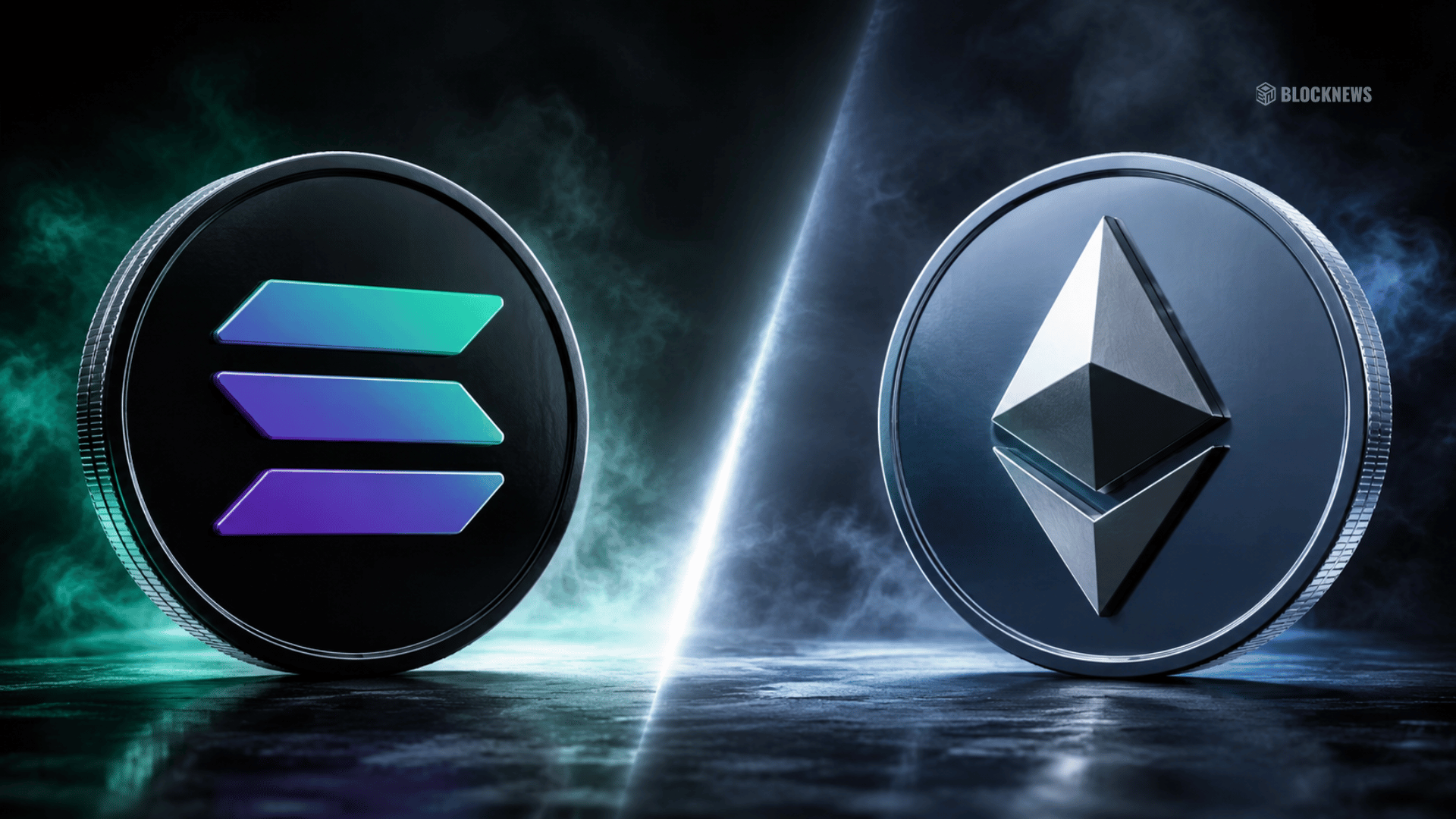
- Solana offers faster transactions and significantly lower fees than Ethereum
- The network has become the dominant hub for memecoin launches and stablecoin activity
- Ethereum still maintains the largest developer ecosystem despite Solana’s rapid growth
Solana has spent the last few years evolving from an “Ethereum competitor” into something much more serious. At this point, the conversation is no longer whether SOL can compete with ETH, it’s about how much market share it can realistically take over the next cycle.
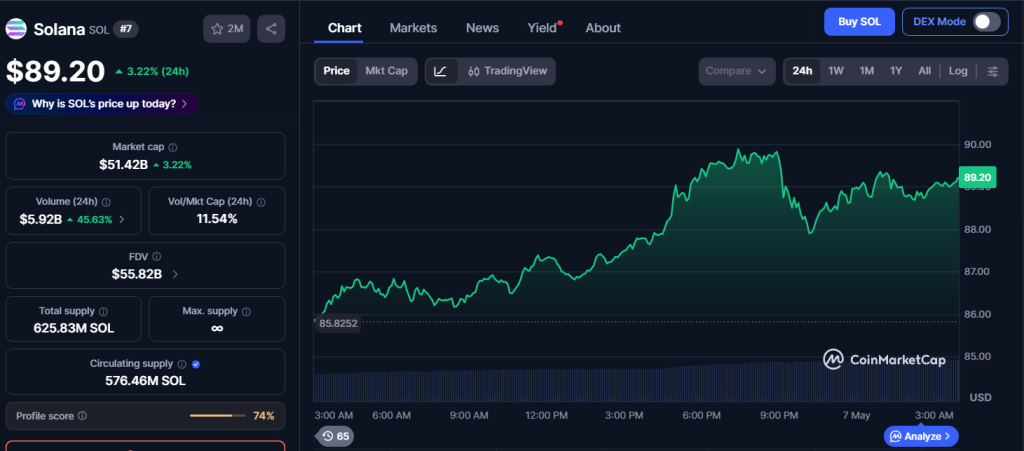
And honestly, some of the momentum is becoming difficult to ignore.
Speed and Fees Still Matter
The biggest advantage Solana continues to hold is simple: user experience.
The network processes transactions dramatically faster than Ethereum’s base layer while keeping fees extremely low. For regular users, traders, and developers, that matters more than ideological debates about decentralization most of the time.
When transactions cost fractions of a cent and settle quickly, activity naturally gravitates there.
Memecoins Turned Solana Into a Retail Magnet
One of the largest shifts happened through memecoins. Solana quietly became the default chain for launching speculative retail tokens, especially through platforms like pump.fun.
Projects such as BONK and other viral tokens helped push enormous user activity toward the network, creating a feedback loop where traders, developers, and liquidity increasingly concentrated in the Solana ecosystem.
Stablecoins Are Expanding Rapidly on SOL
Beyond memecoins, stablecoin adoption is becoming another major growth area.
Western Union recently launched its USDPT stablecoin on Solana, which signals growing institutional confidence in the network’s infrastructure and transaction efficiency. That kind of partnership matters because it expands Solana beyond speculative trading narratives into payment infrastructure discussions.
Solana’s Recovery Changed Perception
The network’s comeback after the 2022 FTX collapse also shifted market psychology significantly.
At one point, many investors assumed Solana would struggle permanently because of its close association with Sam Bankman-Fried and the FTX ecosystem. Instead, SOL recovered aggressively, reclaimed major price levels, and continued attracting developers and users despite the crash.
That resilience gave the project credibility it previously lacked.
Ethereum Still Dominates in Development
At the same time, Ethereum’s position is far from weak.
ETH still controls the largest developer ecosystem in crypto by a wide margin, along with the deepest DeFi infrastructure, institutional integrations, and long-term application development. Most major blockchain innovations still tend to appear on Ethereum first before spreading elsewhere.
That network effect remains extremely powerful.
Solana and Ethereum May End Up Serving Different Markets
What’s increasingly clear is that the two chains may ultimately dominate different parts of the crypto economy rather than fully replacing one another.
Ethereum increasingly resembles institutional-grade financial infrastructure focused on security, tokenization, and large-scale settlement. Solana, meanwhile, excels at speed, consumer applications, payments, gaming, and high-frequency retail activity.
The Flippening Debate Keeps Growing
The idea of Solana eventually overtaking Ethereum used to sound unrealistic. Now it’s becoming a serious discussion among major investors and analysts, especially as SOL continues gaining adoption across trading, payments, and social applications.
Still, overtaking Ethereum completely would require more than price performance alone. It would mean replacing one of the deepest developer and liquidity ecosystems ever built in crypto. That’s a much harder challenge than simply outperforming during a bullish cycle.
Both Networks Are Winning Different Battles
Right now, Solana is clearly winning the momentum conversation. The network feels faster, cheaper, and increasingly more active from a retail perspective.
Ethereum, however, still dominates the long-term infrastructure conversation. And until that changes, the broader crypto market will probably continue treating ETH as the foundational layer while SOL pushes aggressively into the consumer-facing side of blockchain adoption.