
- JPMorgan says major global stock indexes remain in an uptrend, but the risk of a pullback is increasing heading into late summer and early fall.
- Strategist Jason Hunter compared the current AI trading frenzy with the 1999-2000 tech bubble as investors remain heavily concentrated in technology stocks.
- Rising Treasury yields, Middle East tensions, weaker consumer spending and deteriorating U.S. market internals could add pressure.
Global stock markets may still be trending higher, but JPMorgan is warning that conditions are becoming increasingly vulnerable to a correction.
The bank pointed to weakening U.S. market internals and signs that investors are moving toward more defensive assets. Confidence around AI-related stocks has also softened after the sector attracted enormous amounts of capital and became increasingly important to broader market performance.
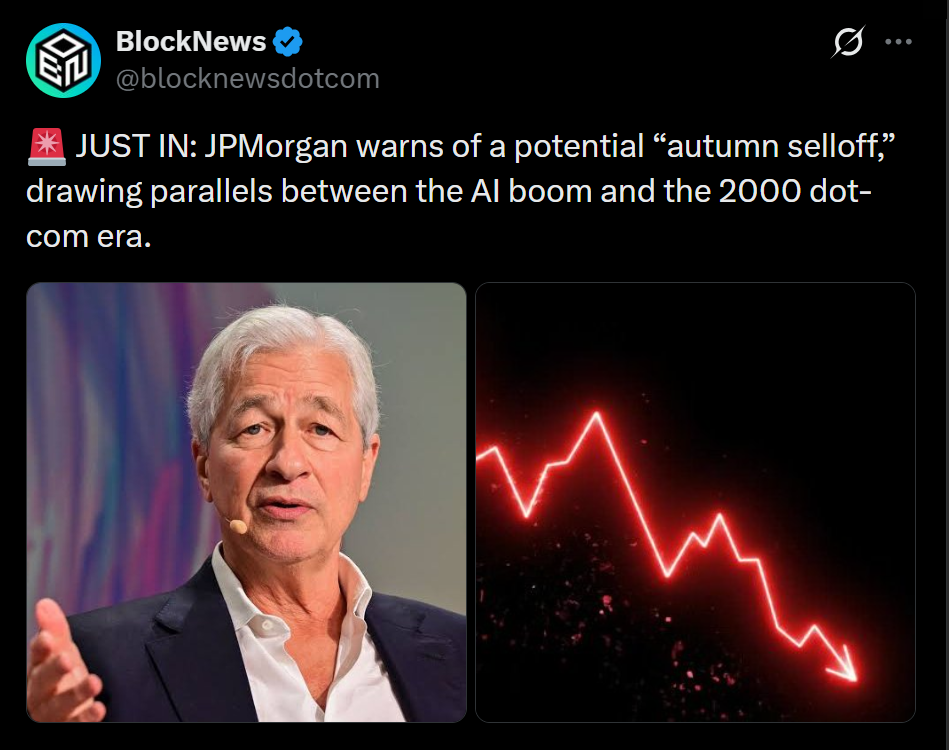
JPMorgan strategist Jason Hunter said the current enthusiasm surrounding AI resembles parts of the technology frenzy seen during the 1999-2000 dot-com bubble. Heavy concentration in a relatively small group of technology companies could amplify losses if sentiment suddenly turns.
AI Trade Faces a Valuation Test
JPMorgan is not arguing that the long-term AI investment cycle is ending. The bank continues to see significant growth potential as companies invest in chips, data centers, software and other AI infrastructure.
The concern is more immediate. Elevated valuations, crowded positioning and high investor expectations leave technology stocks with less room for disappointment.
Even relatively small changes in earnings expectations or AI spending forecasts could therefore create larger price swings.
Treasury Yields Add Pressure
Higher U.S. Treasury yields represent another potential challenge. Rising yields can make bonds more attractive compared with stocks while putting additional pressure on highly valued growth companies.
JPMorgan also pointed to geopolitical tensions in the Middle East and slowing consumer spending as risks that could weaken sentiment.
The bank still sees the broader market uptrend intact, but believes late summer through early fall could bring a more difficult period for equities as investors reassess AI valuations, interest rates and the economic outlook.