

- The U.S. Treasury will at least double the maximum size of certain long-term debt buybacks from $2 billion to $4 billion.
- Treasury yields dropped sharply after the announcement, with the 10-year falling toward 4.65% and the 30-year declining toward 5.20%.
- The program targets stressed longer-duration bonds and is designed to improve market liquidity rather than reduce overall U.S. debt.
The U.S. Treasury is stepping up its intervention in the government bond market after long-term yields climbed toward levels not seen in nearly two decades.
Treasury Secretary Scott Bessent‘s department said it will at least double the maximum size of buyback operations targeting 10- to 20-year and 20- to 30-year securities. Maximum purchases will rise from $2 billion to at least $4 billion, with the expanded program running from Sept. 9 through Nov. 4.
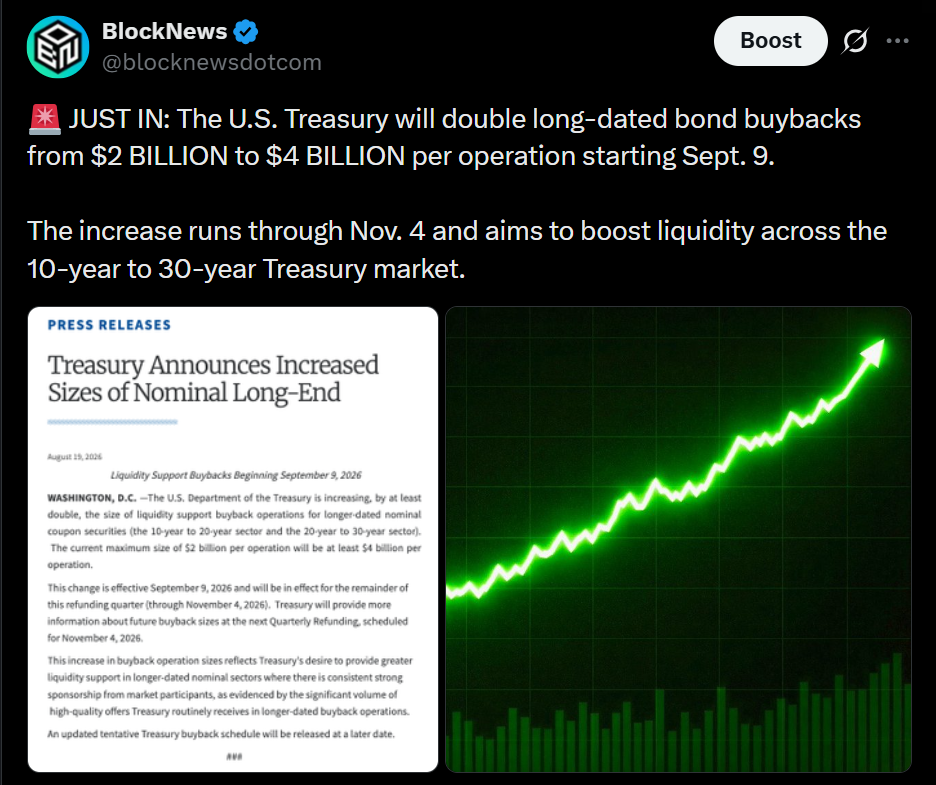
Treasury Yields Drop After Buyback Announcement
Bond markets reacted quickly. The benchmark 10-year Treasury yield dropped around six basis points to roughly 4.65%, while the 30-year yield fell about nine basis points to around 5.20%.
Stock futures also moved higher as investors responded to the decline in borrowing costs.
The move comes after longer-dated Treasuries faced significant selling pressure since late June. Investors have demanded greater compensation for holding long-term government debt amid concerns surrounding supply, term premiums and changing demand for Treasury securities.
Treasury Targets Liquidity Stress
By purchasing more older long-term securities, Treasury aims to inject additional liquidity into parts of the bond market experiencing pressure.
The department said it has consistently received substantial volumes of high-quality offers during longer-duration buyback operations, providing room to increase purchases.
However, the program should not be confused with the government paying down its debt. Treasury is effectively restructuring portions of its outstanding maturity profile rather than reducing the country’s overall debt burden.
The announcement nevertheless sends an important signal to markets: Treasury is willing to increase its presence when liquidity conditions deteriorate. With long-term yields elevated, investors will now watch whether the larger buybacks can stabilize the bond market beyond the initial drop in yields.