

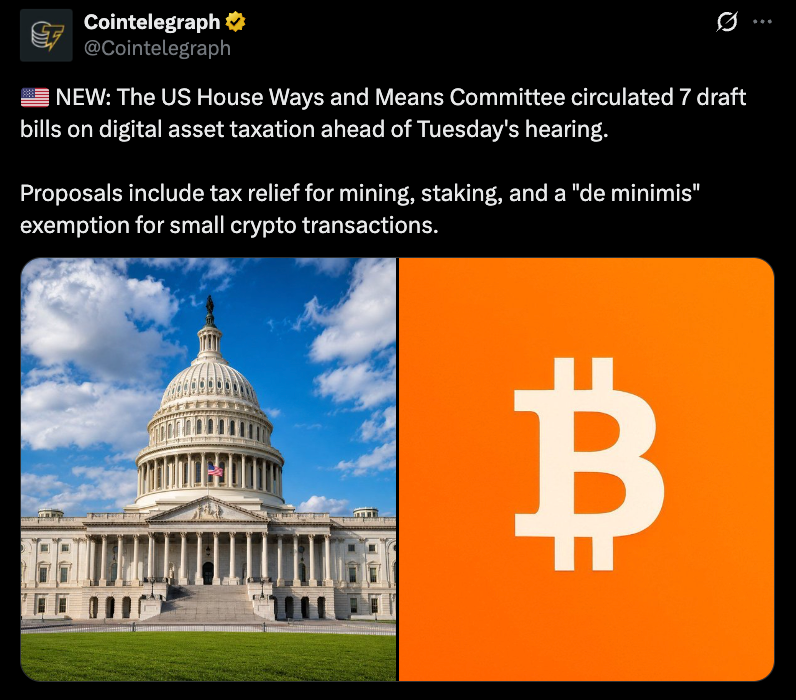
- The House Ways and Means Committee has released seven draft crypto tax bills ahead of a major hearing.
- Proposals include tax relief for staking and mining rewards as well as exemptions for small crypto transactions.
- Lawmakers appear to be moving toward a more modern tax framework tailored to digital assets.
Congress may finally be taking a serious step toward addressing one of the cryptocurrency industry’s biggest frustrations: taxes. Ahead of an upcoming hearing focused on digital asset taxation, the U.S. House Ways and Means Committee circulated seven draft bills that could significantly reshape how crypto transactions are treated under federal tax law.
For years, investors, miners, validators, and everyday crypto users have argued that existing tax rules were designed for traditional financial assets and fail to account for the unique characteristics of blockchain-based activity. The latest proposals suggest lawmakers are beginning to recognize that problem and are exploring ways to modernize the system.
Tax Relief for Miners and Stakers
One of the most closely watched proposals focuses on cryptocurrency mining and staking rewards. Under current IRS guidance, rewards earned through mining or staking are generally treated as taxable income at the moment they are received, regardless of whether the recipient sells the assets.
Many crypto participants have criticized this approach, arguing that it can create tax obligations before they have generated any actual cash proceeds. Several of the draft proposals would modify how these rewards are taxed, potentially allowing taxpayers to defer recognition or receive other forms of relief that better align taxation with realized gains.
If enacted, such changes could provide significant benefits for miners and validators operating within blockchain networks.
Small Transactions Could Become Easier
Another proposal attracting considerable attention is the introduction of a “de minimis” exemption for small cryptocurrency transactions. Under current rules, even minor purchases made with crypto can technically trigger taxable capital gains events, creating substantial recordkeeping burdens for everyday users.
The proposed exemption would eliminate taxation on smaller transactions, potentially allowing consumers to use digital assets for routine purchases without calculating gains and losses for every transaction. Supporters argue that such a change could improve the practicality of using cryptocurrency as a payment method while reducing compliance headaches.
For many crypto users, this proposal could represent one of the most meaningful changes currently under consideration.
Broader Efforts to Modernize Crypto Tax Rules
The draft legislation extends beyond staking and small transactions. Additional proposals reportedly address issues involving hard forks, wash sale rules, blockchain accounting practices, and other areas where existing tax guidance remains unclear or incomplete.

Taken together, the proposals reflect a broader effort to create a tax framework that better accommodates digital asset activity. Rather than forcing crypto into outdated regulatory categories, lawmakers appear to be exploring rules specifically designed for blockchain-based assets and transactions.
From Debate to Policy Development
While none of the proposals have become law, the release of draft legislation before a committee hearing signals that lawmakers are actively seeking industry feedback and preparing for more substantive policy discussions.
The road ahead remains lengthy. The bills will still need to navigate committee reviews, amendments, lobbying efforts, House and Senate votes, and potential revisions before any changes reach the President’s desk. Nevertheless, the process has clearly advanced beyond general discussions and into active legislative development.
For crypto investors who have spent years waiting for clearer tax rules, that alone may represent meaningful progress. Whether these proposals ultimately become law remains uncertain, but Congress appears increasingly focused on building a framework that reflects how digital assets actually function in today’s economy.