

- Ethereum rallied to a three-month high before seeing slight profit-taking from large holders
- Whale activity has increased selling pressure, but overall demand remains strong
- ETH could continue higher if momentum holds, though downside risk persists if selling grows
Ethereum has been on a steady climb lately, pushing up to around $2,466—a level not seen since late January—before easing back slightly. At the time of writing, ETH sits near $2,404, still up close to 3% on the day and holding onto solid weekly gains. It’s a strong move, no doubt… but underneath that rally, something else is happening.
As price rises, larger players—whales, institutions—are starting to take profits. That’s not unusual, but it does add a layer of tension to what otherwise looks like a clean uptrend.
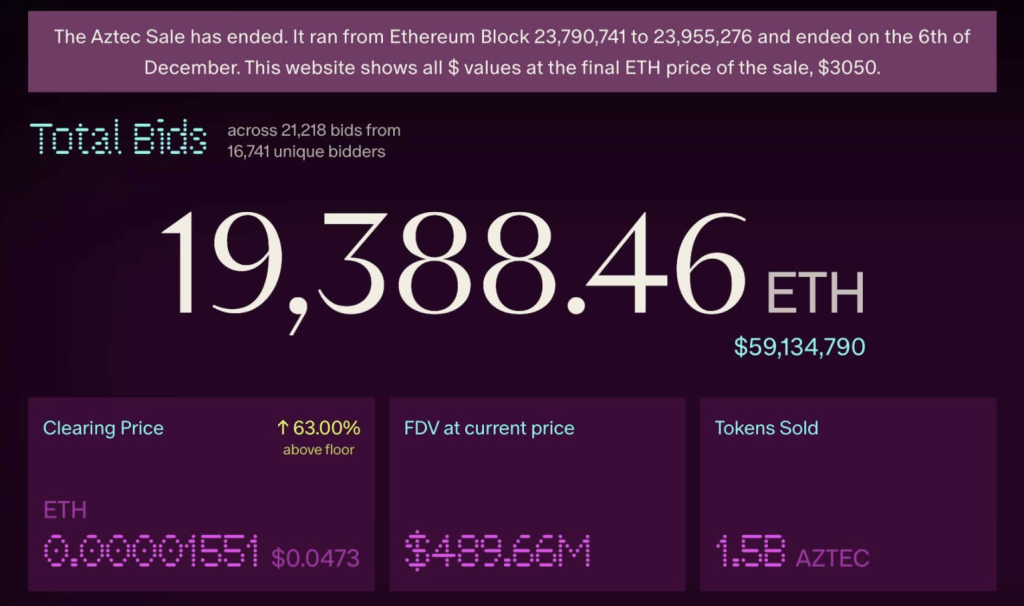
Aztec Network Fully Exits Its ETH Position
One of the more notable moves came from Aztec Network, which has been quietly offloading its Ethereum holdings over the past few months. It started back in December, when the team sold a large batch of AZTEC tokens in exchange for nearly 19,400 ETH, worth roughly $59 million at the time.
From that, a portion—about 4,200 ETH—was allocated to liquidity pools, while the rest was gradually sold off. Recently, they completed their exit with a final sale of just over 5,000 ETH, closing the position entirely. It feels calculated… not rushed, more like a structured unwind.
The likely reasoning? Profit-taking, sure, but also funding operations while maintaining some ecosystem support. It’s not necessarily bearish—but it does add supply to the market.
Other Whales Follow a Similar Path
Aztec isn’t alone here. Another wallet linked to Arthur Hayes reportedly moved around 3,000 ETH—worth over $7 million—onto Binance. Combined with Aztec’s activity, that’s over 8,000 ETH entering the market, which isn’t insignificant.
Historically, when large holders start selling into strength, it can weigh on price… at least in the short term. Not always immediately, but the effect tends to build if selling continues.
Demand Still Holds Despite Selling Pressure
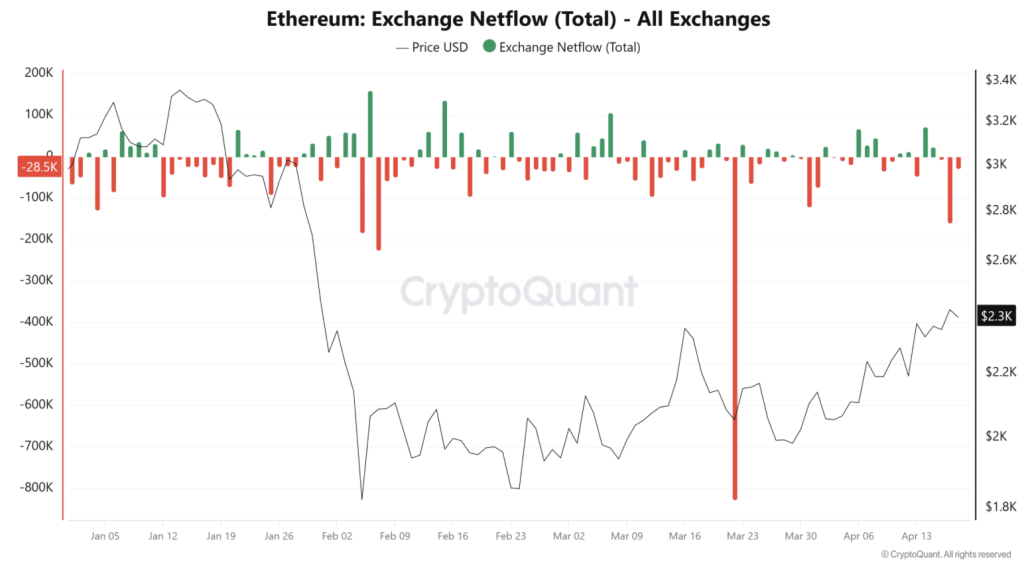
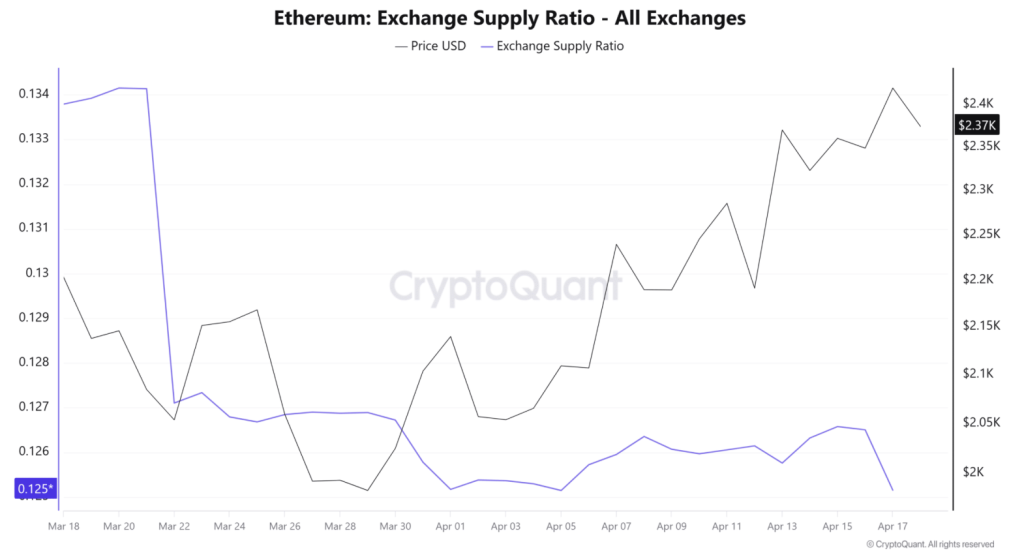
What’s interesting, though, is that demand hasn’t really weakened. In fact, exchange data suggests the opposite. On April 17 alone, over 1.1 million ETH left exchanges, while about 956,000 flowed in—resulting in a net outflow.
That pushed Exchange Netflow deeper into negative territory, which usually signals accumulation rather than distribution. Fewer coins sitting on exchanges means less immediate selling pressure… at least from retail and mid-sized holders.
The Exchange Supply Ratio tells a similar story. It has dropped close to monthly lows, suggesting that more traders are pulling assets off exchanges—often a sign they’re planning to hold rather than sell.
Momentum Stays Positive, But Risks Remain
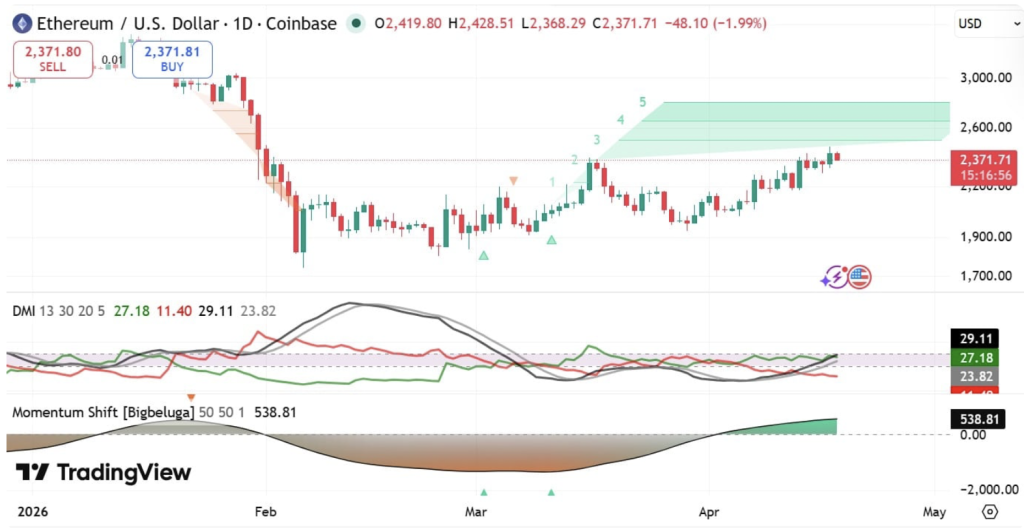
Technically, Ethereum still looks strong. Momentum indicators are aligned in a bullish way, with the Directional Movement Index showing buyers in control. The positive trend line is climbing, while the negative one continues to fade… which usually points to continuation.
If this structure holds, ETH could trade within the $2,400 to $2,800 range in the near term, maybe testing higher levels if demand keeps up. But there’s a catch—if whales continue to offload aggressively, that could shift the balance.
In that case, a pullback toward $2,170 isn’t out of the question. Not guaranteed, just… possible.
For now, Ethereum sits in a familiar place—strong momentum on one side, quiet profit-taking on the other. And whichever side gains the upper hand next… that’s likely where price follows.