

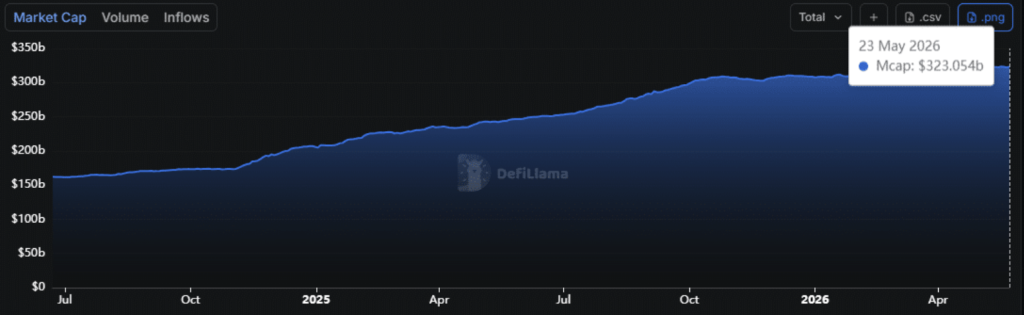
- Stablecoin market cap surged to a new all-time high near $323 billion, boosting crypto liquidity.
- Ethereum’s ETH/BTC ratio remains weak, though historical trends suggest liquidity could help stabilize ETH.
- Rising staking levels and strategic accumulation may tighten ETH supply heading into the next market phase.
For Layer-1 blockchains, liquidity still separates the strong from the weak whenever markets turn defensive. When traders become cautious and capital starts rotating out of speculative plays, the networks with real usage and deeper liquidity usually hold up better. That pattern has been showing itself again lately, especially as the real-world asset sector pushed toward a fresh all-time high above $30 billion despite broader market volatility. Money is still moving, just more selectively now, and investors appear to be favoring ecosystems with stronger fundamentals underneath the surface.
At the same time, stablecoin growth keeps accelerating at a pace that’s difficult to dismiss. According to DeFiLlama data, more than $3 billion flowed into stablecoins this month alone, lifting the total stablecoin market cap to roughly $323 billion. That’s a massive pool of liquidity sitting inside crypto markets, and naturally, Ethereum remains right at the center of it. The network still dominates stablecoin activity across decentralized finance, which makes these inflows especially relevant for ETH. Timing-wise, this could matter more than people think.
Ethereum’s Weakness Against Bitcoin Raises Questions
Ethereum hasn’t exactly looked strong relative to Bitcoin lately though. The ETH/BTC ratio has dropped more than 8% during May, making this Ethereum’s weakest month against Bitcoin since January. That decline wasn’t happening in isolation either. During the same stretch, Ethereum’s stablecoin market cap fell by over $4 billion, sliding back toward levels last seen before October 2025 at around $158 billion. Historically, Ethereum’s relative strength versus Bitcoin has often moved alongside stablecoin liquidity trends, so the pullback caught attention pretty quickly.
Now, however, stablecoin market capitalization is surging back toward new highs again. That creates an interesting setup because if the historical correlation remains intact, Ethereum could eventually regain some momentum against Bitcoin as liquidity conditions improve. Markets rarely move in straight lines, obviously, but the relationship between stablecoin expansion and Ethereum strength has shown up enough times that traders are watching it closely again. Maybe this becomes the turning point, maybe not, but the timing feels important.
Whale Selling Meets Aggressive Ethereum Accumulation
Ethereum’s recent pressure against Bitcoin also came with softer on-chain signals. According to Lookonchain data, one whale unloaded roughly 20,000 ETH during the recent weakness, adding extra downside pressure to the ETH/BTC ratio. Yet almost immediately, BitMine stepped in and accumulated 60,000 ETH as prices dipped closer toward the $2,000 zone. That kind of activity tells a bigger story honestly. Large players are clearly positioning themselves on both sides of the market, and that usually happens near important inflection points.
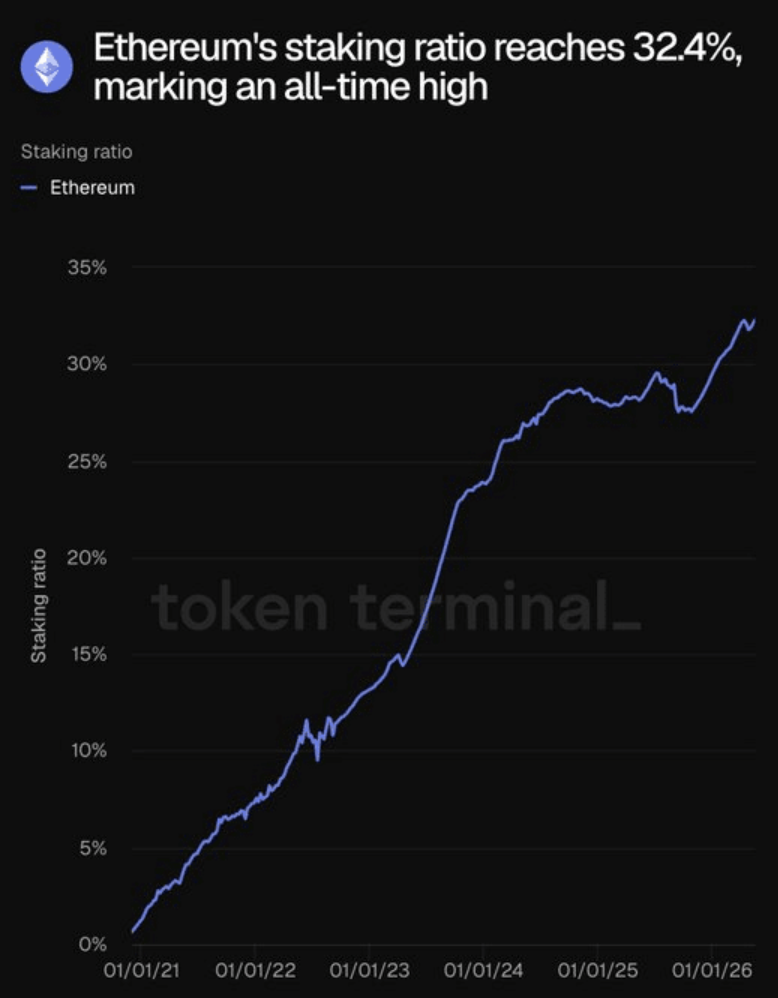
More importantly, Ethereum’s staking ratio climbed to a fresh all-time high of 32.4% during this same period. That matters because it means more ETH is being locked away instead of remaining freely tradable on exchanges. Even while volatility continues shaking prices around, the liquid supply available to the market keeps tightening. In simple terms, there may actually be less ETH circulating just as stablecoin liquidity across crypto expands again. That combination could become pretty significant if demand starts heating up later in the cycle.
Ethereum Could Be Approaching a Key Turning Point
Technically speaking, ETH/BTC now sits in a delicate position. The ratio has posted seven consecutive weeks of declines, including another 1.27% drop this week alone. Momentum still favors Bitcoin right now, no question there. But underneath the surface, several conditions are beginning to shift. Rising stablecoin liquidity, higher staking participation, steady accumulation from strategic buyers, and continued on-chain activity all suggest Ethereum may be approaching stabilization rather than outright collapse.
If liquidity keeps flowing into crypto markets and Ethereum maintains its dominance across decentralized finance and stablecoins, the current weakness against Bitcoin may not last forever. That doesn’t guarantee an immediate reversal, obviously, but historically these kinds of setups have often preceded stronger relative performance phases for ETH later on. For now, Ethereum appears caught between short-term pressure and longer-term structural strength — and honestly, that tension could define the next stage of this cycle.