

- Bitcoin has remained above the important $60,000 support level despite a difficult year for crypto markets.
- The proposed Clarity Act could become a major catalyst by providing regulatory clarity for digital assets.
- While sentiment has improved slightly, Bitcoin remains a high-risk investment that could see significant volatility.
The crypto market has lost much of the excitement that fueled previous rallies. Bitcoin, the industry’s largest digital asset, has struggled through much of 2026 and remains down roughly 27% year-to-date. For many investors, that decline has reinforced concerns that the broader market may still be searching for a bottom.
Yet beneath the surface, there are signs that Bitcoin may be stabilizing. The world’s largest cryptocurrency still commands a market capitalization of around $1.3 trillion, giving it a unique position within the digital asset sector. When positive developments arrive, Bitcoin is often the first asset investors turn to, and that could matter in the months ahead.
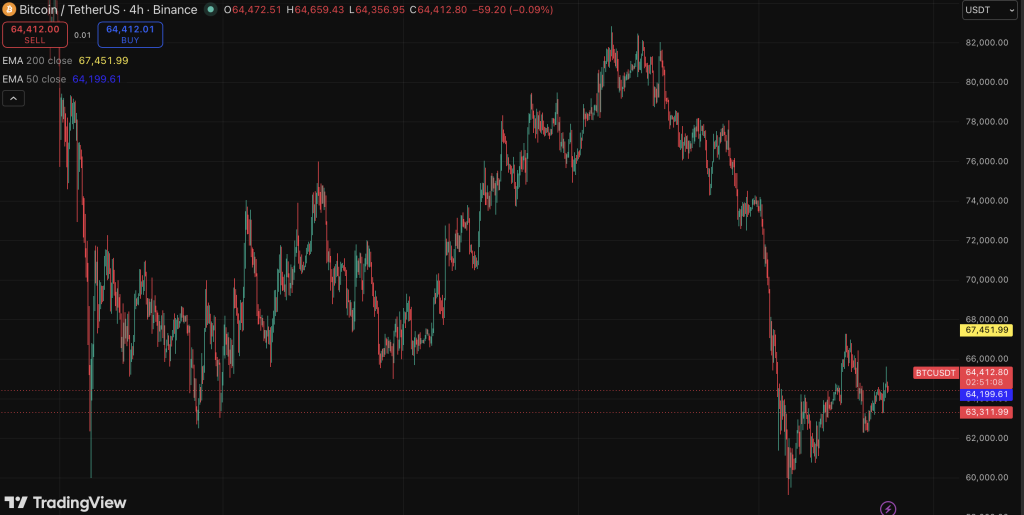
Bitcoin Continues Defending the $60,000 Level
One of the more encouraging developments for Bitcoin bulls has been its ability to remain above the $60,000 mark. Earlier this month, the cryptocurrency briefly dipped below that level before buyers stepped in and pushed prices higher.
That rebound wasn’t just another short-term bounce.
Psychological support levels often play an important role in market sentiment, and Bitcoin’s ability to reclaim and hold above $60,000 suggests there is meaningful demand in that area. Since then, BTC has continued trading relatively steadily, recently climbing above $64,000.
The move does not confirm a new bull market. Not yet, anyway. But it does suggest that sellers have not been able to force a deeper breakdown despite ongoing uncertainty across financial markets.
For investors looking for signs of stability, that’s something worth paying attention to.
The Clarity Act Could Become a Major Catalyst
Beyond technical support levels, many market participants are focused on a potential regulatory catalyst that could reshape the digital asset landscape.
The Digital Asset Market Clarity Act has emerged as one of the most closely watched pieces of crypto legislation. The bill has already reached the Senate floor and could potentially move forward later this year.
Its purpose is relatively straightforward: establish a clearer regulatory framework for cryptocurrencies and digital assets.
That may sound boring compared to price predictions and meme coin rallies, but regulatory clarity often matters more than hype. Financial institutions, corporations, and investment firms generally prefer operating within clearly defined legal structures. The absence of those rules has been a major obstacle for broader adoption.
If the legislation passes, it could encourage greater institutional participation across the crypto market. And because Bitcoin remains the most recognized digital asset globally, it would likely be among the biggest beneficiaries.

Why Regulation Matters for Bitcoin
For years, one of the largest criticisms of cryptocurrency has been regulatory uncertainty. Investors, especially large institutions, have often hesitated to commit significant capital because future rules remained unclear.
The Clarity Act aims to address some of those concerns.
A clearer framework could make it easier for banks, investment managers, and corporations to participate in the digital asset economy. More importantly, it could help legitimize the sector in the eyes of investors who have remained skeptical.
That does not guarantee immediate price gains. Markets rarely move in a straight line, and even positive legislation can produce unexpected reactions.
Still, many analysts believe regulatory clarity could become one of the strongest long-term catalysts for Bitcoin and the broader crypto industry.
Bitcoin Remains a High-Risk Asset
While there are reasons for optimism, investors should not confuse recent stability with safety.
Bitcoin remains one of the most volatile assets available in public markets. Large price swings can occur with very little warning, and sentiment can shift rapidly depending on economic conditions, regulation, or broader market events.
There is also the possibility that the Clarity Act faces delays. Political negotiations are rarely predictable, and legislative timelines can change quickly. If investors become overly optimistic about near-term approval and the process stalls, Bitcoin could face renewed selling pressure.
That’s one reason some investors prefer waiting for confirmation rather than positioning ahead of uncertain regulatory outcomes.
Is Now the Right Time to Buy?
The answer depends largely on an investor’s risk tolerance.
Bitcoin has shown resilience by holding above $60,000, and potential regulatory progress provides a reason for cautious optimism. At the same time, the cryptocurrency remains highly speculative and can experience significant drawdowns even during broader recovery phases.
Importantly, holding above support does not necessarily mean Bitcoin has found its ultimate bottom. Markets can revisit key levels multiple times before establishing a lasting trend.
For investors seeking diversification, a modest allocation may be more appropriate than an aggressive position. Many portfolio managers who support cryptocurrency exposure still advocate limiting allocations to a relatively small percentage of total investments.
The Bigger Picture for Bitcoin
Despite its challenges in 2026, Bitcoin remains the dominant force within the cryptocurrency market. Its scale, liquidity, and institutional recognition continue separating it from most other digital assets.
The combination of strong support near $60,000 and the possibility of meaningful regulatory progress has given bulls something to work with. Whether that translates into a sustained recovery remains uncertain, but the ingredients for improved sentiment are beginning to emerge.
For now, Bitcoin appears to be in a waiting phase. The market is looking for confirmation, whether that comes through stronger price action, regulatory breakthroughs, or renewed institutional demand. Until then, cautious optimism may be the most reasonable approach.