- OpenAI has confidentially filed paperwork for a potential IPO, though the company says it may remain private for now.
- OpenAI joins a growing list of highly anticipated offerings that could include Anthropic and SpaceX.
- Large IPOs often compete for the same investment capital that flows into crypto and other risk assets.
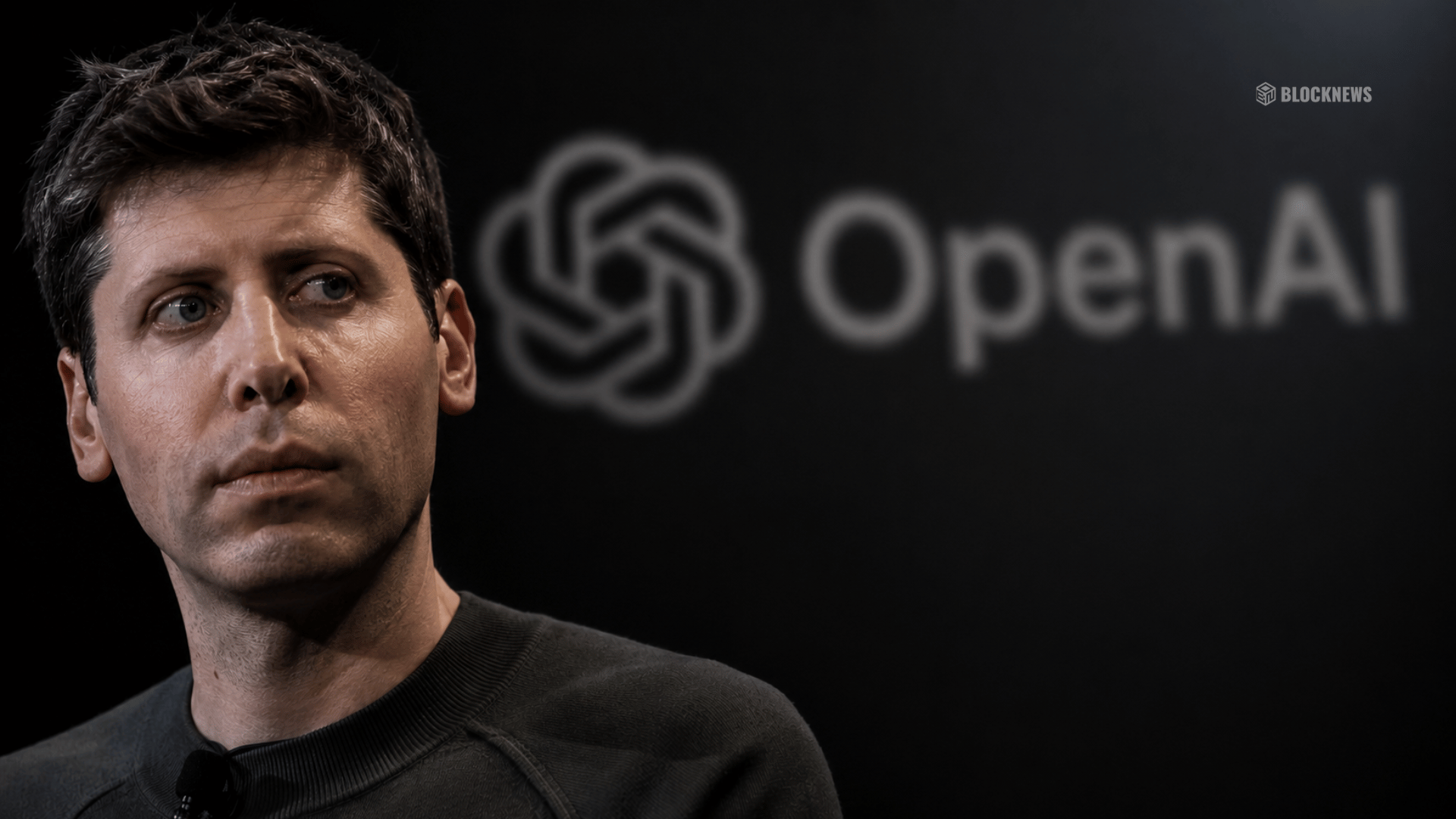
OpenAI quietly made a significant move this week by confirming that it has confidentially submitted an S-1 filing with the U.S. Securities and Exchange Commission. While the filing represents the first formal step toward a public offering, the company was careful to emphasize that an IPO is not guaranteed anytime soon.
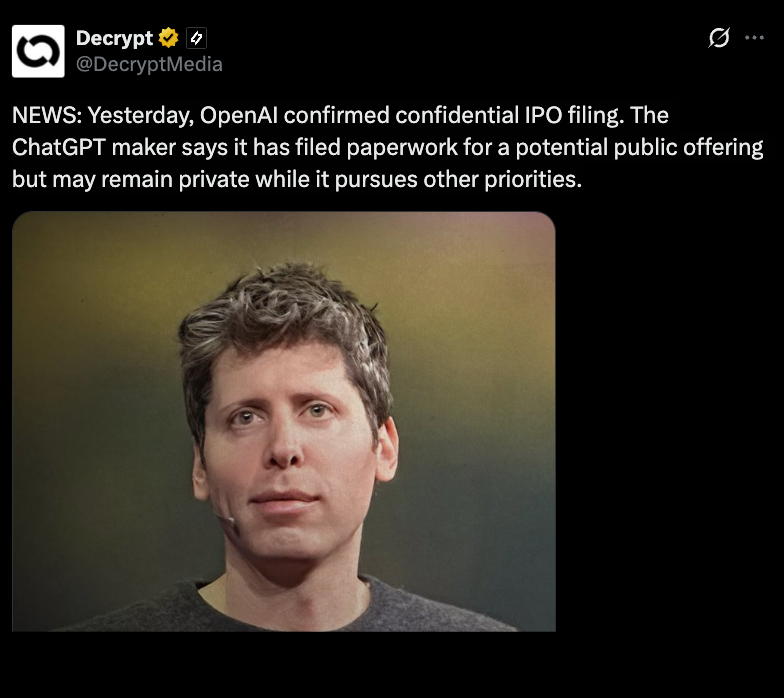
Management indicated that remaining private could still be the preferred path while OpenAI continues pursuing long-term strategic goals. Even so, the filing immediately caught the attention of investors across multiple markets. While many view it as a technology and stock market story, the potential ripple effects could extend far beyond Wall Street.
Why Crypto Investors Should Care
At first glance, OpenAI’s IPO ambitions may seem unrelated to Bitcoin, Ethereum, or the broader digital asset market. However, large public offerings often have consequences that reach well beyond the equity markets where they debut.
OpenAI joins a growing list of private giants reportedly exploring public market opportunities. Anthropic, SpaceX, and several other high-profile companies are also attracting investor attention, and together these firms could seek well over $100 billion in fresh capital. That represents a substantial amount of money, even by institutional investment standards.
When major IPOs arrive, investors frequently reallocate capital from other sectors to participate in the new listings. Historically, speculative and growth-oriented assets, including cryptocurrencies, can experience temporary liquidity pressures as capital shifts toward highly anticipated public offerings.
Competition for Capital Is Increasing
Institutional investors operate within finite capital pools. Pension funds, hedge funds, family offices, and asset managers must constantly decide where to allocate resources. If some of the world’s most valuable private technology companies become available to public investors, many institutions may choose to redirect capital toward those opportunities.
That does not necessarily mean crypto markets will suffer, but it does create another competitor for investor attention and funding. Bitcoin, AI stocks, growth equities, and venture-backed technology companies are increasingly competing for allocations from the same pool of risk-oriented capital.

As a result, crypto investors may need to pay closer attention to developments in traditional financial markets than ever before.
The Broader Signal Could Be Positive
Despite concerns about liquidity rotation, the bigger picture may actually be constructive for risk assets. Large-scale IPO activity typically occurs during periods when investor confidence is strong and capital remains abundant. Markets generally do not support massive public offerings when fear dominates sentiment or liquidity is scarce.
If companies such as OpenAI, Anthropic, and SpaceX successfully attract significant demand, it could indicate that investors remain willing to deploy capital aggressively into growth opportunities. In that scenario, both equities and digital assets could benefit from a healthy risk-on environment.
The enthusiasm surrounding AI, technology, and innovation does not necessarily come at the expense of crypto. In some cases, strong investor appetite can lift multiple sectors simultaneously.
A Development Worth Watching
OpenAI’s confidential filing does not guarantee an immediate public offering, but it highlights an important trend. Competition for investor capital is growing as some of the world’s most valuable private companies prepare for potential market debuts.
For crypto investors, the lesson is simple. Watching Bitcoin and digital asset trends remains important, but so does monitoring Wall Street’s IPO pipeline. When companies with valuations reaching into the hundreds of billions begin seeking public capital, the effects rarely stay confined to a single market.