- Wrapped XRP on Solana allows users to access DeFi without selling their XRP
- The integration expands XRP utility into trading, liquidity, and yield opportunities
- Cross-chain access could help XRP reach new users and grow beyond its payment-focused role
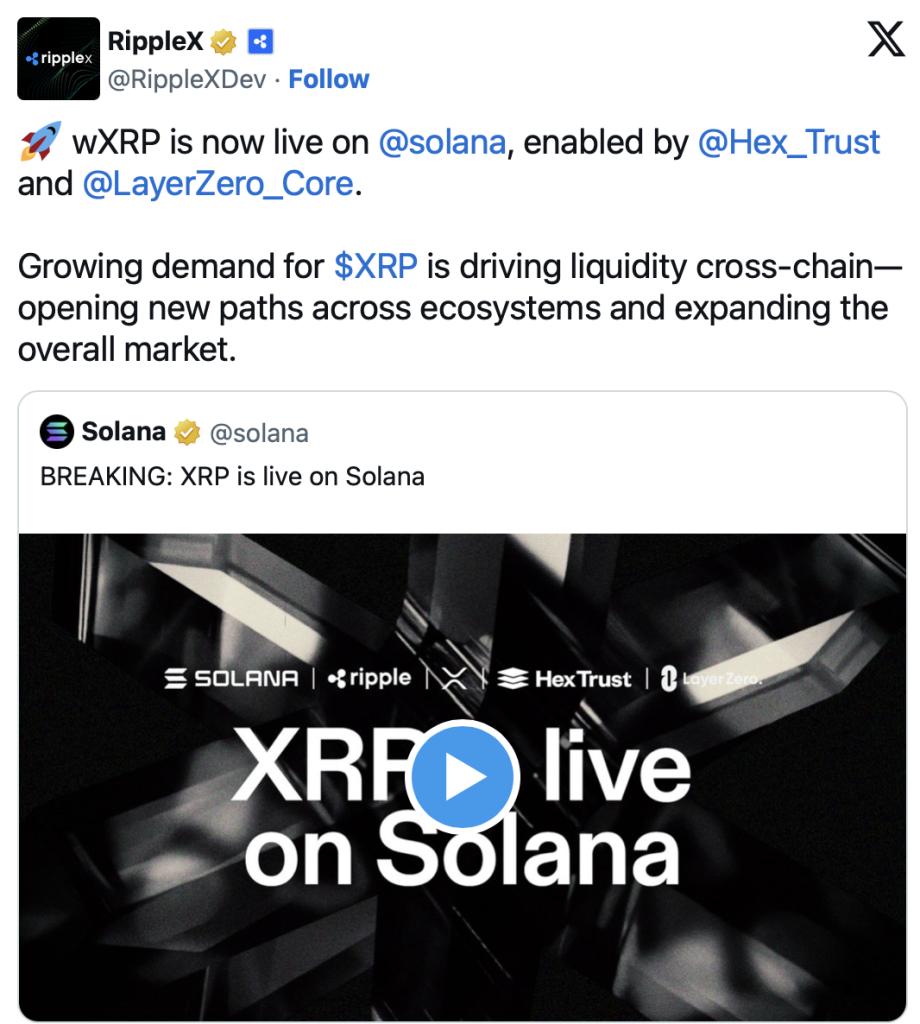
XRP is starting to stretch beyond its usual role, and this time the shift feels… a bit more tangible. Ripple CEO Brad Garlinghouse recently pointed out that demand for XRP is rising, and it’s not just talk—it’s tied to real expansion across different blockchain ecosystems. The latest move? Wrapped XRP, or wXRP, going live on Solana.
It’s a subtle change on the surface, but it opens up something bigger. Instead of XRP being limited to its own network, it can now move into Solana’s DeFi space without holders needing to sell their original tokens. That alone changes how people can use it.
Wrapped XRP Opens the Door to DeFi
The structure behind wXRP is fairly straightforward. Each token is backed 1:1 by real XRP, held in custody by Hex Trust, while LayerZero handles the cross-chain mechanics that make it all work. So users can move into Solana, use XRP in DeFi apps, and still maintain exposure to the original asset.
And importantly, it’s reversible. At any time, wXRP can be redeemed back into native XRP, which helps keep pricing aligned between the two. It’s not a new concept in crypto, but applying it here gives XRP access to a whole new layer of functionality—trading, liquidity pools, yield generation… things it didn’t really have before.
Market Reacts, But Quietly
Since the announcement, XRP has climbed over 7% on the week, now hovering around $1.45. Solana has also seen a smaller lift, moving up a few percentage points to the high $80s. It’s not explosive, but it shows the market is at least paying attention.
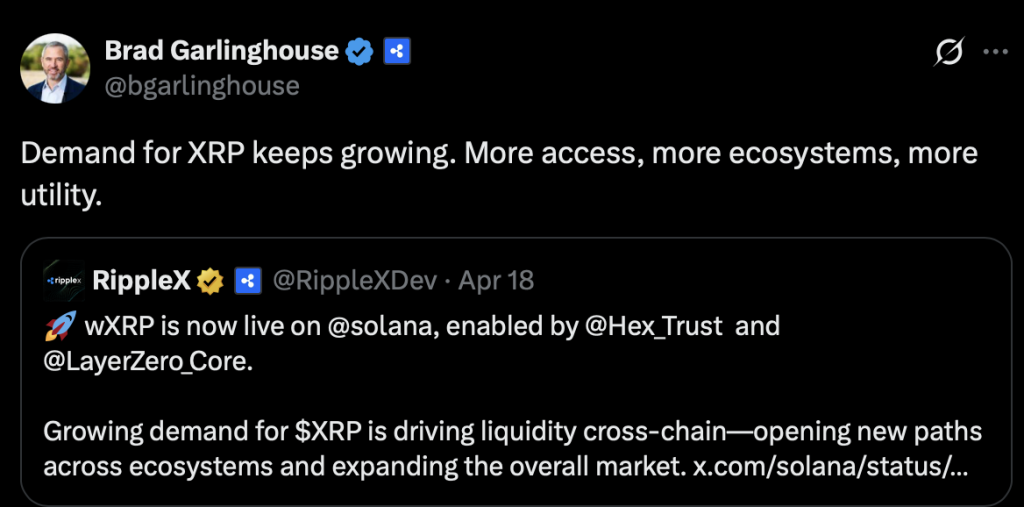
Garlinghouse framed the move as part of a bigger trend—more access, more ecosystems, more utility. And that seems to be the direction XRP is heading. It’s no longer just about payments; it’s slowly stepping into broader financial use cases.
Solana Brings a New Audience Into Play
One of the more interesting angles here is access. By moving onto Solana, XRP suddenly becomes visible to a different group of users—people who are already active in DeFi but may not have interacted with XRP before. Platforms like Jupiter, Phantom, Meteora, and others now support wXRP, which means it’s being plugged directly into existing liquidity and trading systems.
That matters because Solana has built a strong base around on-chain activity. High usage, fast transactions, and a growing DeFi ecosystem… it’s a different environment compared to XRP’s traditional focus on payments.
A Step Toward Multi-Chain Utility
This kind of expansion isn’t entirely new in concept. There’s been talk for a while about bringing XRP into other ecosystems, and figures like David Schwartz have supported the idea. But now it’s not just a plan—it’s live, usable, and already being integrated into real applications.
If this continues, XRP could evolve into something more flexible… less tied to a single network, more connected across multiple chains. And that shift—from isolated utility to cross-chain presence—might end up being one of the more important developments for the asset going forward.