- The U.S. economy unexpectedly lost jobs in July, sharply reducing expectations for a Federal Reserve interest rate hike in September.
- Prediction markets and Fed funds futures now favor the Fed keeping rates unchanged next month.
- July inflation data due Aug. 12 could ultimately determine whether policymakers hold rates steady or revive the case for another hike.
The Federal Reserve‘s next interest rate decision suddenly looks more complicated after the U.S. economy unexpectedly shed jobs in July. The weaker labor market data quickly changed investor expectations, with markets now increasingly betting that policymakers will leave rates unchanged at their September meeting.
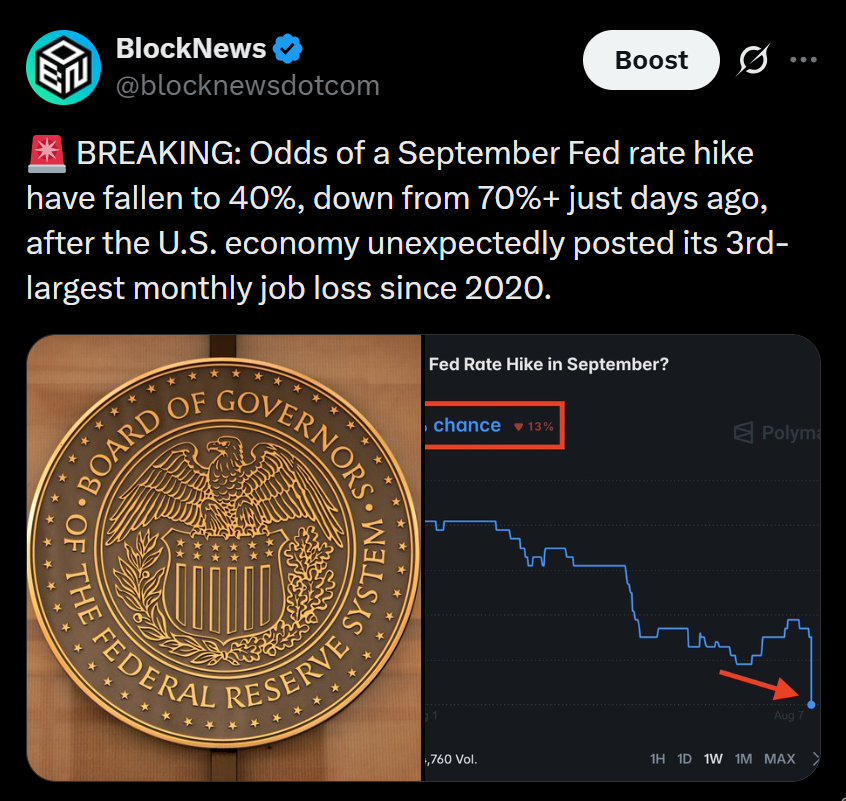
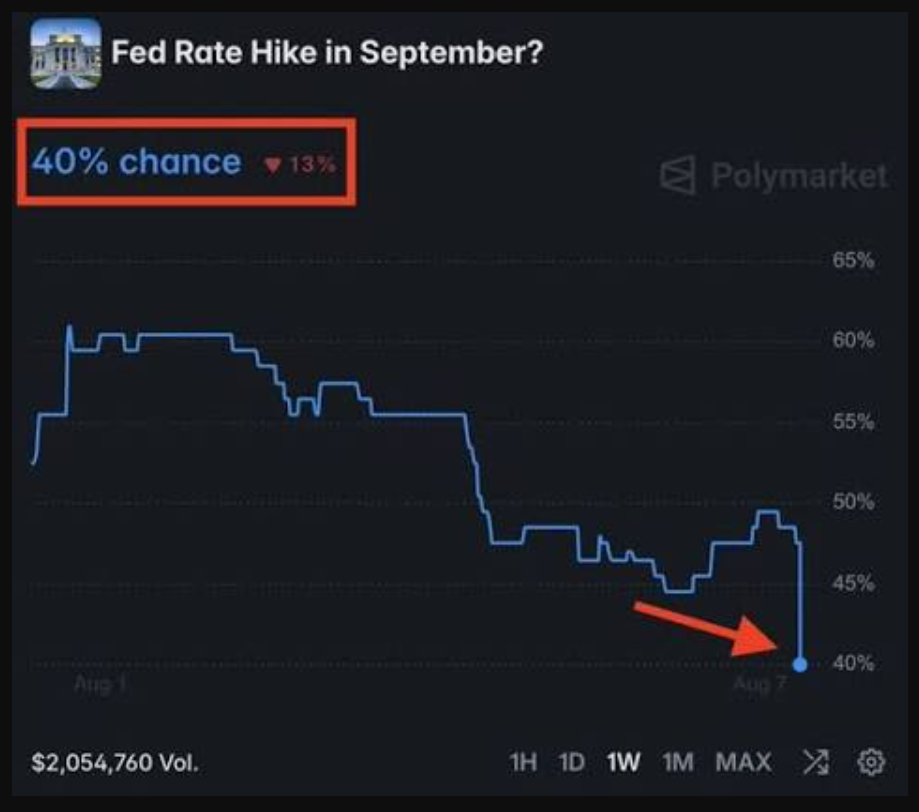
Following Friday’s employment report, Polymarket traders placed the probability of the Fed holding rates steady at roughly 40%. Before the data arrived, expectations had been close to evenly divided between a hike and no change.
Fed Rate Hike Expectations Fall Quickly
The shift was also visible in Fed funds futures. CME’s FedWatch tool showed around a 60% probability that rates would remain unchanged in September, compared with 45% on Thursday and roughly one-in-three a week earlier.
Immediately after the Fed’s July meeting, markets had assigned nearly a 58% probability to another rate increase.
The weaker jobs numbers pushed Treasury yields lower while stocks moved higher as investors adjusted to the possibility that monetary policy may remain unchanged for longer.
Weak Jobs Complicate the Fed’s Inflation Fight
The Federal Reserve has been balancing persistent inflation against the risk that higher borrowing costs could weaken the economy.
Three Federal Open Market Committee members dissented at the July meeting and favored raising rates rather than keeping them unchanged. Higher energy prices associated with the U.S.-Iran conflict have contributed to concerns that inflation could remain elevated.
Those arguments were easier to make while employment remained resilient. If the labor market is now weakening, another rate increase could create additional pressure on businesses, consumers, and employment.
That leaves the Fed facing a difficult trade-off: keeping rates unchanged could allow inflation pressures to persist, while raising rates could deepen an emerging slowdown in the labor market.
July Inflation Could Decide September’s Move
Investors are now turning their attention toward the July Consumer Price Index report scheduled for Aug. 12.
June delivered encouraging inflation data, with consumer prices recording their largest month-over-month decline in six years. However, oil prices increased during July as tensions in the Middle East intensified, potentially complicating the inflation picture again.
Morgan Stanley Wealth Management chief economic strategist Ellen Zentner said the weak payroll report reduces pressure on the Fed to raise rates in September, but inflation will probably remain the deciding factor.
A hotter-than-expected CPI report could revive the case for higher rates even with signs of labor market weakness.
Rate Hikes Are Still Possible Later in 2026
A September pause would not necessarily mean the Federal Reserve has finished raising rates.
Following the employment report, FedWatch continued to indicate roughly a 55% probability of a rate hike by October and nearly a 75% probability by December.
Markets are therefore shifting toward a delayed-hike scenario rather than completely abandoning expectations for tighter monetary policy. The next major signal arrives with the Aug. 12 inflation report, which could determine whether July’s employment weakness is enough to keep the Fed on hold.