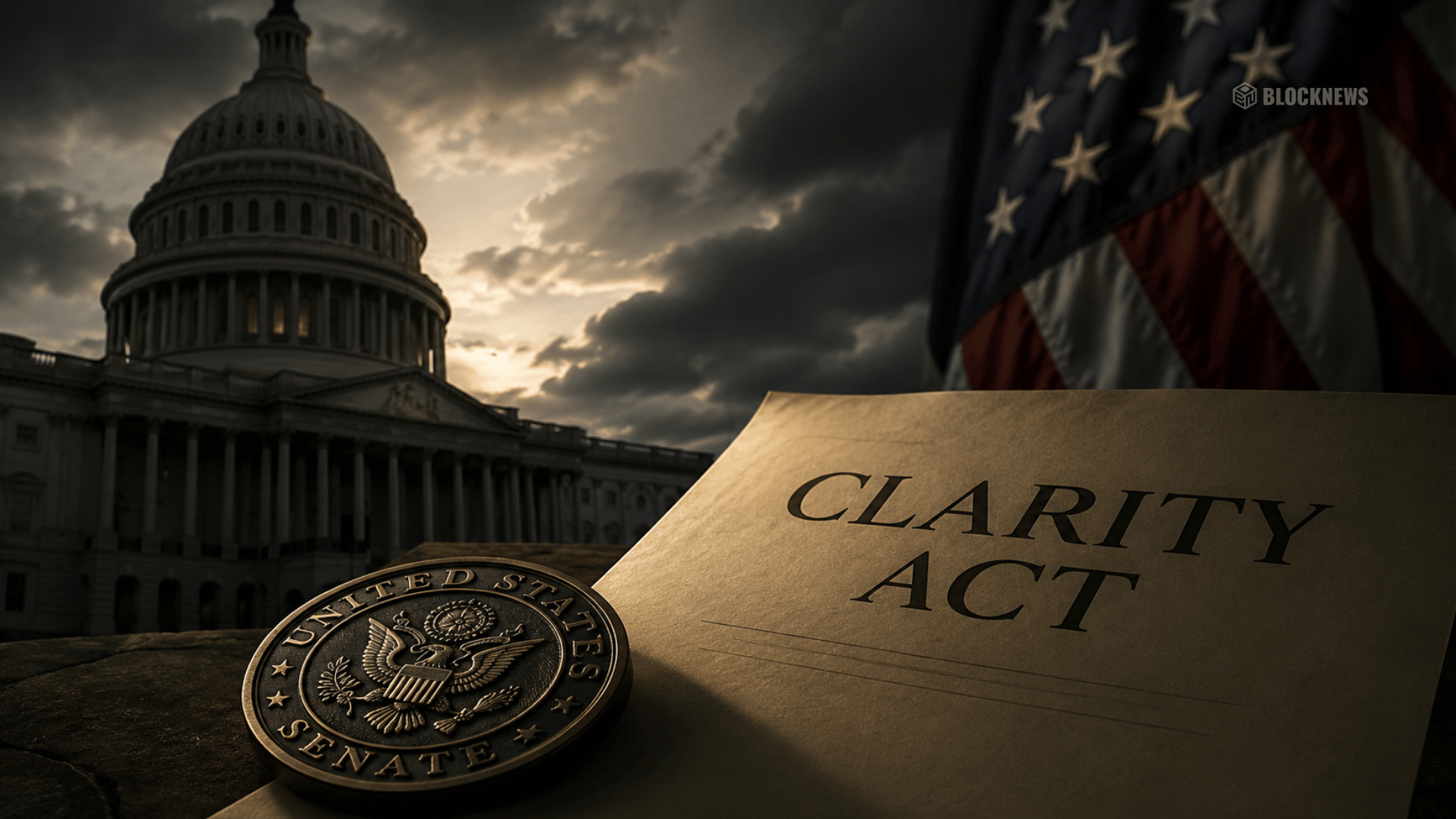
- The Senate’s first procedural vote on the CLARITY Act has been pushed to September 15, leaving lawmakers with a tight window to pass the major crypto bill.
- TD Cowen now estimates just a 25% chance that the legislation becomes law within the next few months as several political disputes remain unresolved.
- Stablecoin rewards, ethics rules, illicit finance protections and a packed congressional calendar remain major obstacles, while the SEC and CFTC move ahead with their own crypto regulations.
The outlook for one of America’s most important cryptocurrency bills has become increasingly uncertain after Senate Majority Leader John Thune delayed the first major procedural vote on the CLARITY Act until September.
Thune filed for a cloture vote scheduled for September 15, shortly after senators return from their month-long recess. The delay disappointed parts of the crypto industry that had hoped lawmakers could at least begin the voting process before leaving Washington.
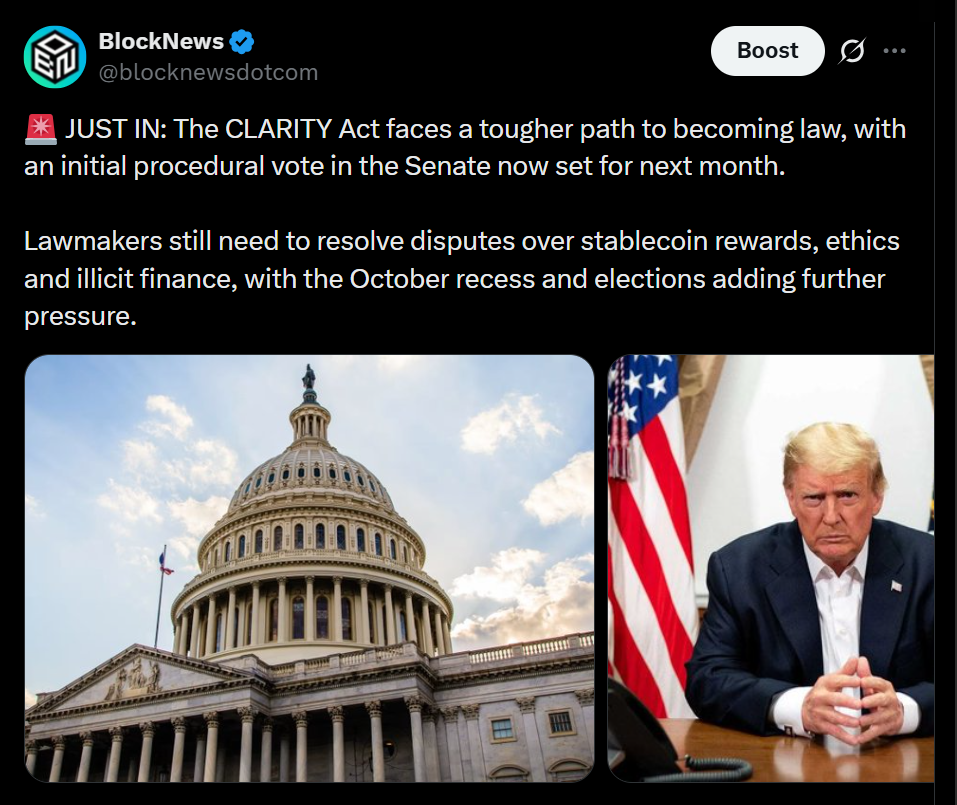
The bill isn’t dead, though the path has clearly become tighter. TD Cowen‘s Washington Research Group now estimates that the CLARITY Act has only a 25% chance of becoming law within the next few months, arguing that the best opportunity to pass the legislation may have been before the summer break.
CLARITY Act Still Faces Several Major Obstacles
The CLARITY Act would establish a comprehensive federal regulatory framework for the U.S. cryptocurrency market and significantly expand the Commodity Futures Trading Commission’s authority over digital assets.
Getting there has been complicated.
One of the longest-running disputes involves stablecoin rewards. Senators previously reached a compromise preventing platforms from paying rewards simply for holding stablecoins while still allowing incentives connected to transactions and payments. Banks, however, continue pushing lawmakers to strengthen those restrictions.
The possibility of reopening Section 404, which addresses stablecoin rewards, has created fresh uncertainty for crypto companies that believed the issue had largely been resolved.
Crypto Ethics Rules Remain a Major Sticking Point
Ethics has emerged as another serious obstacle, particularly amid scrutiny surrounding President Donald Trump’s growing cryptocurrency holdings and business interests.
Trump is reportedly considering a bipartisan proposal from Senators Ruben Gallego and Thom Tillis that would restrict public officials and their spouses from issuing or sponsoring digital assets. The proposal would also allow state attorneys general to enforce the provision.
Industry representatives believe resolving the ethics dispute could unlock progress on several other parts of the legislation. But with senators away from Washington, some of the most difficult negotiations may be harder to complete before September’s vote.
Illicit Finance Concerns Add More Pressure
Lawmakers are also divided over whether the CLARITY Act gives regulators and law enforcement agencies enough authority to combat money laundering, fraud and other illicit financial activity involving cryptocurrencies.
Senator Catherine Cortez Masto has repeatedly argued that the legislation does not provide sufficient protections for consumers and law enforcement. Crypto industry representatives strongly dispute that criticism and are now focused on preventing similar concerns from reducing support among other senators.
With every vote potentially important, losing additional lawmakers over illicit finance provisions could make passage even more difficult.
Congress Faces a Very Tight September Calendar
Timing may ultimately become one of the bill’s biggest enemies.
The Senate returns on September 14, with both chambers scheduled to remain in Washington only until October 2 before leaving for the entire month of October. Congress must also address government funding, defense legislation and other major priorities during that short period.
Even if the Senate passes its version, another problem remains. The House approved a different version of the CLARITY Act last year, meaning lawmakers would still need to resolve differences between the two bills.
Stablecoin rewards could become particularly challenging because the House legislation does not contain the Senate’s Section 404 provisions.
SEC Moves Ahead While Congress Struggles
While Congress wrestles with legislation, the Securities and Exchange Commission is moving forward with its own cryptocurrency regulatory agenda.
The SEC has scheduled a Friday meeting to consider proposing a tailored offering framework for certain investment contracts involving crypto assets. The agency is also preparing potential changes involving broker capital requirements, recordkeeping and digital asset exchange rules.
SEC Chair Paul Atkins has previously outlined plans for a “token taxonomy” designed to clarify which digital assets fall under securities laws. The SEC and CFTC are also working together through Project Crypto to modernize the regulatory treatment of digital assets.
These agency actions could provide the industry with some near-term clarity, but they cannot fully replace legislation. Regulations and exemptions created by agencies can change under future administrations, while an act of Congress would establish a much more durable legal framework.
September Could Decide the CLARITY Act’s Future
Despite the obstacles, several industry leaders remain optimistic that delaying the vote does not necessarily mean the CLARITY Act is finished.
Supporters argue the August recess gives lawmakers and their staff additional time to negotiate outstanding issues before the September 15 cloture vote. The White House also remains committed to passing the legislation, with top crypto adviser Patrick Witt saying the administration still wants to get the bill across the finish line in September.
The next few weeks could therefore determine whether years of negotiations finally produce comprehensive U.S. crypto market structure legislation, or whether regulatory agencies will be left to fill the gap. For the crypto industry, September is shaping up to be a critical month.