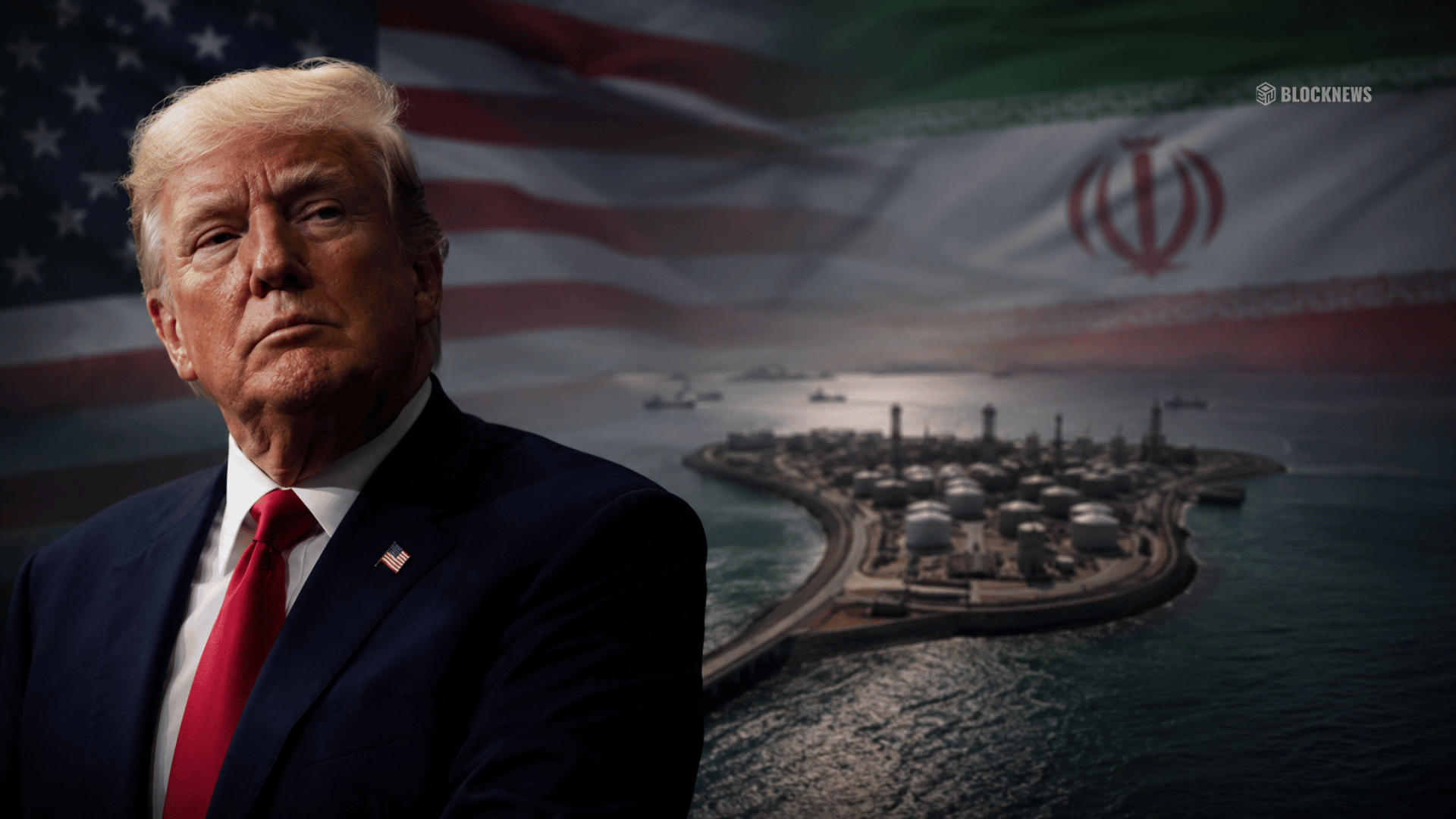
- President Trump says the U.S. will continue military strikes against Iran as negotiations remain stalled.
- Trump also raised the possibility of taking control of Kharg Island, Iran’s most important oil export hub.
- Energy traders and crypto investors are closely monitoring the situation due to its potential impact on oil prices and global markets.
Tensions between the United States and Iran escalated further on Thursday after President Donald Trump announced that additional military strikes would be carried out against Iranian targets. The comments come as diplomatic efforts appear to have stalled, with both sides increasingly relying on military pressure rather than negotiations.
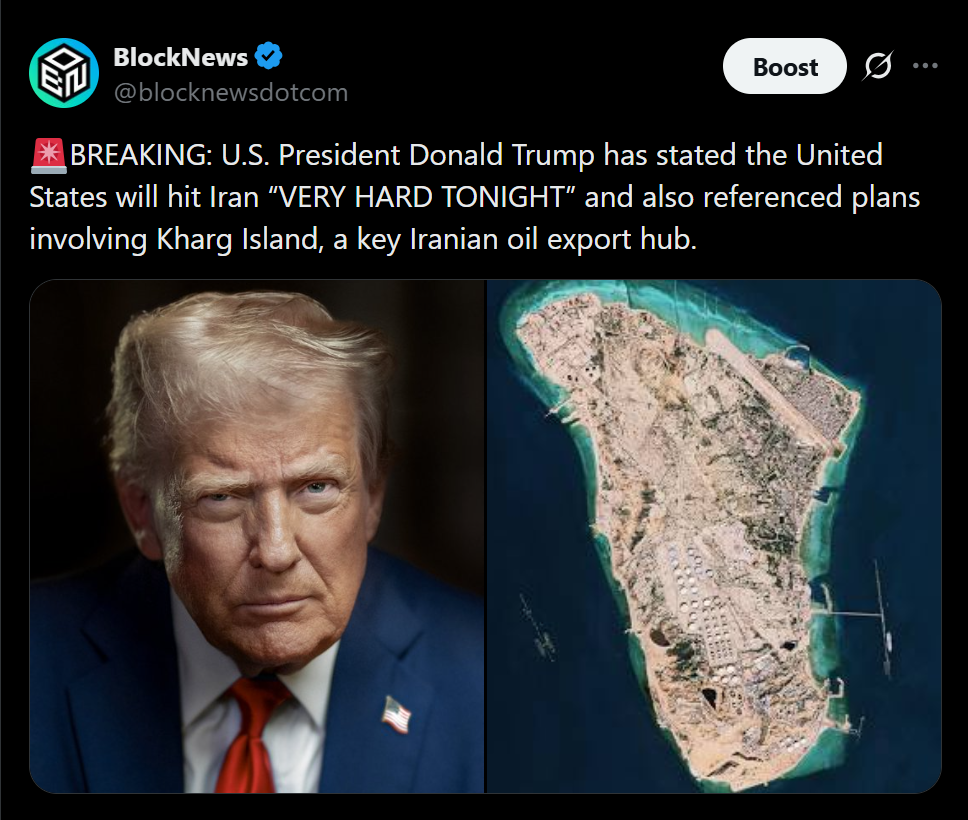
In a social media post, Trump warned that the United States would be hitting Iran “very hard” and claimed much of Iran’s military infrastructure had already been severely degraded. He also made headlines by suggesting that the U.S. could eventually take control of Kharg Island, a critical piece of Iran’s energy infrastructure.
Why Kharg Island Matters
Kharg Island is not just another strategic location. The island serves as Iran’s primary oil export hub and handles the overwhelming majority of the country’s crude oil shipments. Analysts estimate that roughly 90% of Iran’s oil exports pass through the facility, making it one of the most important energy assets in the Middle East.
Because of its importance, Kharg Island has been a recurring focus throughout the current conflict. Earlier this year, U.S. forces conducted strikes against military targets located on the island while deliberately avoiding oil infrastructure. Trump has repeatedly warned that those facilities could become targets if tensions continue to escalate.
The latest remarks go a step further by suggesting potential U.S. control over the island and other Iranian energy assets, a move that would represent a major escalation in the conflict.
Oil Markets Face Growing Risks
Investors are paying close attention because any disruption involving Kharg Island could have significant consequences for global energy supplies. Iran remains a major oil producer, and interruptions to exports from the island could place additional pressure on already volatile energy markets.
The broader region is equally important. The Strait of Hormuz, located nearby, remains one of the world’s most critical shipping routes for oil and natural gas. Any escalation that threatens shipping traffic through the area could send energy prices sharply higher and create new inflationary pressures worldwide.
Why Crypto Investors Are Watching
The conflict is not just an energy story. Rising geopolitical tensions often affect risk assets, including cryptocurrencies. When uncertainty increases, investors frequently move toward defensive positions and reduce exposure to more volatile investments.
Higher oil prices can also feed inflation concerns, potentially influencing central bank policy and financial conditions. Those factors often ripple into crypto markets, where liquidity and investor sentiment remain key drivers of price action.
As a result, Bitcoin and the broader digital asset market could remain sensitive to developments in the Middle East over the coming days and weeks.
A High-Stakes Situation
Trump’s latest comments signal that the administration is prepared to increase pressure on Iran if negotiations fail to resume. Whether the rhetoric leads to further military action or becomes part of a broader negotiating strategy remains unclear.
What is clear is that Kharg Island has emerged as one of the most strategically important locations in the conflict. Any move involving Iran’s oil infrastructure would likely have consequences extending far beyond the region, affecting energy markets, inflation expectations, equities, and cryptocurrencies alike.
For now, investors are watching closely as diplomacy and military escalation continue moving in opposite directions.