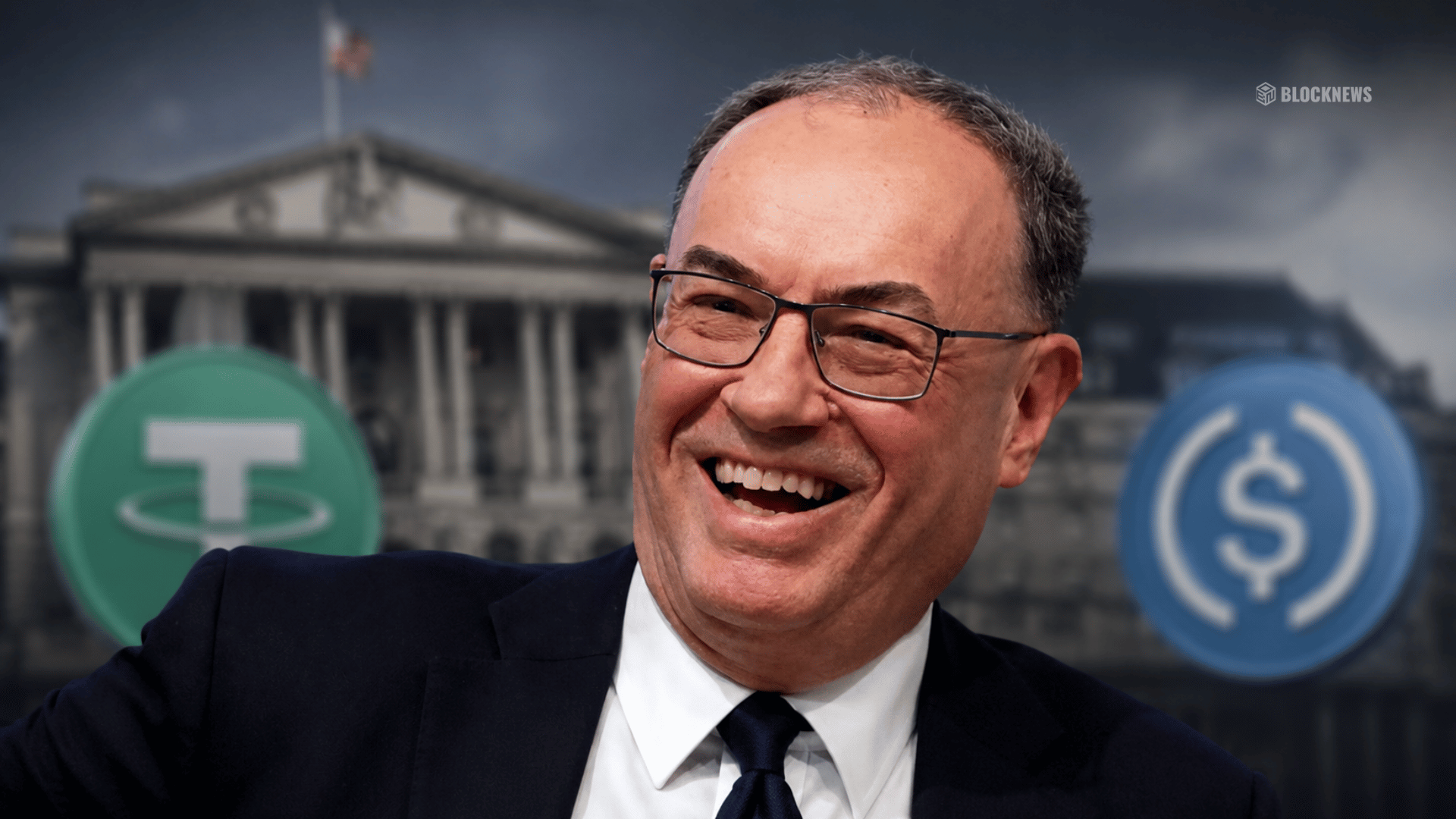
- Bank of England Governor Andrew Bailey warned stablecoin regulation could trigger international conflict with the US
- Bailey raised concerns about stablecoins that require crypto exchanges for dollar redemption during crises
- Dollar-backed stablecoins now dominate a $317 billion market with growing global financial influence
The Bank of England is openly warning that dollar-backed stablecoins are becoming a global financial issue, not just an American one anymore. Speaking at a conference on May 8, Bank of England Governor Andrew Bailey said international regulators will likely face a serious “wrestle” with the United States over how stablecoins should be governed as they continue expanding globally.
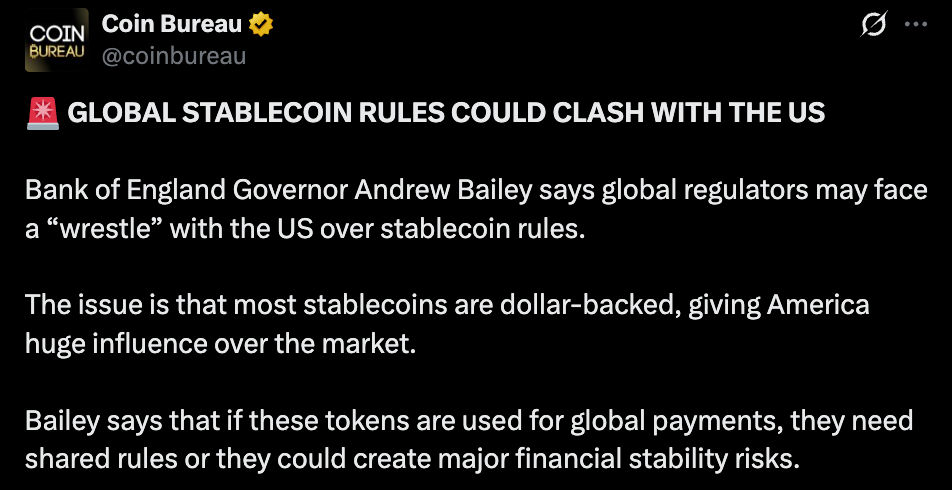
For central bankers, that kind of language is unusually direct. And honestly, it reflects growing concern that privately issued digital dollars are quietly evolving into critical international payment infrastructure without a unified global regulatory framework behind them.
Bailey Is Worried About Crisis Scenarios
One of Bailey’s biggest concerns revolves around convertibility during periods of financial stress. According to him, some stablecoins cannot easily be redeemed directly for dollars without routing through centralized crypto exchanges first, which could create major liquidity problems during a market panic or large-scale redemption event.
As Bailey reportedly put it, “We know what would happen if there was a run on a stablecoin — they’d all turn up here.” In other words, if confidence collapses around a major dollar-backed stablecoin, international spillover effects could rapidly impact financial systems outside the United States as users scramble for redemption access.
That concern becomes even larger once stablecoins start functioning more like mainstream payment infrastructure rather than speculative crypto tools. Because at that point, a liquidity failure doesn’t just affect traders anymore, it potentially affects broader financial stability.
The US Holds Most Of The Power
Part of the tension comes from the fact that the stablecoin market is overwhelmingly dominated by US dollar-backed assets. The global stablecoin sector has now surpassed roughly $317 billion in size, with most major issuers tied directly to dollar reserves and US financial infrastructure.
At the same time, the United States has increasingly embraced stablecoins strategically. The GENIUS Act passed last year created a regulatory framework specifically aimed at supporting and expanding the stablecoin industry domestically.
From the Bank of England’s perspective, that effectively gives Washington enormous influence over what is increasingly becoming a globally used financial system. And honestly, that’s probably the core issue underneath Bailey’s comments.
Stablecoins may be privately issued, but when nearly all of them are dollar-denominated, US regulatory decisions start affecting the entire world whether other countries like it or not.
Stablecoins Are Becoming Global Infrastructure
What makes the conversation so important now is that stablecoins have evolved far beyond their original role inside crypto trading markets. They increasingly function as settlement layers, payment rails, cross-border remittance tools, collateral systems, and liquidity infrastructure across multiple economies simultaneously.
That means problems involving stablecoins no longer stay isolated within crypto ecosystems. A major stablecoin failure could potentially create pressure across banks, exchanges, fintech firms, payment systems, and even sovereign monetary systems if adoption keeps growing at the current pace.
Bailey appears particularly worried about how difficult it may become for countries like the UK to maintain financial control if massive volumes of privately issued digital dollars circulate freely inside their economies during periods of stress.
A Global Regulatory Fight Is Starting
The broader message from Bailey’s comments is pretty clear: international regulators are no longer treating stablecoins as niche crypto products. They increasingly view them as strategically important financial infrastructure requiring coordinated oversight between governments and central banks globally.
The problem is that the United States currently holds most of the leverage because the market itself revolves around dollar-backed assets. That creates a situation where America’s domestic policy decisions could end up shaping the rules for global digital finance more broadly.
And honestly, that’s probably why Bailey used words like “clash” and “wrestle” publicly. The next major battle in crypto regulation may not be about whether stablecoins survive — it may be about who ultimately controls the global system they’re building.