
- SUI pulled back nearly 10% after rallying almost 40% over the past week.
- Institutional staking activity and upcoming CME futures helped fuel bullish momentum.
- Despite the correction, Sui’s TVL and on-chain activity continue showing strong growth.
Sui [SUI] has started cooling off after one of the strongest rallies seen across the altcoin market this month. Following an explosive move that pushed the token nearly 40% higher over the past week, SUI has now slipped close to 10% from Sunday’s local high, raising fresh questions about whether momentum is beginning to fade a bit.
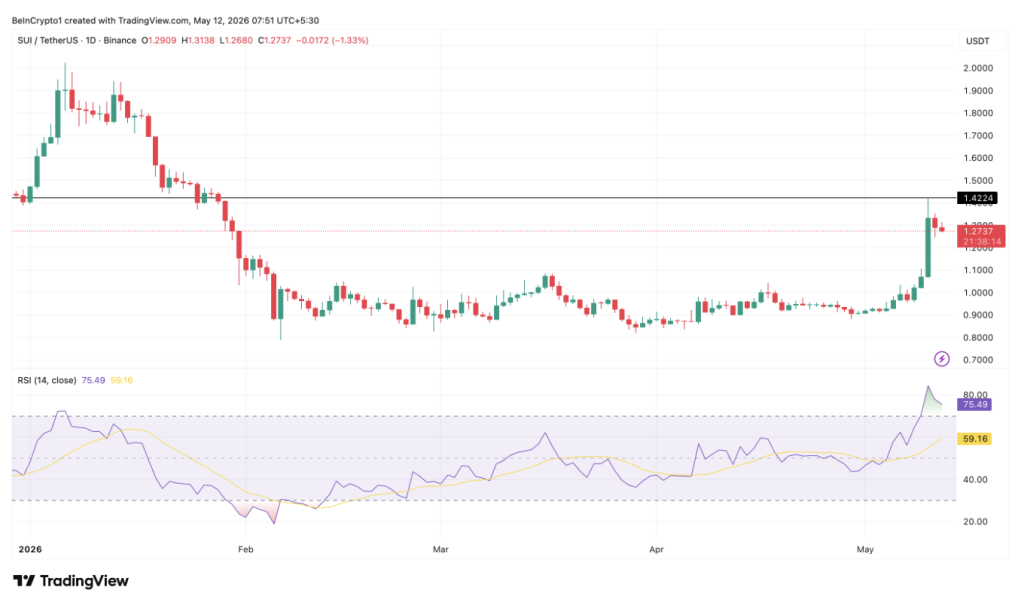
The token recently climbed to an intraday high near $1.42, marking its strongest level since late January before sellers finally stepped in. At the time of writing, SUI traded around $1.27, down roughly 4% over the last 24 hours and sitting notably below its weekend peak. Even so, the broader trend still looks significantly stronger than it did just a few weeks ago.
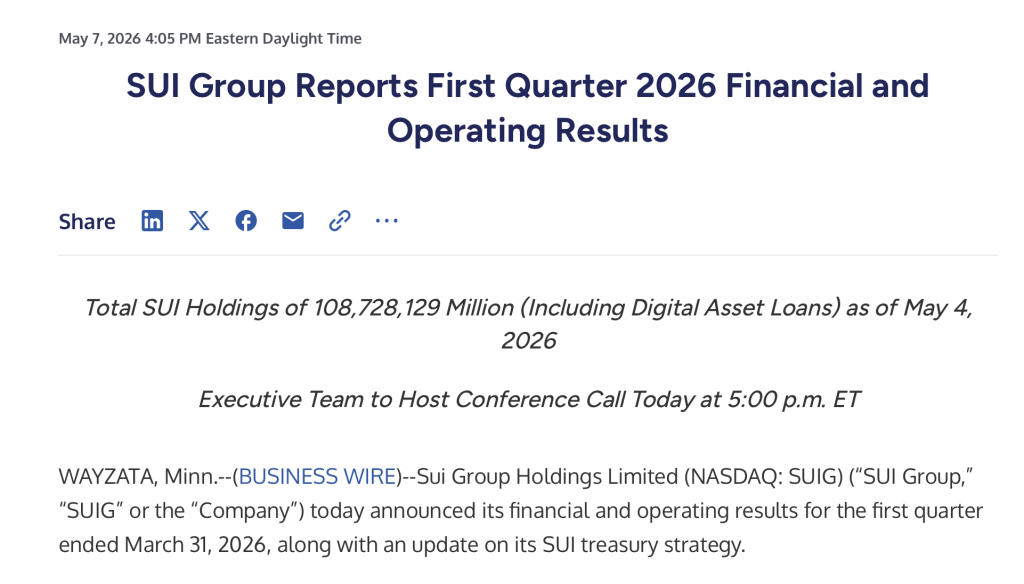
Part of the rally was fueled by growing institutional-style activity surrounding the ecosystem. SUI Group Holdings revealed that it expanded its treasury position to more than 108 million SUI tokens, while also confirming that most of those holdings have now been staked for yield generation. According to the firm, that move alone removed another 2.7% of the circulating supply from the liquid market, tightening available supply conditions in the process.
New Catalysts Continue Driving Interest in Sui
Beyond staking activity, several additional developments helped strengthen bullish sentiment around Sui recently. Santiment highlighted the upcoming launch of CME Group SUI futures scheduled for May 29, which would make SUI only the fifth Layer-1 blockchain to gain access to regulated derivatives markets through CME products.
At the same time, the network’s partnership with Paga for cross-border African payments added another layer to the bullish narrative. For many traders, these kinds of partnerships matter because they signal attempts at real-world utility beyond speculative trading activity alone.
Still, despite all the optimism, the market eventually needed to cool down. SUI’s Relative Strength Index surged as high as 84.4 during the rally, placing the token deep inside overbought territory before easing back toward 75.94. Usually, readings that elevated suggest prices moved too aggressively in a short period of time, making some level of pullback almost inevitable.
Broader Market Weakness Added Pressure
The correction also didn’t happen in isolation. The broader crypto market weakened slightly over the same period, with total market capitalization slipping around 0.33% while several altcoins pulled back alongside Bitcoin and Ethereum.
One analyst pointed out that nearly $680 million reportedly rotated out of BTC and ETH into stablecoins recently, reflecting a temporary shift toward lower-risk positioning across the market. In that environment, SUI’s decline looked more like part of a broader cooldown rather than a collapse tied specifically to the project itself.
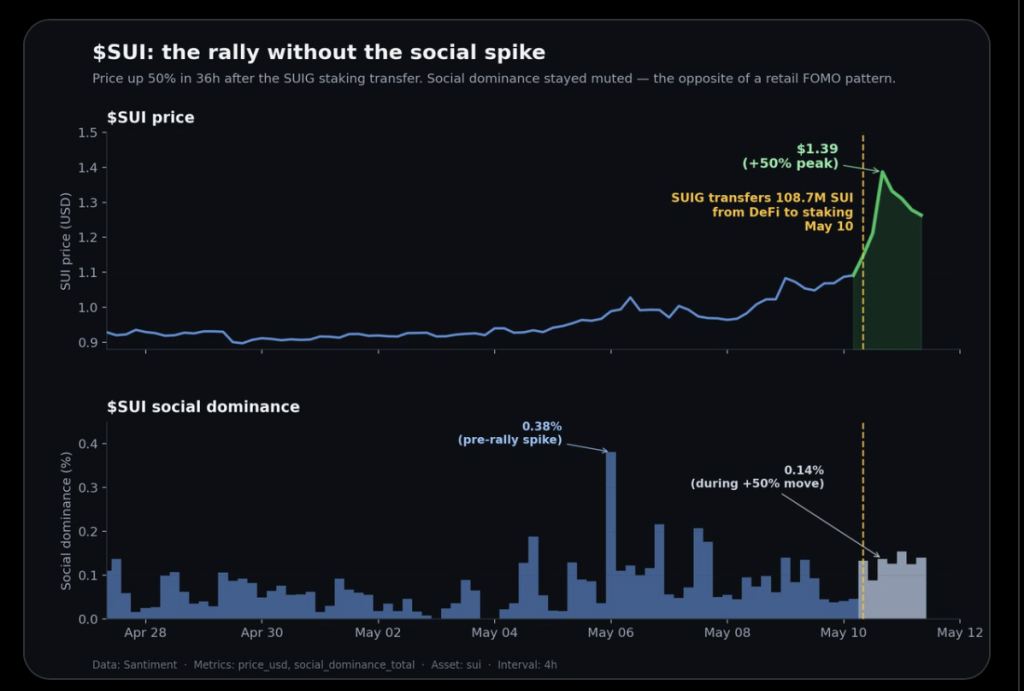
Interestingly, social sentiment around SUI remained relatively controlled even during the rally. Santiment data showed the token’s social dominance hovering between roughly 0.13% and 0.15%, still well below the major spike near 0.38% seen earlier in May. That may actually matter more than people realize because it suggests retail-driven hype hasn’t fully taken over the market yet.
On-Chain Growth Remains Strong Despite the Pullback
While price momentum cooled, on-chain activity inside the Sui ecosystem continued showing signs of strength. According to DefiLlama data, total value locked across the network climbed to approximately $653 million, rising sharply from around $541.9 million at the beginning of May.
Stablecoin supply across the network also increased roughly 4.5% over the past week, while decentralized exchange volumes reportedly exploded more than 200% higher. Those metrics suggest users and liquidity are still actively flowing into the ecosystem even as price volatility increases.
That said, SUI still remains nearly 76% below its all-time high and continues trading below its early-2026 levels, meaning the project still has significant ground left to recover. The next major move likely depends on whether institutional inflows, growing network activity, and investor demand can continue outpacing ongoing token unlocks over the coming months.