
- Michael Saylor says this is a “milder” and shorter crypto winter
- He points to stronger banking support and political backing for Bitcoin
- Long-term forecasts still project BTC toward six-figure levels
Michael Saylor is back with another bold take on the crypto market, and this time he’s calling it what many investors already feel, a crypto winter. With Bitcoin hovering near $69,000 and volatility returning, Saylor acknowledged that the market is in its fifth major drawdown since he entered the space. But unlike prior cycles, he insists this one is different.
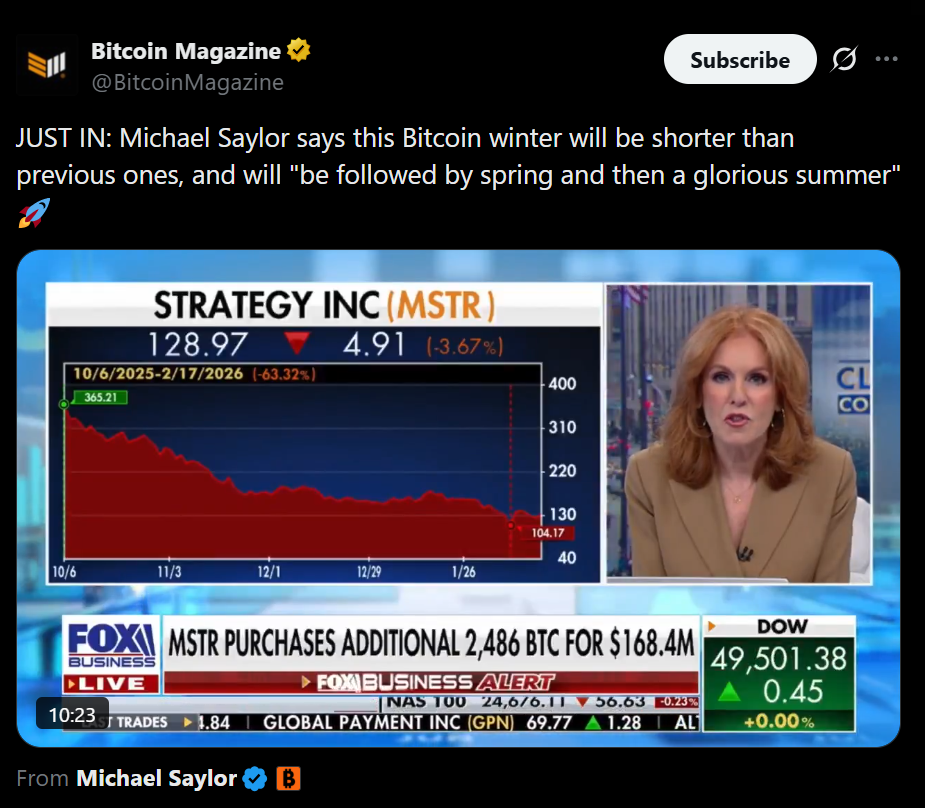
According to Saylor, this winter is milder and shorter than previous downturns. He framed it as part of Bitcoin’s natural cycle, predicting it will transition into a spring and eventually a “glorious summer.” The message was simple: don’t panic. In his view, this is consolidation, not collapse.
Why Saylor Thinks This Cycle Is Structurally Different
Saylor’s confidence isn’t based purely on optimism. He argues that Bitcoin’s institutional and political backing is stronger today than ever before. Four years ago, major banks were cautious at best. Now, traditional financial institutions are integrating crypto services, launching products, and supporting digital asset infrastructure more openly.
He also pointed to the formation of digital credit networks and broader acceptance from regulators and policymakers. Saylor highlighted support from the current US administration and pro-digital asset cabinet members, describing it as a fundamental shift in how Bitcoin is viewed at the highest levels. In his view, that kind of structural support reduces the severity of downturns.
Institutional Adoption Is No Longer Theoretical
Another factor reinforcing Saylor’s outlook is institutional capital. BlackRock and other major asset managers pushing spot Bitcoin ETFs marked a major turning point for market access. Vehicles like IBIT transformed Bitcoin from a niche holding into something allocators can integrate into portfolios more easily.
That doesn’t eliminate volatility. But it changes the depth of the market. Bitcoin now sits inside pension models, ETF flows, and structured products. When demand pauses, it feels sharp. But when capital returns, it can scale quickly.
Long-Term Bitcoin Projections Remain Aggressive
Looking further ahead, long-term models remain ambitious. Some forecasts suggest Bitcoin could reach around $78,000 by the end of 2026, with projections extending toward $166,000 by 2030. More aggressive long-term outlooks even stretch toward seven-figure territory by 2040 or 2050.
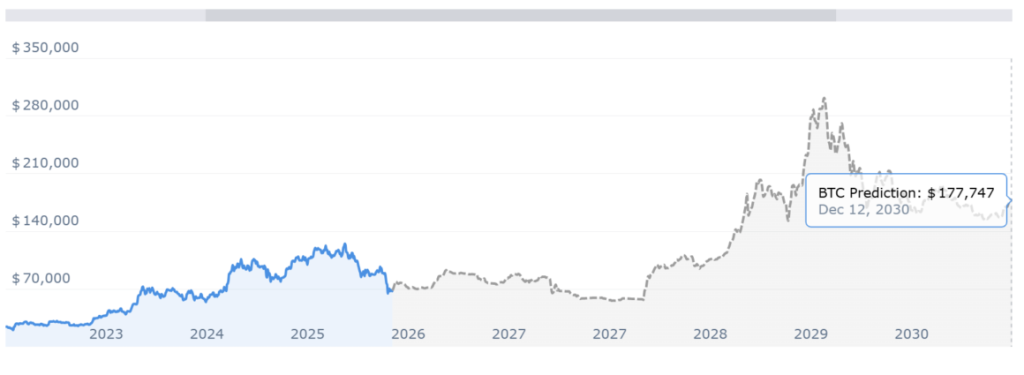
Forecasts are never guarantees, and Bitcoin has a history of humbling bold predictions. Still, Saylor’s framing isn’t about precise targets. It’s about structural momentum. If institutional adoption, regulatory clarity, and financial integration continue, he believes the next expansion phase may arrive sooner than many expect.