
BlockNews
FOLLOW ON X
  • BITCOIN
  • CRYPTO
    • ETHEREUM
    • RIPPLE XRP
    • SOLANA
    • CARDANO
    • BINANCE BNB
    • DOGECOIN
    • TRON
    • SUI
    • CHAINLINK
    • LITECOIN
  • FINANCE
  • POLITICS
  • MEMECOINS
  • NFT
  • OPINION
No Result
View All Result
BlockNews
  • BITCOIN
  • CRYPTO
    • ETHEREUM
    • RIPPLE XRP
    • SOLANA
    • CARDANO
    • BINANCE BNB
    • DOGECOIN
    • TRON
    • SUI
    • CHAINLINK
    • LITECOIN
  • FINANCE
  • POLITICS
  • MEMECOINS
  • NFT
  • OPINION
No Result
View All Result
BlockNews
Home CRYPTO

Ethereum Is Now Deflationary

BlockNews Team by BlockNews Team
November 9, 2022
in CRYPTO, INVESTING, TECHNOLOGY
Share on XShare in TelegramShare on Reddit

Ethereum has become deflationary for the first time since the Merge, meaning that more Ether (ETH) has been burnt than issued since September 15, according to tracking by Ultrasound Money.
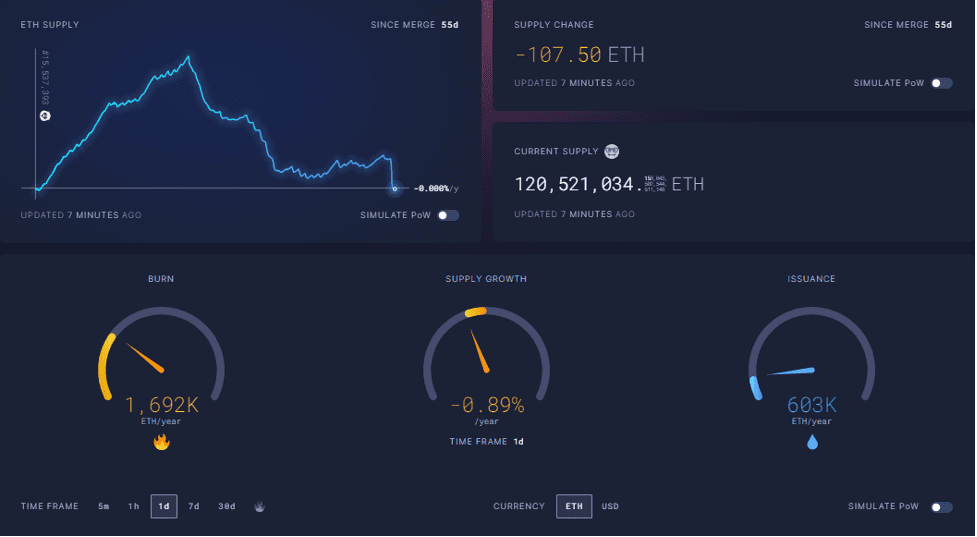
Fifty-five days had passed since Ethereum’s Merge, when the network successfully transitioned from Proof-of-Work (PoW) to Proof-of-State (PoS), a move that drastically changed the dynamics of its supply.

A combination of the Merge event and the network’s move to introduce EIP1559, wherein transaction fees are burnt, equates to the possibility of a deflationary ETH. The test of deflationary evaluates an asset’s current issuance and burn rate to assess its future. Following the much-anticipated Merge, Ethereum 2.0 was expected to deliver several long-awaited upgrades to the Ether ecosystem.

Despite this expectation, whether the new version would mean Ethereum would become a deflationary asset remained. Fast forward to November 8, and Ethereum issuance has officially become a deflationary post Merge.

“JUST IN: #Ethereum has gone deflationary.”

Ethereum As A Deflationary Asset

An asset is considered deflationary when it records decreasing coin supply. It follows that the circulating supply of Ethereum has reduced over time, with each of the remaining ETH coins becoming more valuable because the scarcity of Ethereum continues to decrease.

Ethereum managed to keep inflation in check before the Merge thanks to its PoW consensus mechanism. The main factors leveraged by the network to control inflation included block time and block rewards.

However, with the roll-out of Ethereum 2.0, EIP-1559, and the Merge event, the network’s countdown to becoming deflationary started. Noteworthy, EIP-1559, launched in August 2021, determines the supply of Ethereum by introducing a deflationary mechanism by bringing down the base fee while introducing the ETH burning mechanism.

Ethereum’s current situation is different from most cryptocurrencies in the market today, as well as fiat currency, which is inflationary and has high supply caps and no cap on their supply, respectively. As more Ethereum is created, its value continues to decrease.

After the Merge, Ethereum 2.0 ushered in the PoS consensus mechanism, which reduced the issuance rate significantly. With the PoS mechanism, mining rewards due to the PoW mechanism became obsolete, an action that caused a sliding scale between the amount of ETH staked by the network validators and the amount of interest they would earn. As such, miners became more motivated to mine ETH than other coins like Litecoin, which uses the PoW mechanism.

The Supply of Ethereum

On April 1, 2018, Vitalik Buterin made a ‘Fools’ day joke suggesting that the total supply of ETH be capped at 120 million. According to the Ethereum co-founder, this would guarantee a more stable and sustainable economy for the network. While this was just a joke, it sparked the inflationary-deflationary discussion surrounding the supply of cryptocurrencies.

During the 2014 Ethereum ICO, Ether’s (ETH) total supply was approximately 72 million. In June 2022, Ethereum’s total supply was a little over 121 million. While Ethereum does not have a supply cap, this does not mean the second largest crypto in the market cap will be circulating in the billions. The number of ETH issued has been steadily declining.

Ethereum used to be an inflationary crypto. However, it became deflationary following a series of upgrades- Ethereum 2.0, EIP-1559, and the Merge. The EIP-1559 update marked one of the most crucial transformations for the Ethereum network, introducing a deflationary mechanism by destroying the base fee.

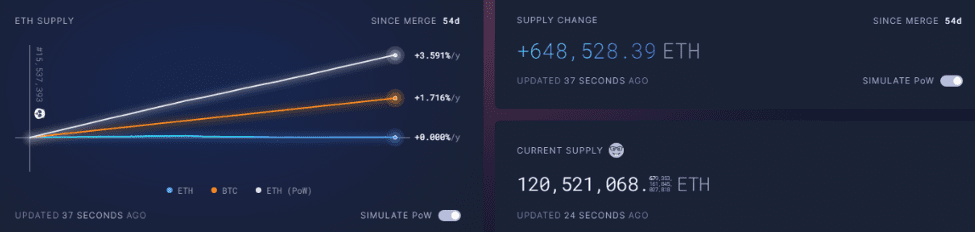
Post-Merge, the Ethereum issuance rate reduces below 1%. If ETH were still Proof of work, its supply would have increased by around 650,000 ETH. Instead, it has decreased.
Nonetheless, watching how this plays out will be fun as demand for Ethereum grows into the next cycle and thus drives even more ETH to burn.


Disclaimer: BlockNews provides independent reporting on crypto, blockchain, and digital finance. All content is for informational purposes only and does not constitute financial advice. Readers should do their own research before making investment decisions. Some articles may use AI tools to assist in drafting, but every piece is reviewed and edited by our editorial team of experienced crypto writers and analysts before publication.
Tags: cryptoethethereum
Tweet1ShareShare
BlockNews Team

BlockNews Team

DON'T MISS THESE! HOT OFF THE PRESS

Stellar Price Stabilizes Near $0.20 as Technical Indicators Turn Cautiously Bullish
CRYPTO

Stellar Price Stabilizes Near $0.20 as Technical Indicators Turn Cautiously Bullish

January 3, 2026
Litecoin Bulls Return Cautiously as Indicators Hint at Waning Selling Pressure
CRYPTO

Litecoin Bulls Return Cautiously as Indicators Hint at Waning Selling Pressure

January 3, 2026
Chainlink (LINK) Reserve Accumulation Signals Long-Term Strength Amid Rising Leverage
CHAINLINK

Chainlink (LINK) Reserve Accumulation Signals Long-Term Strength Amid Rising Leverage

January 3, 2026
Dogecoin Breaks Out as Price Surges 12% While On-Chain Signals Turn Mixed
CRYPTO

Dogecoin Breaks Out as Price Surges 12% While On-Chain Signals Turn Mixed

January 3, 2026
Cardano Price Holds Key Support as Analysts Eye a Move Toward the $0.40 Level
CARDANO

Cardano Price Holds Key Support as Analysts Eye a Move Toward the $0.40 Level

January 3, 2026
$53 Million Solana Transfer Sparks Sell-Off Speculation as SOL Price Surges
CRYPTO

$53 Million Solana Transfer Sparks Sell-Off Speculation as SOL Price Surges

January 2, 2026
Load More

Related News

Stellar Price Stabilizes Near $0.20 as Technical Indicators Turn Cautiously Bullish

Stellar Price Stabilizes Near $0.20 as Technical Indicators Turn Cautiously Bullish

January 3, 2026
Litecoin Bulls Return Cautiously as Indicators Hint at Waning Selling Pressure

Litecoin Bulls Return Cautiously as Indicators Hint at Waning Selling Pressure

January 3, 2026
Chainlink (LINK) Reserve Accumulation Signals Long-Term Strength Amid Rising Leverage

Chainlink (LINK) Reserve Accumulation Signals Long-Term Strength Amid Rising Leverage

January 3, 2026
Dogecoin Breaks Out as Price Surges 12% While On-Chain Signals Turn Mixed

Dogecoin Breaks Out as Price Surges 12% While On-Chain Signals Turn Mixed

January 3, 2026
Cardano Price Holds Key Support as Analysts Eye a Move Toward the $0.40 Level

Cardano Price Holds Key Support as Analysts Eye a Move Toward the $0.40 Level

January 3, 2026
Twitter Telegram Threads

BLOCKNEWS.COM

BlockNews is your premier source for real-time cryptocurrency, blockchain, political and financial market news.

Stay ahead of the herd with BlockNews

RESOURCES

  • About Us
  • Contact Us
  • Editorial Policies
  • Terms and Conditions
  • Privacy Policy
  • Sitemap

DISCLOSURES AND POLICIES

BlockNews provides independent reporting on crypto, blockchain, and digital finance. Content is for informational purposes only and does not constitute financial advice. Sponsored material is always disclosed. By using this site, you agree to our Terms and Conditions and Privacy Policy.

© 2025 BlockNews

No Result
View All Result
  • HOME
  • BITCOIN
  • CRYPTO
    • ETHEREUM
    • RIPPLE XRP
    • SOLANA
    • CARDANO
    • BINANCE BNB
    • DOGECOIN
    • TRON
    • LITECOIN
    • CHAINLINK
    • SUI
  • MEMECOINS
  • POLITICS
  • FINANCE
  • NFT
  • DEFI
  • GUIDES

© 2025 BlockNews