

- DeFi protocols are redesigning liquidations to reduce value lost to MEV bots
- Aave’s SVR model has already recaptured millions and is expanding across chains
- Long-term impact depends on sustained market activity and volatility
For a long time, DeFi had this underlying issue that most people kind of knew about, but didn’t really fix. During liquidations, MEV bots would step in, capture profits, and walk away, while protocols and users were left with less value. It wasn’t a bug exactly… more like a loophole that kept getting exploited.
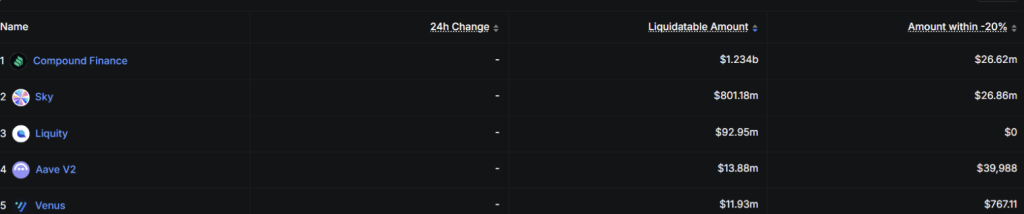
Over time, that leakage became too big to ignore. Ethereum lending markets alone ended up with around $2.16 billion in liquidatable positions, with protocols like Compound and Sky holding a large share of that. And every time volatility hit, those positions turned into opportunities, mostly for bots, not the protocols themselves.
A Shift Toward Controlled Liquidations
Now, things are starting to change. Protocols are redesigning how liquidations work, moving toward auctions and more controlled systems that keep value inside rather than letting it slip away. It’s a subtle shift, but an important one, because it changes who actually benefits when markets get chaotic.
Instead of liquidation events acting as extraction points, they’re being turned into structured processes where the protocol captures part of that value. In a way, it’s like DeFi is learning from its own inefficiencies and slowly patching them, not all at once, but step by step.
Aave Leads With a New Model
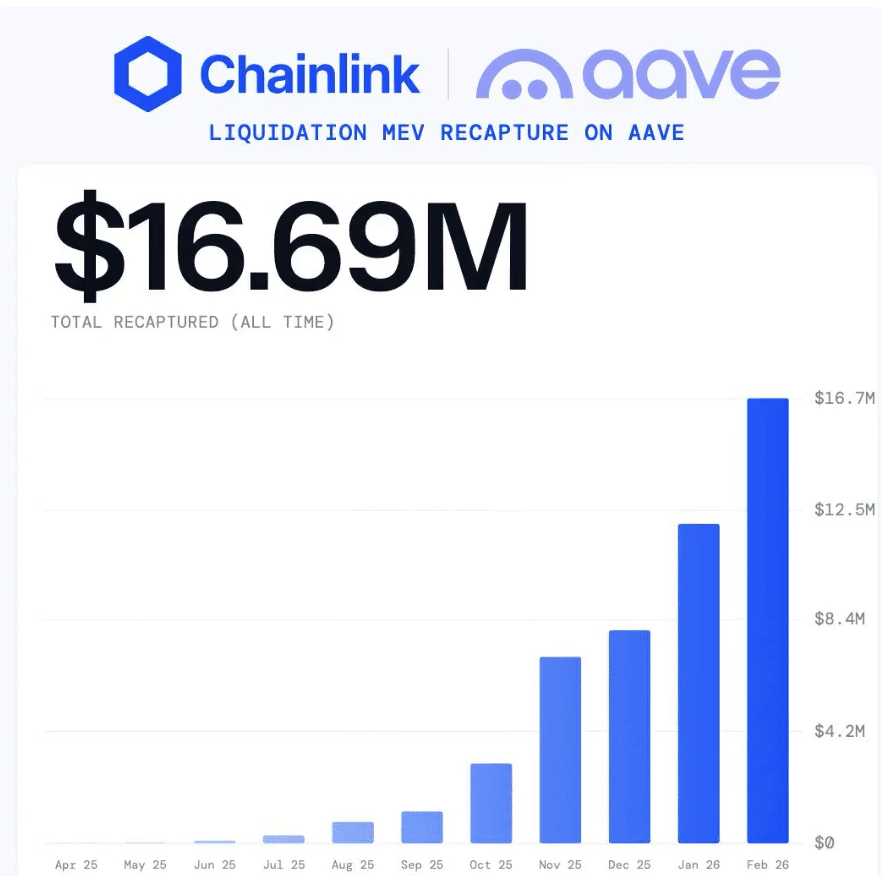
Aave is probably the clearest example of this shift in action. Through its SVR model, it has already managed to recapture over $16.7 million in MEV on Ethereum, which is… not insignificant. And now, it’s expanding that system to other networks like Arbitrum and Base, suggesting this isn’t just a one-chain experiment.
Before this, bots were consistently extracting value during liquidations, especially in volatile conditions. Aave’s approach redirects that flow back into the protocol itself, which changes the entire dynamic. Liquidations stop being purely opportunistic events for outsiders and start becoming revenue streams for the ecosystem.
Turning Volatility Into Revenue
What’s happening here is interesting, because volatility, which usually creates instability, is now being turned into income. As liquidation activity increases, so does the protocol’s revenue, creating a feedback loop that strengthens its financial position.
Aave currently holds around $23.87 billion in total value locked, with about $6.24 million in revenue over 30 days. That scales to roughly $76 million annually, assuming conditions hold. And a big part of that is coming from value that previously would have gone to bots.
But Sustainability Isn’t Guaranteed
Still, there’s a catch, there always is. This model works best when market activity is high, when there’s enough volatility and lending demand to generate liquidations. If activity slows down, that revenue stream naturally weakens.
So while SVR improves the economics of the protocol, it’s not a permanent fix for everything. It’s conditional, tied closely to how active the market is at any given time. That doesn’t make it weak, just… dependent on the environment.
A Structural Change in DeFi Economics
Even with those limitations, the broader shift matters. DeFi is moving toward capturing its own value instead of leaking it outward, which strengthens the entire ecosystem over time. It’s not just about Aave either, this could set a precedent for how other protocols approach liquidations going forward.
In the end, it’s a structural improvement. Not flashy, not headline-grabbing, but meaningful. And sometimes, those are the changes that stick the longest.