
- Veteran investor Jeremy Grantham believes Bitcoin will gradually lose relevance rather than collapse overnight.
- The billionaire argues BTC has no lasting utility, produces no income, and has failed to prove itself as a dependable store of value.
- Grantham also criticized Bitcoin’s energy consumption and questioned its role in the broader financial system.
Legendary British investor Jeremy Grantham has once again taken aim at Bitcoin, delivering one of his strongest criticisms of the world’s largest cryptocurrency. The GMO co-founder, known for accurately identifying several major financial bubbles over the past few decades, believes Bitcoin’s future isn’t explosive, it’s simply… forgettable.
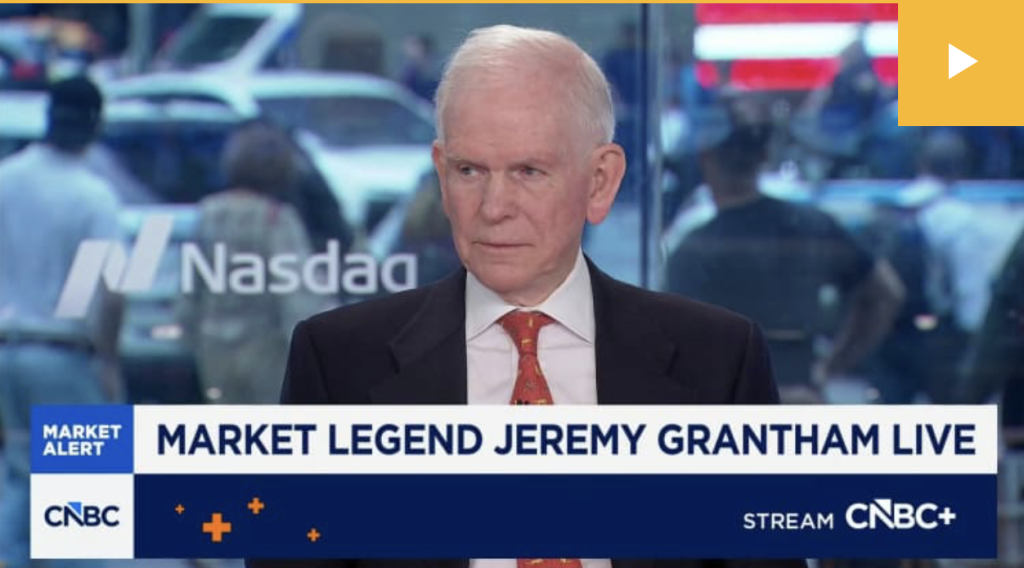
Speaking during CNBC’s Squawk Box, Grantham described Bitcoin as a speculative asset with little practical value and predicted that it would slowly drift into irrelevance over time. In his view, Bitcoin is not headed for a dramatic collapse but rather a long, gradual decline that could stretch across years, or even decades.
“Not With a Bang, But With a Whimper”
Unlike many Bitcoin critics who warn of an imminent crash, Grantham believes the cryptocurrency will fade much more quietly.
According to him, Bitcoin’s decline will not resemble the sudden bursting of a financial bubble. Instead, interest in the asset will slowly erode as investors eventually move on to opportunities they see as having stronger fundamentals.
He described Bitcoin as a “useless, speculative mechanism” and argued that its value rests almost entirely on the belief that someone else will eventually pay a higher price. Without that expectation, Grantham suggested, there is very little supporting the asset itself.
Bitcoin Is Not a Reliable Store of Value, He Says
One of Grantham’s biggest criticisms centered on Bitcoin’s reputation as digital gold.
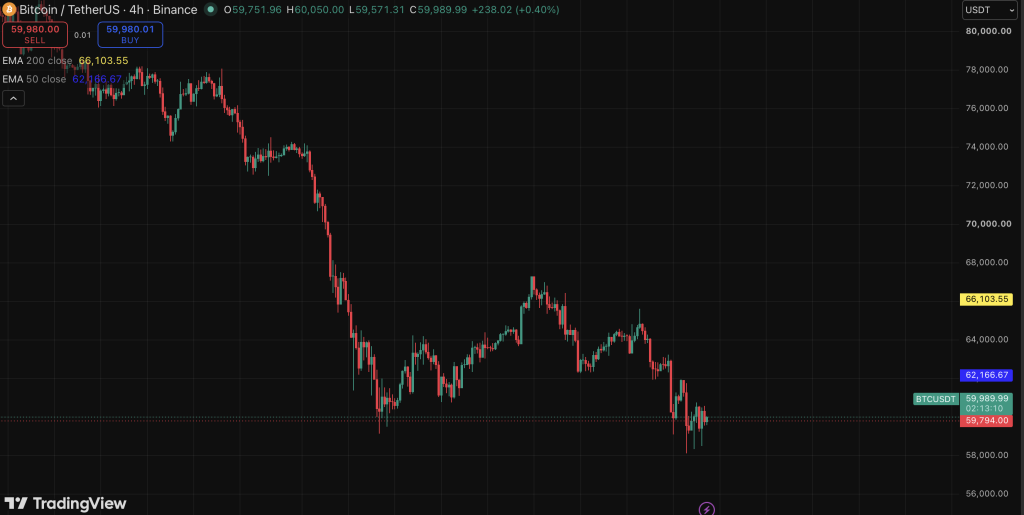
He argued that recent price swings undermine the narrative that Bitcoin can reliably preserve wealth during uncertain periods. As an example, he pointed to Bitcoin’s sharp decline despite relatively strong economic conditions, saying that an asset capable of losing roughly half its value without a major economic shock cannot reasonably be viewed as dependable protection.
By comparison, Grantham noted that gold performed considerably better over the same period, reinforcing his long-held preference for traditional safe-haven assets.
Questions Over Real-World Utility
Grantham also challenged Bitcoin’s usefulness as an everyday currency.
According to the veteran investor, widespread consumer adoption has never materialized. He argued that very few people use Bitcoin to pay for groceries, everyday purchases, or commercial transactions, making its practical role in the economy difficult to justify.
He went on to criticize the cryptocurrency’s ability to facilitate anonymous transfers, claiming that this feature has contributed to illicit financial activity. Those comments echo concerns that regulators and policymakers have raised over the years, although Bitcoin advocates frequently argue that blockchain transactions are publicly traceable and far from anonymous.
Criticism Extends to Bitcoin Mining
Another target of Grantham’s criticism was Bitcoin’s proof-of-work consensus mechanism.
He argued that the energy-intensive mining process offers little economic value relative to its enormous electricity consumption. In his view, the resources devoted to securing the network outweigh the benefits provided by the system itself.
For Grantham, Bitcoin ultimately lacks the characteristics typically associated with traditional investments. Unlike stocks, it pays no dividends. Unlike real estate, it produces no cash flow. And unlike many physical assets, he argues it cannot be valued based on underlying fundamentals.
Instead, he believes Bitcoin’s market value is driven almost entirely by investor confidence and speculation. If that confidence fades over time, Grantham expects Bitcoin’s relevance to fade alongside it.
Of course, many Bitcoin supporters strongly disagree. They argue that Bitcoin’s fixed supply, decentralized design, growing institutional adoption, and expanding role as a global digital asset continue strengthening its long-term investment case. The debate between critics and supporters has existed for years, and judging by comments like Grantham’s, it isn’t ending anytime soon.