

- Bitcoin is consolidating below $79,000 as on-chain data suggests the market absorbed excess leverage in late 2025.
- Rising realized price and an MVRV near 1.5 indicate most holders remain in profit despite cautious sentiment.
- Supply movement and miner data point to rotation and stabilization rather than panic-driven selling.
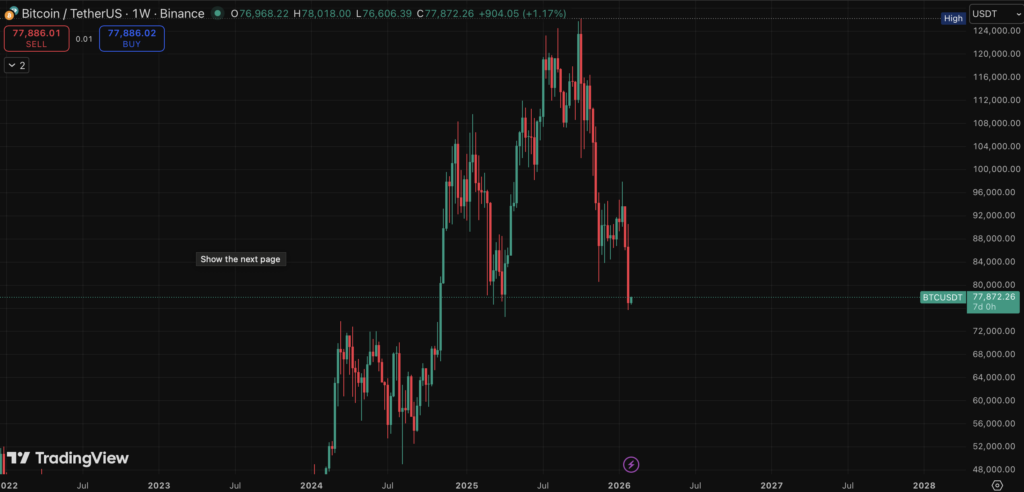
Bitcoin is trading in a tight, almost compressed range just below the $79,000 level as broader macro conditions remain supportive. Most major crypto assets have followed a similar sideways path, with momentum slowing across the board. Still, analysts remain relatively constructive on BTC compared to the rest of the market.
In a joint report from Coinbase and Glassnode, the firms noted that Bitcoin appears to be entering 2026 on firmer footing than many altcoins. While parts of the market are still digesting the sharp selloff seen last October, Bitcoin has shown more resilience. The data suggests the largest cryptocurrency absorbed much of that stress earlier and is now stabilizing.
Bitcoin’s Healthier Start to 2026
According to Coinbase and Glassnode, crypto markets look structurally healthier heading into 2026 after excess leverage was largely cleared during the fourth quarter. That reset, while painful at the time, appears to have reduced fragility across the system. Several on-chain indicators support this view.
One key metric, the entity-adjusted Net Unrealized Profit/Loss (NUPL), shows that investor sentiment dropped from the “Belief” phase into “Anxiety” following the October selloff. That shift persisted through the end of the year, signaling caution rather than outright capitulation. Markets cooled, but they didn’t break.
At the same time, Bitcoin’s realized price continued to trend higher into early 2026. This suggests the network’s overall cost basis is steadily rising, even during consolidation. Importantly, Bitcoin’s spot price remains above this realized price, meaning the average holder is still sitting on unrealized gains, not losses.
The Market Value to Realized Value (MVRV) ratio currently sits near 1.5. In simple terms, BTC is trading about 50% above its on-chain cost basis. That’s elevated, but not historically extreme, and often associated with periods of consolidation rather than tops.
On-Chain Signals Show Rotation, Not Panic
During the fourth quarter of 2025, the share of Bitcoin supply held in profit dropped sharply. The report suggests this move may point to accumulation behavior around the $80,000 to $85,000 range, particularly by systematic or model-driven strategies. It wasn’t blind selling, more like rotation.
Supply dynamics also shifted noticeably. Bitcoin that moved within the previous three months increased by 37% during the quarter, while supply that hadn’t moved in over a year declined by about 2%. That change hints at a higher-velocity environment, where older coins began circulating again.
The data implies a period of distribution rather than panic. Coins were moving, but not flooding exchanges in distress. This distinction matters, especially when comparing corrective phases to full-scale breakdowns.
Mining metrics also softened. The Puell Multiple fell to around 0.9 in the fourth quarter, meaning miners were earning roughly 10% less than their average revenue over the prior year. Historically, this level reflects moderate pressure, not forced capitulation.
Interestingly, long-term holder positioning and exchange balance data showed profit-taking between July and September. However, similar behavior wasn’t clearly present in the fourth quarter. That absence suggests selling pressure eased as prices stabilized, even if sentiment remained cautious.
For now, Bitcoin continues to move sideways, quietly digesting past excesses. The on-chain picture doesn’t point to euphoria, but it also doesn’t resemble panic. And in this part of the cycle, that balance tends to matter more than price alone.