
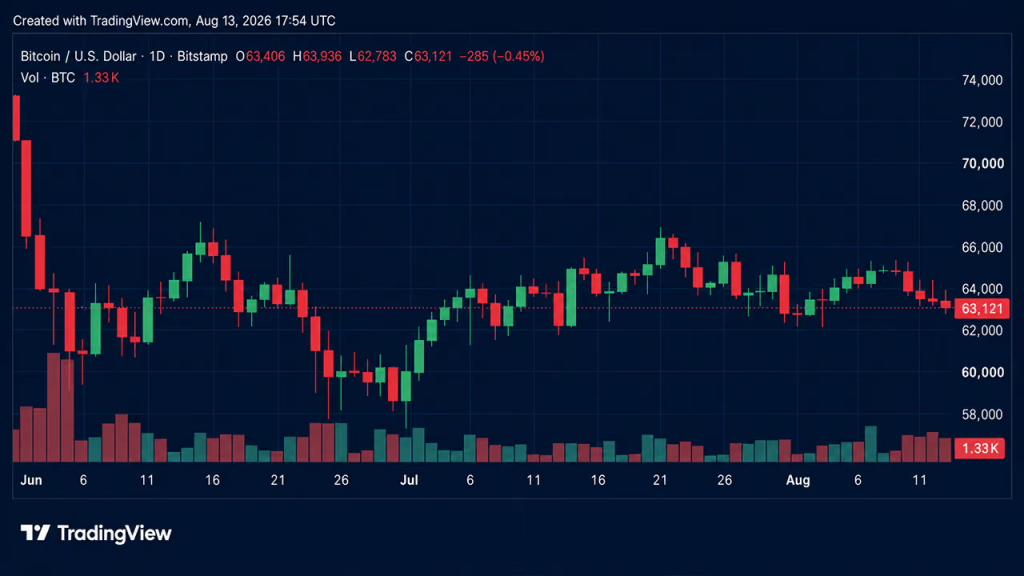
- Bitcoin briefly fell to $62,912 after repeatedly failing to hold gains near $63,900.
- Rising volatility triggered nearly $34 million in Bitcoin long liquidations, while total crypto liquidations reached $227 million.
- Inflation, Federal Reserve policy and tensions around the Strait of Hormuz remain major factors influencing Bitcoin’s next move.
Bitcoin slipped below $63,000 on Thursday as volatility returned to the crypto market, leaving BTC struggling to find enough momentum for a sustained recovery.
After spending much of Wednesday between $63,300 and $63,500, Bitcoin briefly climbed toward $63,900 before sellers stepped in. Another attempt at the same level ended similarly, eventually sending BTC down to $62,912 and reducing its market capitalization to roughly $1.26 trillion.

Bitcoin quickly recovered above $63,000, but remained around 0.5% lower as traders continued searching for a stronger catalyst.
Bitcoin Liquidations Rise as Volatility Returns
The sharper price swings triggered an increase in leveraged liquidations.
Bitcoin long positions accounted for nearly $34 million in liquidations, more than $13 million higher than the previous day. Across the broader cryptocurrency market, approximately $227 million in positions were wiped out, including $122 million in longs and roughly $105 million in shorts.
Interestingly, Bitcoin’s weakness came while U.S. stocks traded slightly higher. Falling oil prices and stronger corporate earnings helped equities, while the S&P 500 reached another record high on August 13.
Fed Rate Outlook Remains Uncertain
Cooling U.S. inflation and softer labor market indicators have provided some hope that the Federal Reserve could eventually move toward lower interest rates.
However, the outlook remains complicated. Recent research suggests global central banks have become less supportive of additional rate cuts, with some policymakers increasingly favoring holding rates steady or even considering further tightening.
Geopolitical uncertainty adds another layer of risk. Tensions surrounding the Strait of Hormuz have already contributed to temporary energy-price spikes, which could renew inflationary pressure and make the Fed more cautious about easing monetary policy.
Bitcoin Still Needs a Stronger Catalyst
Bitcoin remains caught between improving inflation data and persistent geopolitical risks.
A lasting decline in energy prices, further cooling in inflation or a more dovish Federal Reserve could provide the macroeconomic catalyst BTC needs to escape its current range. Continued Middle East tensions, however, could push oil prices higher and complicate that outlook.
For now, Bitcoin’s repeated rejection near $63,900 shows buyers haven’t regained firm control. Until BTC establishes a convincing move beyond its recent trading range, volatility and sudden liquidation-driven swings could remain a major feature of the crypto market.