
- Bitcoin briefly climbed above $82,000 after the Senate Banking Committee advanced the CLARITY Act.
- Traders view the bill as a potential step toward clearer crypto regulation in the United States.
- BTC now faces major resistance near $82,400 to $83,000 as analysts debate the next breakout direction.
Bitcoin [BTC] briefly pushed back above the $82,000 level on May 14 after a major development tied to U.S. crypto regulation gave traders a fresh reason to turn bullish again. The move came after several days of volatile price swings that saw BTC temporarily lose the important $80,000 support zone earlier in the week before buyers stepped back in aggressively.
At one point, Bitcoin climbed as high as $82,005 during the session before cooling slightly. The asset later traded near $81,500 after swinging between a daily low near $78,900 and its local peak above $82K. That sharp recovery suggested traders were still willing to defend key psychological support levels despite broader uncertainty hanging over both crypto and traditional markets.
The main catalyst behind the rally came from Washington. The U.S. Senate Banking Committee officially advanced the CLARITY Act in a 15-9 vote, moving the digital asset market structure bill closer toward a full Senate decision. For crypto markets, this was a pretty big moment because the legislation aims to create clearer rules around how digital assets are classified and regulated in the United States.
Why the CLARITY Act Matters for Bitcoin
The CLARITY Act has quickly become one of the most closely watched crypto bills in the country because it could reshape the way federal regulators treat digital assets moving forward. One of the central goals of the legislation is creating a clearer distinction between digital commodities and digital securities, something the industry has argued about for years.
For Bitcoin specifically, that distinction matters a lot. BTC is widely viewed as a digital commodity rather than a security, which means clearer oversight from the Commodity Futures Trading Commission could potentially support more institutional participation, deeper derivatives markets, and stronger regulatory certainty overall.
CFTC Chairman Mike Selig described the committee vote as a major step toward turning the United States into a global hub for digital asset markets. According to him, the bill would help reduce reliance on enforcement-based regulation while giving companies and investors clearer operating rules.
Of course, the legislation still has a long road ahead before becoming law. It must pass a full Senate vote and eventually coordinate with the House before reaching the president’s desk. Even so, the committee approval alone was enough to shift short-term market sentiment after Bitcoin’s earlier breakdown below $80,000.
Bitcoin Faces a Critical Technical Resistance Zone
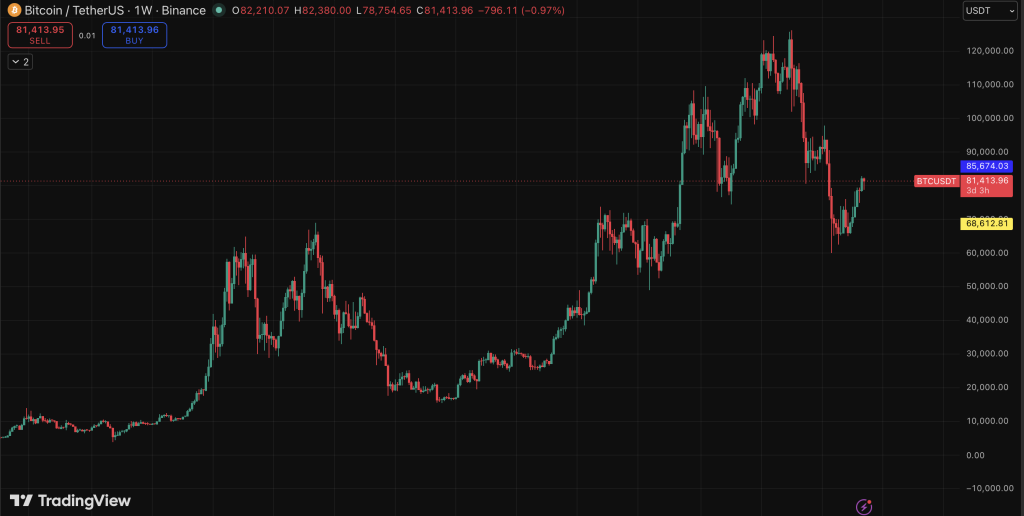
Despite the rebound, Bitcoin is now approaching one of the most important technical resistance areas on the chart. Analysts continue watching the $82,400 to $83,000 range closely because it lines up with the 200-day moving average and the upper boundary of several recent trading structures.
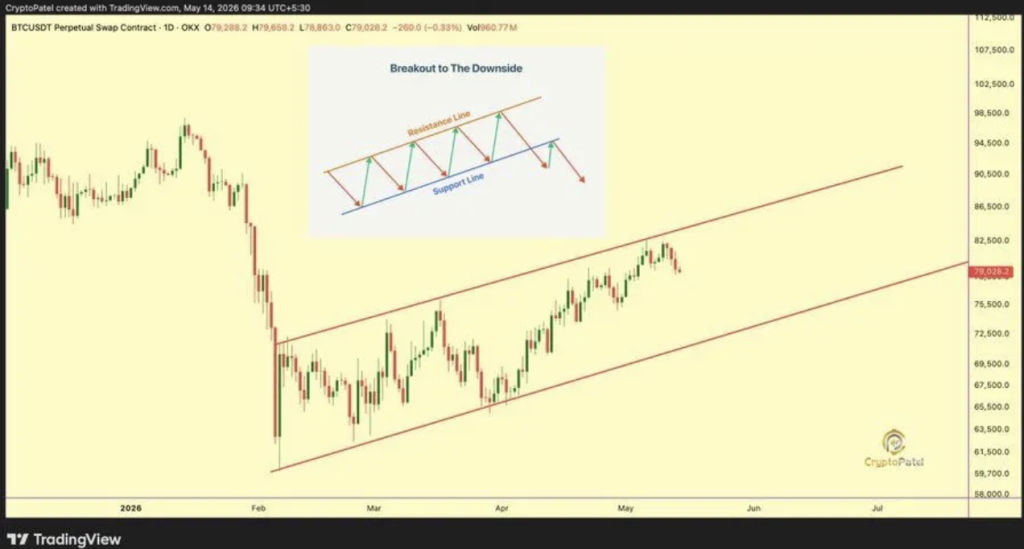
Some traders believe Bitcoin has remained inside a broader ascending channel since early April. Previous touches near the lower edge of that channel triggered strong recoveries, including rallies from roughly $71,000 toward $78,000 and another move from around $75,000 to nearly $83,000 later in the month.
This latest push feels slightly different though because BTC is once again running directly into heavy resistance after rebounding rapidly from below $80K. If bulls manage to secure a daily close above $83,000, many analysts believe the next move could target the $86,000 to $87,000 region fairly quickly.
On the other hand, failure to break above resistance could keep Bitcoin trapped inside a broader consolidation range. In that scenario, traders would likely start watching support near $79,000 first, followed by the deeper $76,500 to $78,000 zone underneath.
Analysts Remain Divided on Bitcoin’s Next Move
Not everyone is fully convinced the rally still has enough strength to continue higher immediately. Some analysts remain bullish, arguing that the recent dip below $80,000 looked more like a stress test for buyers rather than the beginning of a larger breakdown.
Others are becoming more cautious. Analyst Crypto Patel recently pointed toward fading momentum, weaker trading volume, and the formation of a lower high near resistance as potential warning signs. According to his outlook, a stronger rejection near the upper channel boundary could eventually drag BTC back toward the $71,000 to $72,000 demand area. A deeper breakdown could even expose the $60,000 to $62,000 range if the broader structure completely fails.
Still, Patel noted that a confirmed close above $83,000 would invalidate much of the bearish setup.
Prediction markets also remain split. Polymarket data showed traders placing roughly a 48% chance on Bitcoin reclaiming $100,000 before the end of the year, even while U.S. stock indexes continue hovering near record highs. For now, the market still seems stuck between growing regulatory optimism and ongoing macroeconomic uncertainty.