

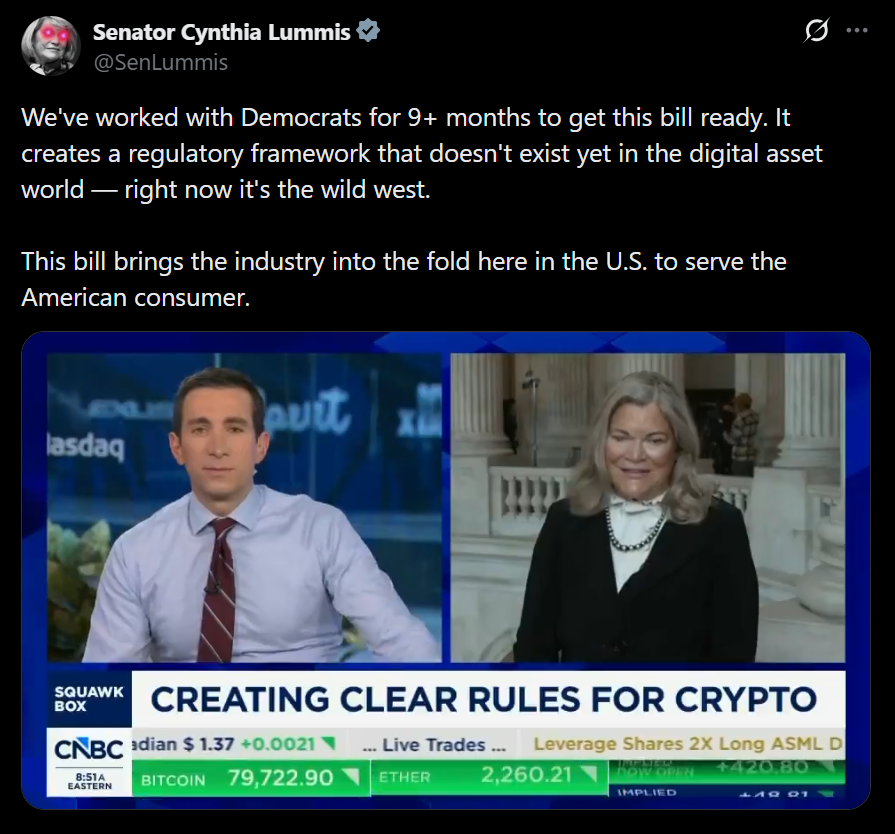
- Senator Cynthia Lummis confirmed the Clarity Act is advancing with bipartisan backing
- The bill aims to establish a formal regulatory framework for digital assets in the U.S.
- Crypto markets are closely watching as the legislation moves toward presidential approval
The long-running push for clear crypto regulation in the United States may finally be moving out of the talking phase and into actual law. Senator Cynthia Lummis announced that the Clarity Act has secured bipartisan support, pushing the legislation one major step closer to becoming official policy.

For an industry that has spent years operating inside regulatory gray zones, the development feels pretty significant. Crypto companies, investors, and even traditional financial firms have been waiting for clearer rules for what honestly feels like forever.
What the Clarity Act Actually Does
According to Lummis, the Clarity Act is designed to establish a structured regulatory framework for digital assets across the United States. The goal is to define which agencies oversee different parts of the crypto market while creating clearer standards for compliance, trading, custody, and innovation.
Right now, one of the biggest problems facing crypto firms is regulatory overlap and uncertainty. Companies often don’t know whether assets fall under securities laws, commodities rules, or something else entirely until enforcement actions suddenly appear.
The Clarity Act aims to reduce that confusion by creating more predictable guidelines for how digital assets are classified and regulated. That predictability could become a major unlock for institutional participation if firms finally feel safer operating inside the U.S. market.
Why Bipartisan Support Matters
The bipartisan backing may actually be the most important part of the story. Crypto legislation in Washington has often stalled because support tends to fracture along political lines, but the Clarity Act appears to be gaining traction from both Republicans and Democrats.
That broader support gives the bill a much stronger chance of surviving the political process and eventually reaching the president’s desk. Markets tend to react differently when legislation looks genuinely achievable rather than just another proposal floating around Congress for headlines.
Investors are paying attention because regulatory clarity has become one of the biggest missing pieces preventing wider institutional adoption. Many firms want exposure to digital assets, but uncertainty around compliance and enforcement still creates hesitation behind closed doors.
The Banking Industry Is Watching Closely
During her appearance on CNBC’s “Squawk Box,” Lummis also addressed concerns about how crypto regulation could impact traditional banking. Some critics argue clearer digital asset rules may encourage capital to flow away from legacy financial institutions and toward blockchain-based systems.
Lummis pushed back on the idea that crypto and banking must exist in direct conflict. Instead, she framed digital assets as an emerging financial sector that can coexist alongside traditional banking infrastructure while offering consumers more choice and innovation.
Whether banks fully agree with that perspective is another question entirely. But one thing is becoming harder to ignore, crypto regulation is no longer hypothetical policy discussion anymore. Washington is starting to move, slowly maybe, but still moving.