

- Bitcoin has fallen nearly 15% in June, pushing the Crypto Fear and Greed Index to an extreme fear reading of 11.
- Analysts remain divided on the timing of a recovery, with some projecting a potential market bottom later in 2026.
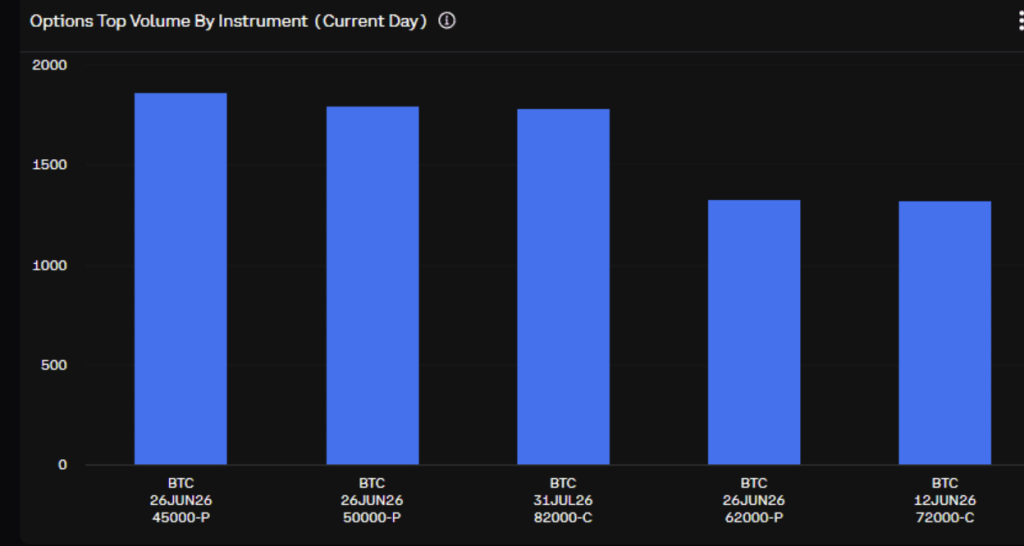
- Institutional traders are increasingly hedging against a drop toward the $50,000 and $45,000 price levels.
Bitcoin endured a brutal month in June, sliding nearly 15% as selling pressure intensified across the crypto market. The decline accelerated after reports surfaced regarding Strategy’s Bitcoin sell-off, triggering fresh concerns among investors who were already navigating a fragile market environment.
What really fueled the panic, however, was speculation that the recent sale may not be an isolated event. Some traders began worrying that a much larger wave of selling could still be ahead. As of publication, Strategy founder Michael Saylor had neither confirmed nor denied those concerns, leaving market participants to fill in the blanks themselves — and markets rarely react well to uncertainty.
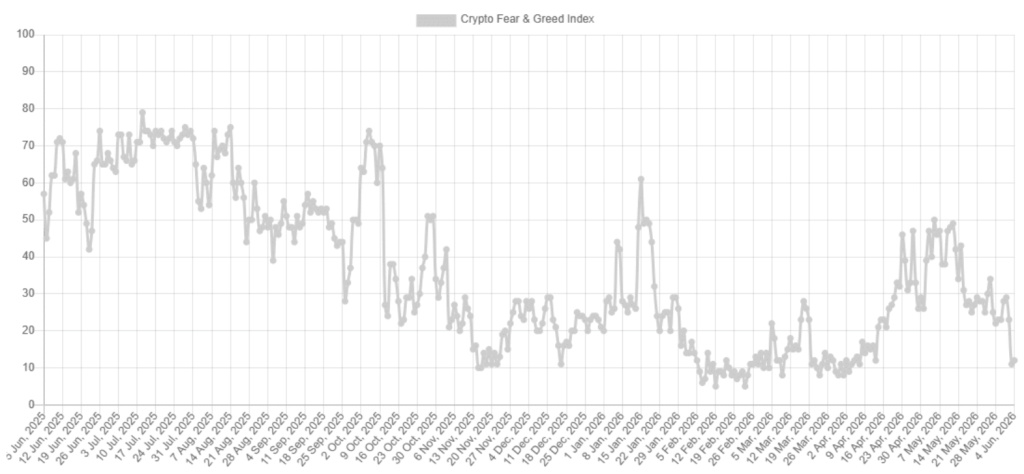
Extreme Fear Returns to Crypto Markets
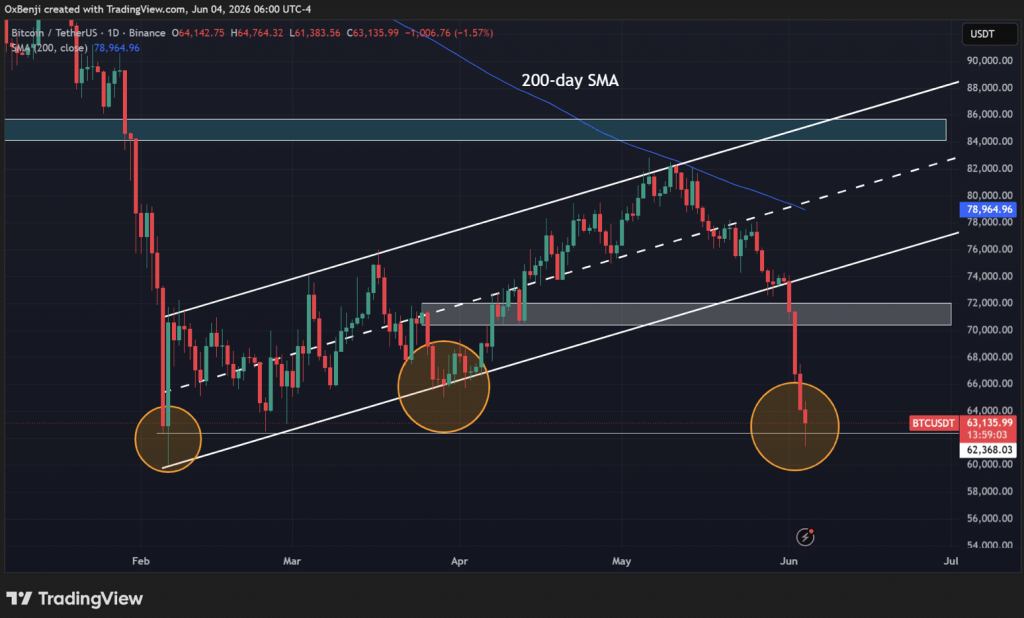
The growing anxiety pushed the Crypto Fear and Greed Index down to a reading of just 11, firmly placing sentiment in the “Extreme Fear” category. At the same time, Bitcoin dropped to roughly $61,200, extending its year-to-date losses to around 25%.
Interestingly, this isn’t the first time fear has reached such levels. Similar readings appeared near local market bottoms in both February and March, leading some investors to wonder whether another reversal could be approaching. Still, not everyone believes a recovery will arrive anytime soon.
Veteran trader Peter Brandt noted that while Bitcoin has already reached an important support zone near its February lows, the market could still experience further weakness before establishing a meaningful bottom.
According to Brandt, Bitcoin may continue grinding lower or even experience a final capitulation event before finding lasting support. In his view, a tradable bottom may not emerge until October, suggesting investors could face several more months of volatility.
Stocks Rally While Bitcoin Struggles
One of the more notable developments during Bitcoin’s decline has been the stark contrast between crypto and traditional markets. While Bitcoin continued losing ground, major stock indexes pushed higher, driven largely by enthusiasm surrounding artificial intelligence companies.
That divergence has caught the attention of several market analysts. Jake Ostrovskis, Head of OTC Trading at Wintermute, believes Bitcoin could struggle to regain investor interest until capital begins rotating away from the AI sector.
In his assessment, a cooling of the AI-driven rally may be necessary before investors seriously reconsider crypto exposure. For now, many market participants remain focused on technology stocks and emerging AI opportunities rather than digital assets.
AI Boom Could Shape Bitcoin’s Next Cycle
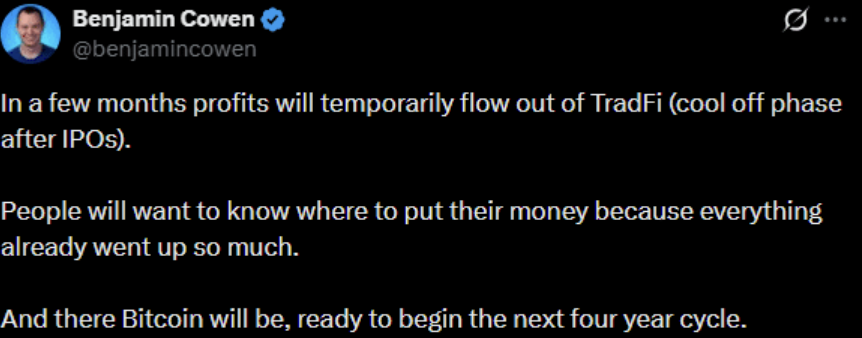
Analyst Benjamin Cowen echoed a similar outlook, suggesting that a shift away from AI investments could eventually help ignite Bitcoin’s next major bull cycle. Historically, Bitcoin has benefited when capital rotates between sectors, and some traders believe the current concentration in AI-related assets may eventually reverse.
Several highly anticipated public offerings could keep attention on the AI industry for much of 2026. Elon Musk’s SpaceX is expected to pursue a public listing in June, while Anthropic, the company behind Claude AI, is reportedly targeting a September debut. OpenAI has also been widely rumored as a future IPO candidate, though no official timeline has been announced.
As long as those opportunities continue attracting investor capital, crypto could face stiff competition for attention.
Institutional Traders Prepare for More Downside
Professional investors appear to be positioning cautiously as well. Data from Deribit shows that options traders, particularly institutions, have increasingly sought protection against a deeper Bitcoin correction.
The most actively traded put options for the end-of-June expiration were concentrated around the $50,000 and $45,000 strike prices. Put contracts generally increase in value when prices decline, meaning traders are effectively betting on — or hedging against — the possibility of Bitcoin falling significantly further.
While fear remains elevated, history shows that extreme pessimism often appears near important turning points. Whether this latest bout of fear signals a bottom or simply another stop on the way down remains the question hanging over the market.