

- Bitcoin surged toward $69,000, breaking above $68,000 for the first time since June.
- Roughly $1.1 billion in Bitcoin perpetual futures shorts were liquidated, marking the largest daily short liquidation on record.
- Total crypto liquidations approached $2 billion in 24 hours as the sudden rally caught bearish traders off guard.
Bitcoin has staged a sharp breakout, climbing toward $69,000 and triggering a historic wave of liquidations across the crypto derivatives market.
The move marked Bitcoin’s first break above $68,000 since June, ending weeks of relatively tight range-bound trading. As BTC accelerated higher, traders positioned for further declines were forced to rapidly close leveraged positions.
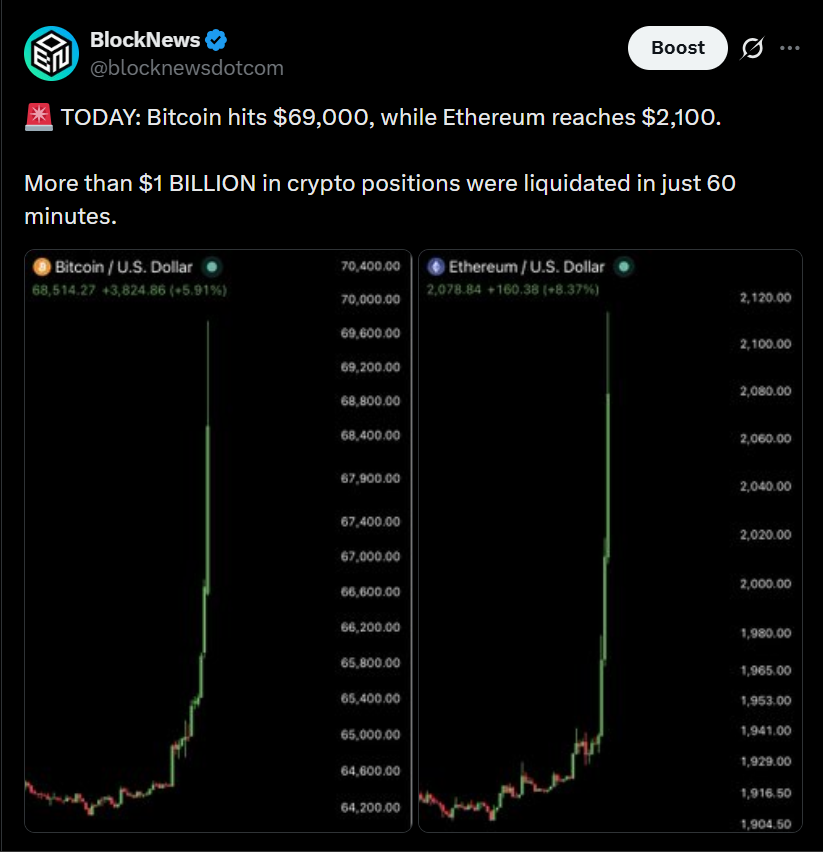
Bitcoin Shorts Face Record Liquidations
Around $1.1 billion worth of Bitcoin perpetual futures short positions were liquidated during the move, reportedly exceeding previous daily records from the 2021 and 2025 market cycles.
Across the broader crypto market, total liquidations approached $2 billion over 24 hours, with short positions accounting for most of the damage.
The scale of the squeeze likely contributed to Bitcoin’s momentum. When leveraged shorts are liquidated, exchanges automatically purchase assets to close those positions, potentially creating additional buying pressure and accelerating an already-rising market.

Treasury Move Boosts Risk Appetite
The rally also followed the U.S. Treasury‘s announcement that it would at least double the size of certain long-duration debt buybacks, increasing maximum operations from $2 billion to at least $4 billion.
Treasury yields initially moved sharply lower following the announcement, helping improve broader market sentiment and potentially supporting demand for risk assets such as Bitcoin.
For crypto traders, the bigger question is whether Bitcoin can hold its breakout after the liquidation-driven surge. A sustained move above the recent trading range could signal improving momentum, while a quick reversal would suggest much of the rally came from forced short covering rather than lasting spot demand.