- Bitcoin climbed more than 4% after news of a U.S.-Iran peace agreement and the reopening of the Strait of Hormuz.
- Ethereum, Solana, and XRP outperformed BTC, posting gains of nearly 10% or more within 24 hours.
- Despite the rally, market sentiment remains in Extreme Fear territory, suggesting volatility could continue.
Crypto markets received a major boost after President Donald Trump announced a peace agreement with Iran that includes reopening the Strait of Hormuz, one of the world’s most critical energy
shipping routes. The news immediately sparked a wave of buying across risk assets, with cryptocurrencies among the biggest beneficiaries.
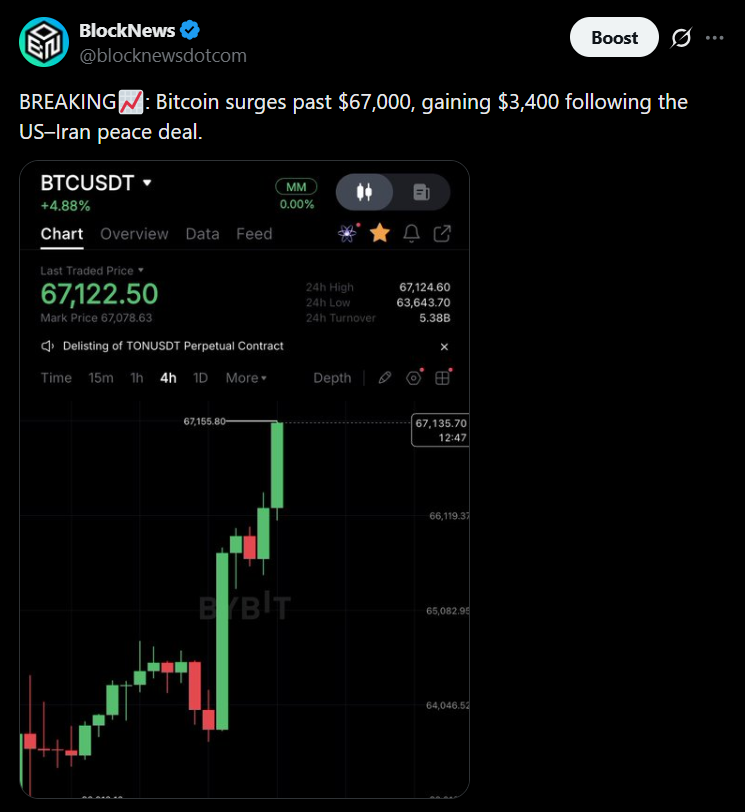
Bitcoin surged roughly 4.4% over a 24-hour period, climbing from around $63,000 to nearly $67,000. The move helped restore confidence after weeks of geopolitical uncertainty weighed heavily on digital assets. While Bitcoin led the rally, the strongest gains came from major altcoins, signaling that investor appetite for risk may be returning.
Ethereum, Solana, and XRP Outperform Bitcoin
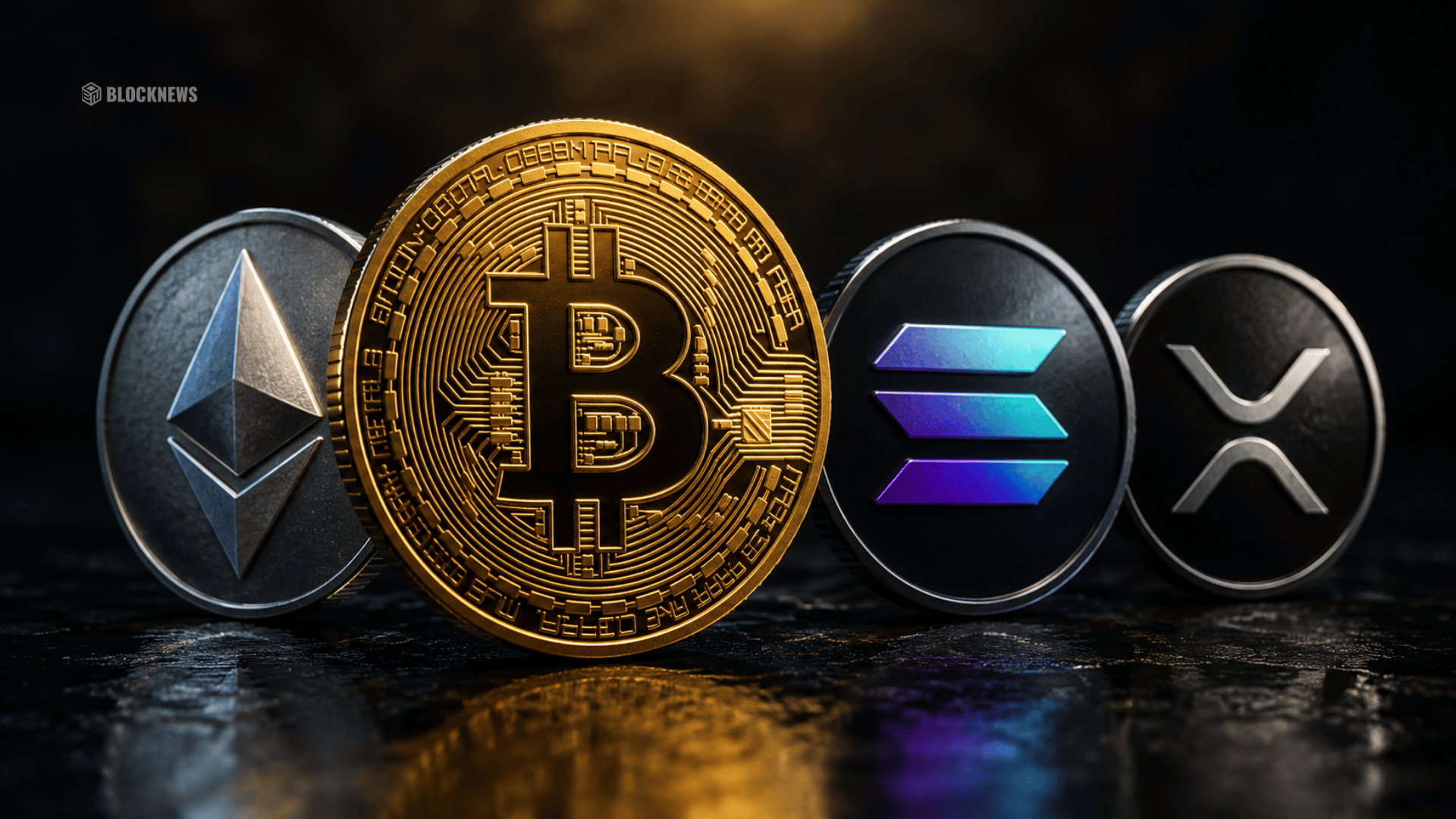
The rally spread quickly across the broader crypto market. Ethereum gained nearly 10%, pushing above the $1,800 level, while Solana jumped more than 10% to trade near $74. XRP also participated in the recovery, climbing above $1.25 as traders moved back into higher-risk assets.
Bitcoin’s gains may appear smaller by comparison, but a 4.4% move on an asset trading above $60,000 still represents thousands of dollars per coin. Over the last seven days, Bitcoin has risen roughly 4.5%, indicating that most of the rally occurred immediately after the peace deal announcement.
The stronger performance from altcoins is particularly noteworthy. Historically, when Ethereum and Solana outperform Bitcoin by a wide margin, it often signals increasing investor confidence and a willingness to move further out on the risk curve.
Why the Strait of Hormuz Matters to Crypto
At first glance, a shipping route in the Middle East may seem disconnected from digital assets. In reality, the Strait of Hormuz plays a critical role in global energy markets. A significant portion of the world’s oil passes through the narrow waterway, making it one of the most important trade routes on the planet.
When tensions threaten oil shipments, crude prices tend to rise, fueling inflation concerns. Higher inflation can force central banks to maintain tighter monetary policies, creating a difficult environment for risk assets such as stocks and cryptocurrencies. By reopening the strait and reducing geopolitical risk, the agreement effectively removes a major source of market uncertainty.
Lower energy costs could eventually help ease inflationary pressure, improving the outlook for interest rates and creating more favorable conditions for speculative investments. Since crypto markets trade around the clock, they often react to these developments faster than traditional financial markets.
Fear Remains High Despite the Recovery
Although prices moved sharply higher, investor sentiment remains surprisingly cautious. The Crypto Fear and Greed Index recently stood at 20, keeping it firmly within the “Extreme Fear” category. Just one week ago the index sat at an even lower reading of 8, showing sentiment has improved but remains far from healthy.
This matters because deeply negative sentiment often leaves a large amount of capital sitting on the sidelines. When a positive catalyst arrives, short sellers can be forced to cover positions while hesitant investors rush back into the market at the same time. That combination can amplify rallies beyond what fundamentals alone might justify.
Can the Rally Continue?
The biggest question facing investors is whether the current move marks the beginning of a sustained recovery or simply a relief rally after a prolonged selloff. Many sectors within crypto were deeply underwater before the announcement, meaning a portion of the recent gains represents lost ground being reclaimed rather than entirely new momentum.
Market participants are also watching closely for developments surrounding the peace agreement itself. Geopolitical deals can sometimes encounter implementation challenges, and any signs of setbacks could quickly weigh on sentiment again. At the same time, upcoming inflation data, central bank decisions, and regulatory developments remain key variables for the broader market.
For now, the strong performance of Ethereum, Solana, and other altcoins suggests investors are becoming more comfortable taking on risk again. Whether that optimism evolves into a lasting bull run will likely depend on whether positive macroeconomic and geopolitical conditions continue to improve in the weeks ahead.