
- XRP and XLM are displaying nearly identical chart structures after months of consolidation.
- XLM recently gained momentum following DTCC’s decision to integrate tokenized securities infrastructure with Stellar.
- XRP could benefit from growing regulatory clarity as the Digital Asset Market Clarity Act advances through Congress.
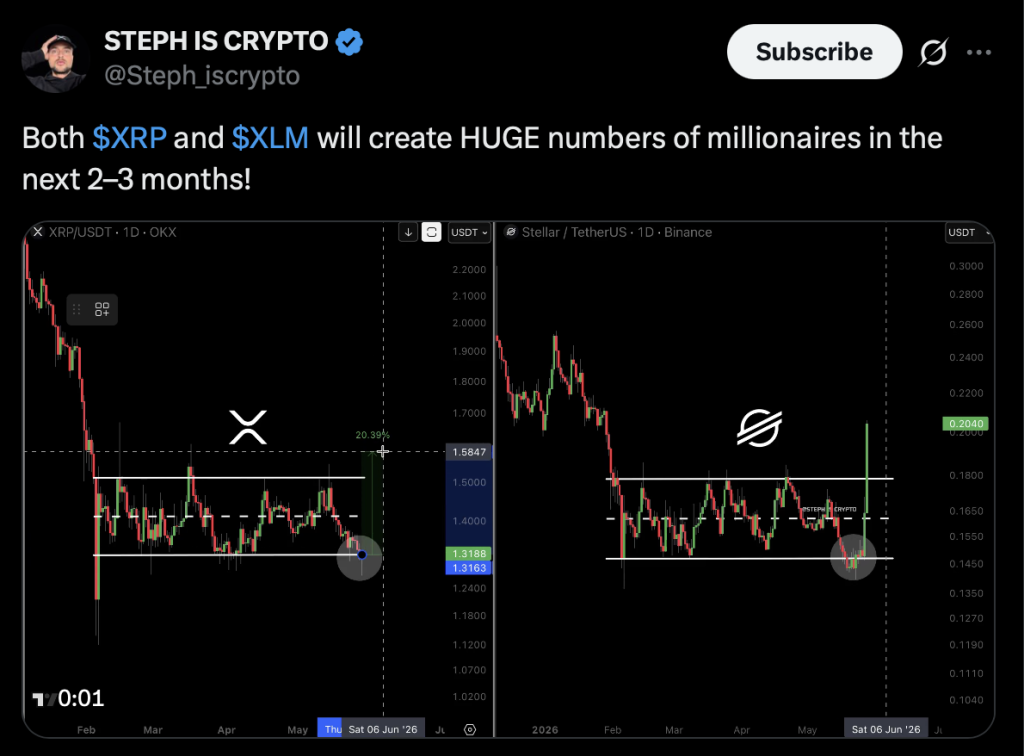
Crypto analyst Steph Is Crypto recently highlighted an interesting development that has caught the attention of traders across the market. A side-by-side comparison of XRP and Stellar (XLM) on the daily timeframe reveals remarkably similar price structures, with both assets spending months trapped inside well-defined trading ranges while much of the broader crypto market moved in different directions.
What makes the setup particularly interesting is timing. XRP currently trades near $1.32, sitting close to the lower boundary of its range, while XLM has already started showing signs of life after breaking free from a horizontal channel that held prices down since the market-wide correction earlier this year. Both assets appear to be approaching pivotal moments, and if historical chart behavior is any guide, the next move could be significant.
Markets often spend long periods compressing before explosive breakouts occur. That’s exactly the kind of structure traders believe they’re seeing now. Price action has tightened, volatility has contracted, and both charts are beginning to hint that a directional move may be closer than many expect.
Technical Structure Suggests Momentum Could Be Building
Looking closer, both XRP and XLM have repeatedly defended key support zones throughout their consolidation phases. XRP has managed to hold around the $1.31 region on multiple occasions, while XLM consistently found buyers near the $0.145 level whenever selling pressure intensified.
The charts also reveal another similarity. Both assets struggled to sustain moves above the midpoint of their respective ranges, creating a ceiling that repeatedly pushed prices back down. However, XLM recently broke through its range following a major fundamental catalyst, potentially offering a glimpse of what could happen if XRP follows a similar path.
Steph believes the current setup could ultimately lead to substantial gains for both assets over the coming months. While predictions of life-changing returns should always be approached carefully, the structural similarities between the two charts are difficult to ignore. If momentum continues building, many traders expect volatility to return in a much bigger way.
Stellar Gains Institutional Momentum Through DTCC Partnership
One reason XLM has recently outperformed is the emergence of a major institutional catalyst. On May 27, the Depository Trust & Clearing Corporation (DTCC) announced plans to integrate aspects of its tokenized securities infrastructure with the Stellar blockchain.
The significance of this partnership extends beyond headlines. DTCC sits at the center of traditional financial markets, processing and settling enormous volumes of transactions every year. Production testing of the integration is scheduled to begin in July 2026, while broader implementation plans are expected to roll out in stages through 2027.
The initiative aims to improve settlement efficiency, expand asset mobility, reduce operational costs, lower counterparty risks, and potentially support longer trading hours for tokenized assets. Investors responded quickly to the announcement. While much of the crypto market struggled, XLM posted a strong rally, signaling that participants viewed the development as more than just another partnership announcement.
XRP Moves Closer to Regulatory Clarity
XRP’s catalyst is taking shape on a different front. Rather than infrastructure adoption, the focus remains on regulation. On May 14, the Senate Banking Committee advanced the Digital Asset Market Clarity Act through a 15-9 vote, with bipartisan support helping move the legislation forward.
For years, one of XRP’s biggest challenges has been uncertainty surrounding digital asset regulation in the United States. The proposed legislation seeks to establish clearer rules for cryptocurrencies and blockchain-based assets, potentially removing a major overhang that has weighed on the sector.
The bill must still navigate additional legislative steps before becoming law, including the merging of proposals from both Senate committees and a final vote. Nevertheless, momentum appears to be building. Reports suggest the White House could receive finalized legislation as early as this summer, creating a potential catalyst that many XRP supporters have waited years to see.
Two Different Catalysts, One Similar Market Structure
What’s making this situation unique is that both XRP and XLM are approaching potential breakout moments from entirely different directions. XLM has gained momentum through institutional adoption and real-world blockchain integration. XRP, meanwhile, is benefiting from improving prospects for regulatory clarity in the United States.
Yet despite the different stories, their charts continue to look remarkably alike. Both spent months consolidating, both defended critical support levels, and both now appear to be approaching inflection points. XLM has already begun moving higher following its DTCC-related catalyst. If XRP receives a similar boost from regulatory developments, traders believe the next few months could become some of the most important for both assets in recent years.
Whether those expectations ultimately materialize remains to be seen. But one thing is clear: the market is watching both charts very closely, and the similarities are becoming harder to ignore.