
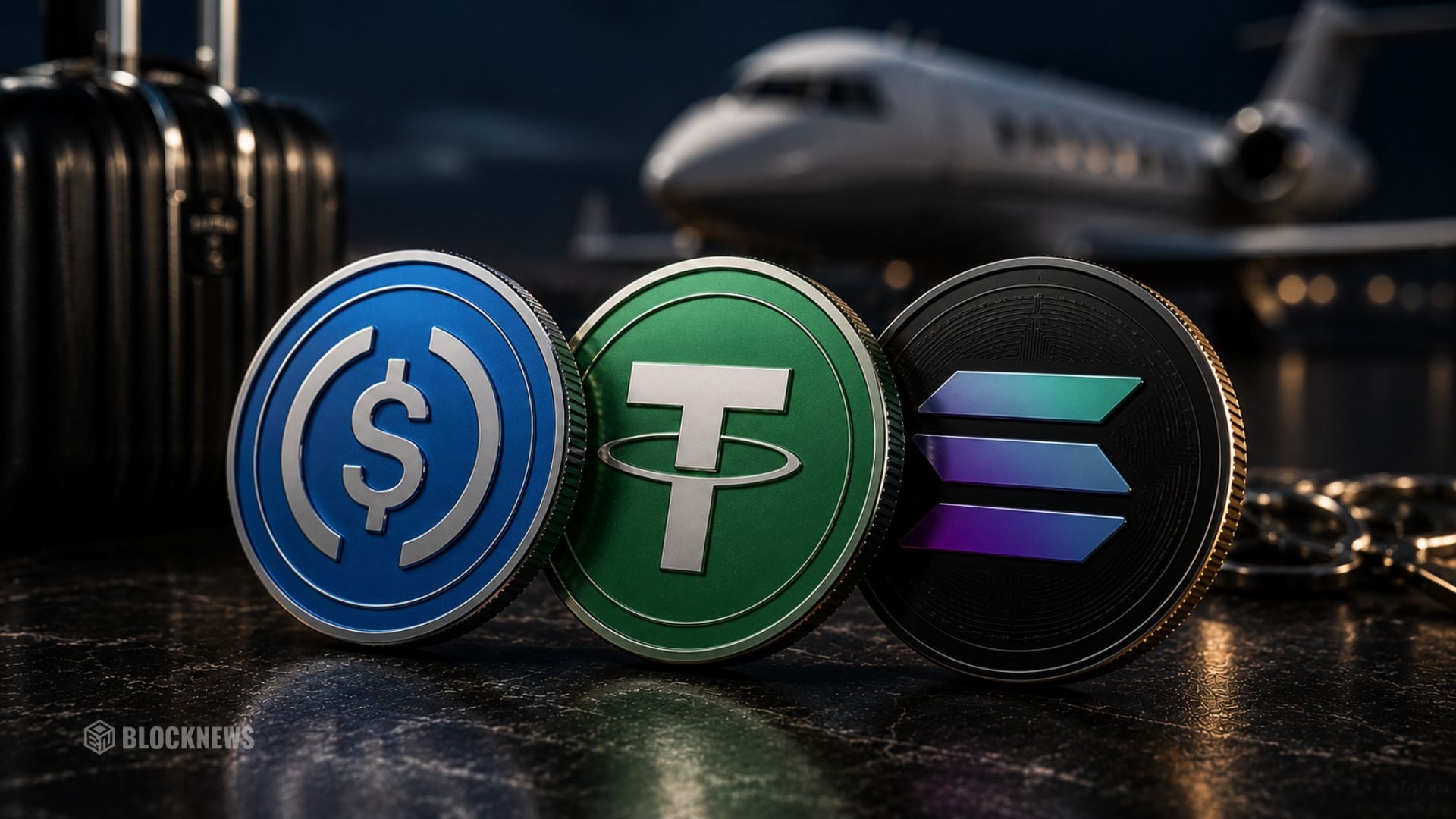
- Solana Foundation, AirAsia MOVE, and Intebix signed an agreement to explore stablecoin payments in Kazakhstan.
- The project would bring Evo (KZTE), a Kazakhstani tenge-backed stablecoin, onto the Solana blockchain.
- AirAsia MOVE’s 17 million monthly users could eventually gain access to blockchain-based travel payments and rewards systems.
Solana is pushing deeper into the real-world payments sector again, this time through a new partnership tied to travel, stablecoins, and Kazakhstan’s growing digital finance market. The Solana Foundation, together with AirAsia MOVE and Kazakhstan-regulated crypto exchange Intebix, announced they signed a Letter of Intent to explore bringing Evo (KZTE) — a stablecoin linked to the Kazakhstani tenge — onto the Solana blockchain.
At first glance, it might sound like another experimental blockchain pilot. But honestly, the scale behind this one makes it more interesting than most people probably realize.
AirAsia MOVE already serves more than 17 million monthly users and connects travelers to roughly 700 airlines alongside nearly one million hotels globally. That gives the companies a massive real-world platform to test whether stablecoin payments can actually function smoothly inside everyday travel commerce rather than just inside crypto-native ecosystems.
Stablecoin Payments Could Enter Travel Bookings
The main goal of the collaboration is to study how Evo (KZTE) could eventually work inside AirAsia MOVE’s ecosystem for users in Kazakhstan. Instead of relying entirely on traditional payment rails or bank cards, travelers may eventually be able to book flights and hotels directly using stablecoins tied to local currency value.
And that’s a pretty important distinction.
A lot of blockchain payment projects still focus heavily on speculation or cross-border transfers between crypto users. This initiative feels more consumer-oriented — trying to integrate stable digital payments into actual travel services people already use regularly.
The companies said they plan to evaluate everything from Solana’s technical performance and settlement speeds to how payments between different parties would process behind the scenes. Regulatory compliance also appears central to the project, especially because Kazakhstan has spent the last few years building clearer digital asset frameworks.
Intebix will reportedly act as the local regulated partner, helping make sure the pilot aligns with Kazakhstan’s financial rules while bridging the crypto side with national compliance requirements.
AirAsia MOVE Wants to Push Travel Commerce Further Into Crypto
AirAsia MOVE executives made it clear this project is part of a broader ambition around modernizing travel payments through emerging technologies. According to Lim Ben-Jie, the company’s Chief of People and Partnership Officer, the collaboration reflects AirAsia MOVE’s interest in reshaping future travel commerce through blockchain infrastructure and digital assets.
He specifically pointed toward stablecoins becoming a smoother payment option for travelers in markets like Kazakhstan, especially as digital asset adoption continues expanding globally.
The bigger long-term opportunity here probably goes beyond simple hotel bookings too. AirAsia MOVE may eventually integrate blockchain payments into loyalty systems, rewards infrastructure, and broader travel-related services across its platform. If that happens successfully, it could create a much more connected digital commerce ecosystem built around stable-value assets rather than relying exclusively on traditional banking rails.
And naturally, Solana’s fast transaction speeds and lower costs make it an attractive network for experiments like this where payment efficiency actually matters in real-world usage.
Kazakhstan Keeps Positioning Itself as a Digital Asset Hub
The timing of this partnership also lines up with Kazakhstan’s broader push into digital finance and crypto regulation. Over the past few years, the country has steadily introduced clearer frameworks through the Astana International Financial Centre, including licensing systems for crypto exchanges and custodians launched back in 2023.
Kazakhstan’s central bank has also become increasingly active around digital assets. Earlier this year, officials announced plans to allocate roughly $350 million into cryptocurrency-related investments and technology firms connected to digital finance infrastructure.
That growing openness toward regulated blockchain activity is helping position Kazakhstan as one of the more active crypto markets emerging across Central Asia. And for Solana, this partnership potentially strengthens its foothold in a region where blockchain adoption still feels relatively early but increasingly important.
Solana Continues Expanding Beyond Pure Crypto Trading
What makes this story stand out is that it reflects another example of Solana moving beyond purely speculative crypto use cases. Instead of focusing only on memecoins or trading activity, the network is increasingly attaching itself to payment infrastructure, tokenized assets, stablecoins, and broader consumer-facing applications.
Whether this specific pilot eventually scales globally is still uncertain, obviously. A lot depends on regulation, user adoption, and how smoothly stablecoin payments actually integrate into traditional travel systems. But the direction feels important.
If blockchain payments are ever going to become mainstream, projects like this — where users book flights and hotels without even thinking about blockchain underneath the experience — probably matter far more than another short-term trading frenzy.
And Solana seems determined to position itself directly inside that future.