- ZNSConnect tool creates and deploys NFTs in under 60 seconds
- Uses multiple AI engines to generate art and metadata
- Removes nearly all barriers to launching NFT collections
NFT creation just got a lot easier, maybe too easy, depending on how you look at it. ZNSConnect has rolled out an AI-powered NFT generator on Soneium that can turn a simple prompt into a fully deployed collection in under a minute. No coding, no design skills, not even a clear idea is required, you can let the AI handle that too.
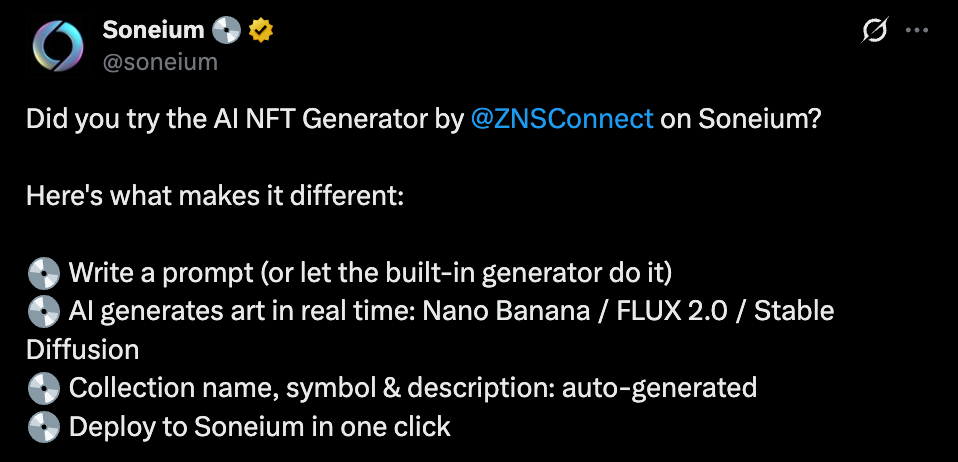
The process is almost suspiciously simple. You type something in, or don’t, and the tool generates artwork, a collection name, symbol, description, and then pushes it on-chain with a single click. It feels less like launching a crypto project and more like filling out a quick form online, which is kind of the point.
NFT Creation Has Become Frictionless
For years, NFTs were pitched as accessible, but the reality was different. You still needed design skills, technical knowledge, or at least someone who had them. Now, that barrier is basically gone.
This tool handles everything, from visuals to metadata to deployment. It even uses multiple AI engines like Google’s Nano Banana, FLUX 2.0, and Stable Diffusion, letting users pick styles without really needing to understand how any of it works. It’s streamlined to the point where the hardest part might just be deciding whether to take it seriously.
Soneium Is Built for This Kind of Scale
The choice of Soneium as the base layer isn’t random either. As an Ethereum Layer-2 built by Sony and Startale, it offers faster and cheaper transactions, which matters when people are launching entire collections, not just single NFTs.
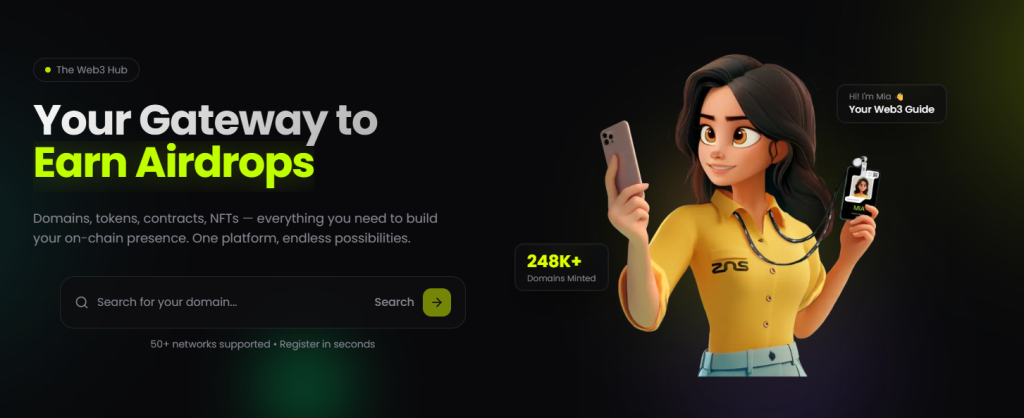
ZNSConnect already operates as a naming service provider within the ecosystem, so this tool fits naturally into what Soneium is trying to build, a more accessible, global Web3 infrastructure. Lower costs and faster deployment make experimentation easier, and this tool leans heavily into that.
The Barrier Is Now Just an Idea
What’s really changed here is the entry point. Creating NFTs used to require skill, then it required capital, now it mostly requires… intent. Or even less than that, since the AI can generate ideas on its own.
Creators can also earn a share of mint fees, which adds a financial layer to something that now takes almost no effort to launch. That’s powerful, but it also raises questions about quality, because when everything is easy to create, not everything is worth creating.
This Doesn’t Fix NFTs, But It Changes Them
Tools like this probably won’t produce the next major NFT collection. That’s not really what they’re for. Instead, they expand who gets to participate, lowering the barrier so more people can experiment, build, and test ideas.
At the same time, it shifts the problem. If launching an NFT becomes trivial, the challenge moves to standing out, building something meaningful, or at least something people care about.
The Question Is No Longer “How”
The biggest shift here is conceptual. The question used to be “how do I launch an NFT?” Now it’s closer to “should I?” or maybe “what would actually make this worth launching?”
AI tools like this don’t solve the identity crisis NFTs are still going through, but they do make participation easier than ever. And that alone is enough to change the shape of the market, even if the outcome isn’t clear yet.