

- Ethereum outperformed Bitcoin in March, signaling early capital rotation
- On-chain activity and exchange outflows suggest growing demand for ETH
- Institutional flows and fundamentals point to potential Q2 outperformance
As the market rolls into a new quarter, there’s a growing focus on where things might head by the end of Q2. But to really understand that, you kinda have to look back first. Q1 wasn’t exactly kind to crypto, Bitcoin dropped over 22%, marking its worst quarterly performance since 2018, which says a lot.
Ethereum didn’t escape the pressure either, falling around 29%, though oddly enough, that was still better than its much steeper losses in early 2025. So yeah, both assets struggled, but the setup now feels a bit different. Sometimes, after a rough quarter like that, markets start to rotate, and that’s where things get interesting.
Capital Rotation Begins to Favor Ethereum
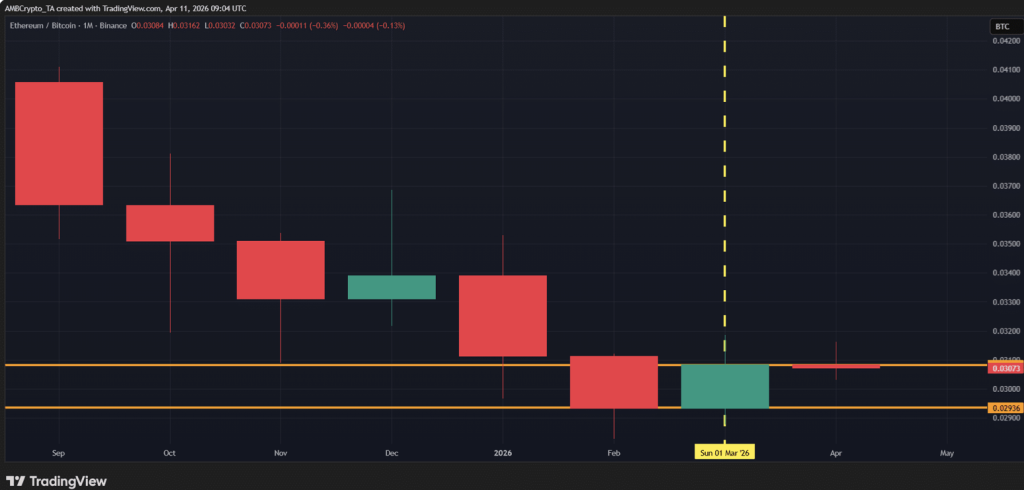
March, in particular, started to hint at a shift. Bitcoin managed a small gain of just under 2%, while Ethereum moved up over 7%, which isn’t huge on its own, but the difference stands out. It suggests that capital might already be rotating, slowly, toward higher-risk, higher-reward assets like ETH.
That idea gets a bit more support when you look at market cap changes. Bitcoin’s market cap dipped slightly, while Ethereum’s actually grew, not by a massive amount, but enough to reinforce the trend. These subtle shifts don’t always grab headlines, but they matter, especially when they start lining up with other signals.
On-Chain Activity Tells a Stronger Story
What’s happening under the surface might be even more important. Ethereum has been seeing steady exchange outflows, which usually means investors are holding rather than selling. That kind of behavior tends to tighten supply over time, even if price doesn’t react immediately, which can feel a bit frustrating in the short term.
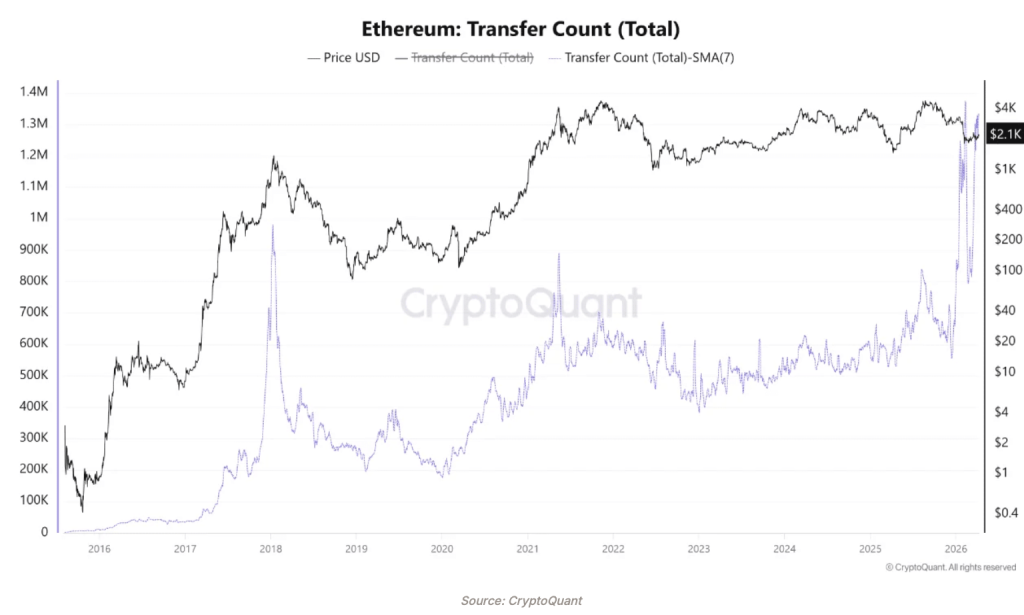
At the same time, network activity is picking up again. Active addresses are climbing, and total transfer counts have pushed back above 1.3 million on a 7-day average. That level hasn’t been seen since mid-February highs, which suggests usage is returning, maybe even building momentum quietly in the background.
Institutional Interest Slowly Aligns With Fundamentals
There’s also a growing sense that institutional flows are starting to catch up with Ethereum’s fundamentals. Indicators like the Coinbase Premium Gap are improving, hinting at stronger demand from US-based investors, which often signals bigger players stepping in. It’s not a flood of capital yet, more like a steady stream, but it’s noticeable.
The thing with Ethereum is that price doesn’t always react instantly to fundamentals. Demand tends to build on-chain first, then show up later in the charts, sometimes all at once. That lag can make it look like nothing is happening, until suddenly, something is.
Ethereum May Be Setting Up for Q2 Outperformance
When you put it all together, the picture starts to make a bit more sense. The ETH/BTC ratio climbing in March wasn’t just random noise, it reflected a mix of capital rotation, tightening supply, and improving network activity. And now, those same factors seem to be lining up again.
Does that guarantee Ethereum will outperform Bitcoin in Q2? Not exactly. But the early signs are there, and they’re hard to ignore. If momentum continues to build, even gradually, ETH could find itself leading the next phase of the market, maybe not immediately, but soon enough.