
- Coinbase CLO says stablecoin deal could happen within days
- CLARITY Act aims to define SEC vs CFTC crypto oversight
- Traders remain split on whether the bill passes this year
A potential breakthrough in US crypto regulation may be closer than expected, with Coinbase Chief Legal Officer Paul Grewal signaling that a key agreement could land within days. Speaking in a recent interview, Grewal said a deal around stablecoin yields tied to the CLARITY Act could be reached within 48 hours. That timeline, if it holds, would remove one of the biggest sticking points holding the bill back.
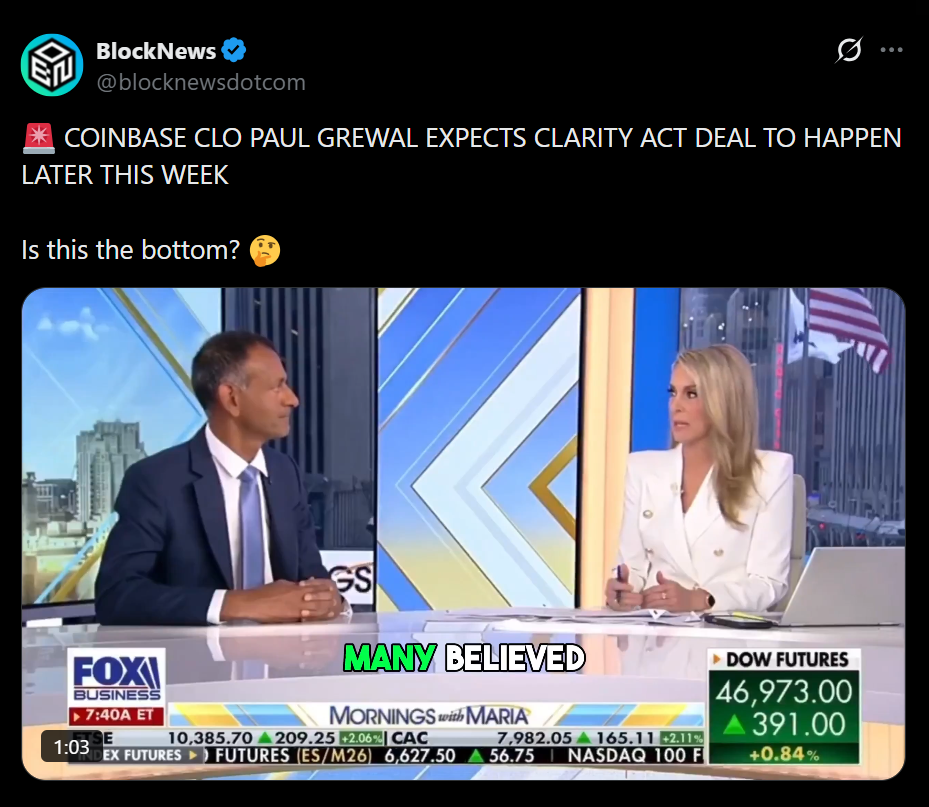
This comes as momentum builds behind the broader market structure legislation, which many see as the missing piece after last year’s GENIUS Act. While that earlier law marked a turning point, Grewal made it clear that the CLARITY Act carries even more weight. It’s meant to define how crypto markets are structured in the US, and more importantly, who regulates what.
Crypto Regulation Hinges on Stablecoin Yield Debate
The biggest friction point has been stablecoin yields, and the divide here is pretty sharp. Banks have pushed back against allowing crypto firms to offer yield-bearing products, while crypto companies argue it’s essential for innovation and competitiveness. That tension has slowed progress, even as both sides continue negotiating behind the scenes.
Recent reports suggest that discussions have intensified again after earlier drafts faced resistance from industry players, including Coinbase. Grewal’s confidence hints that a compromise may finally be within reach, though nothing is officially locked in just yet. It’s one of those moments where progress feels close, but not guaranteed.
CLARITY Act Could Reshape Crypto Oversight
Beyond the yield debate, the CLARITY Act is fundamentally about defining regulatory boundaries. One of its core goals is to determine which digital assets fall under the SEC and which fall under the CFTC. That distinction has been a long-standing gray area, and resolving it could bring much-needed clarity to the market.

There’s also growing optimism that the Senate Banking Committee could move forward with the markup phase this month once lawmakers return from recess. If that happens, a floor vote could follow relatively quickly, pushing the bill one step closer to becoming law.
Market Sentiment Remains Uncertain
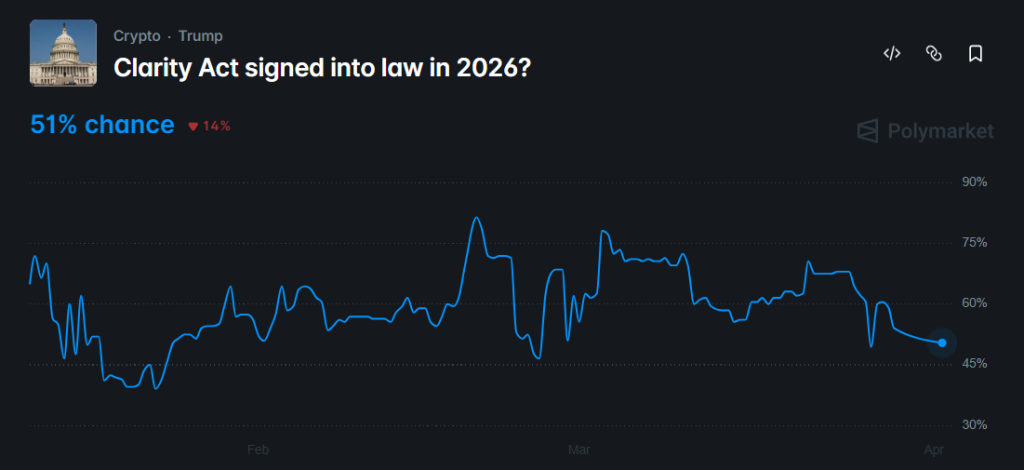
Despite the optimism from insiders, traders aren’t fully convinced. Prediction markets currently show roughly a coin-flip chance that the bill gets signed into law this year. That hesitation reflects both political uncertainty and the complexity of the issues still being negotiated.
There’s also a strategic delay in play. Reports indicate that lawmakers may hold off on releasing the latest draft text to avoid giving opponents time to organize resistance. It’s a careful balancing act, progress is happening, but quietly.