- MoonPay launches open wallet standard designed for AI agents
- Backed by PayPal, Ethereum, Solana, and Ripple contributors
- Enables secure, cross-chain autonomous transactions for AI systems
MoonPay may have just solved one of the biggest bottlenecks holding back AI in crypto, and it’s happening a bit under the radar. While everyone talks about AI agents trading, coordinating, and optimizing strategies, there’s always been a missing piece, they couldn’t actually manage money cleanly across different blockchains. That limitation made “autonomous finance” more theoretical than real.
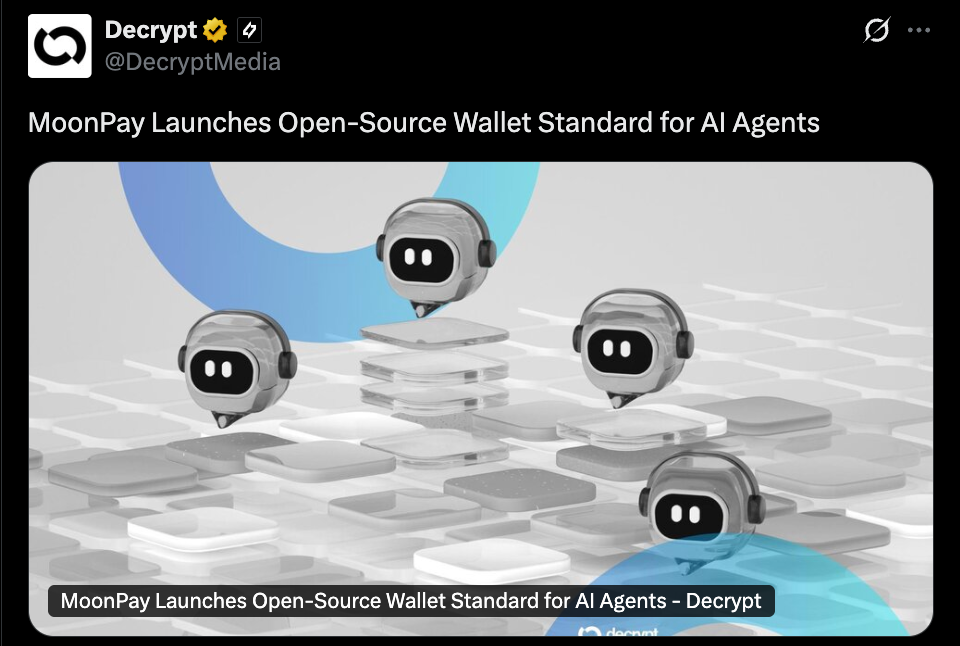
Now, with its Open Wallet Standard, MoonPay is giving AI agents a unified way to hold, manage, and move funds across ecosystems. It sounds technical at first glance, but it’s not just another upgrade. It’s infrastructure that allows AI to actually participate in financial systems, not just analyze them from the sidelines.
Wallet Fragmentation Was Holding AI Back
Until now, crypto wallets have been messy by design. Different chains use different formats, key management is complex, and interoperability is often limited. Humans can navigate that, even if it’s inconvenient. AI systems, though, struggle to scale in fragmented environments.
MoonPay’s approach standardizes how wallets work across chains while keeping private keys secure and abstracted away. That matters because it removes a key barrier, AI agents can now operate without introducing major security risks or relying on fragile workarounds.
AI Can Finally Act, Not Just Observe
This shift changes the role of AI in crypto markets. Instead of just analyzing data or generating signals, agents can now execute actions directly. They can trade, rebalance, pay for services, and interact with protocols in real time, across multiple chains.
And once that capability exists, things start to accelerate. Decision-making loops shrink. Processes that used to take minutes or hours can happen in seconds. It’s not just faster, it’s a different kind of system altogether.
Big Players Are Quietly Aligning
One of the more important signals here is who’s involved. Contributors include PayPal, the Ethereum Foundation, Solana Foundation, and Ripple. That kind of alignment doesn’t happen randomly. It suggests a shared understanding that this layer of infrastructure needs to be standardized early.
This isn’t being treated as an experiment. It’s more like groundwork, something that future systems will rely on whether people notice it now or not.
Autonomous Markets Start to Take Shape
When AI can transact natively, markets begin to behave differently. Liquidity can move continuously, services can price dynamically, and entire workflows can operate without human intervention. It doesn’t eliminate humans, but it shifts their role toward oversight rather than execution.
That transition won’t feel dramatic at first. It rarely does. But over time, the compounding effect becomes obvious, systems move faster, adapt quicker, and operate at a scale that manual processes simply can’t match.
A Quiet Shift With Big Implications
This isn’t a flashy product launch. It’s a foundational upgrade that enables something bigger, AI as an active participant in financial systems. And once that layer is in place, everything built on top of it starts evolving faster.
For now, it’s easy to overlook. But if adoption follows, this could mark the point where AI moves from watching markets to actually shaping them.