- Tokenized OpenAI and Anthropic PreStocks on Solana crashed after both companies rejected the products publicly
- Anthropic and OpenAI said the tokens do not represent authorized equity ownership
- Legal experts warn some buyers may have purchased instruments with no enforceable ownership rights at all
The market for tokenized AI startup exposure just ran headfirst into reality.
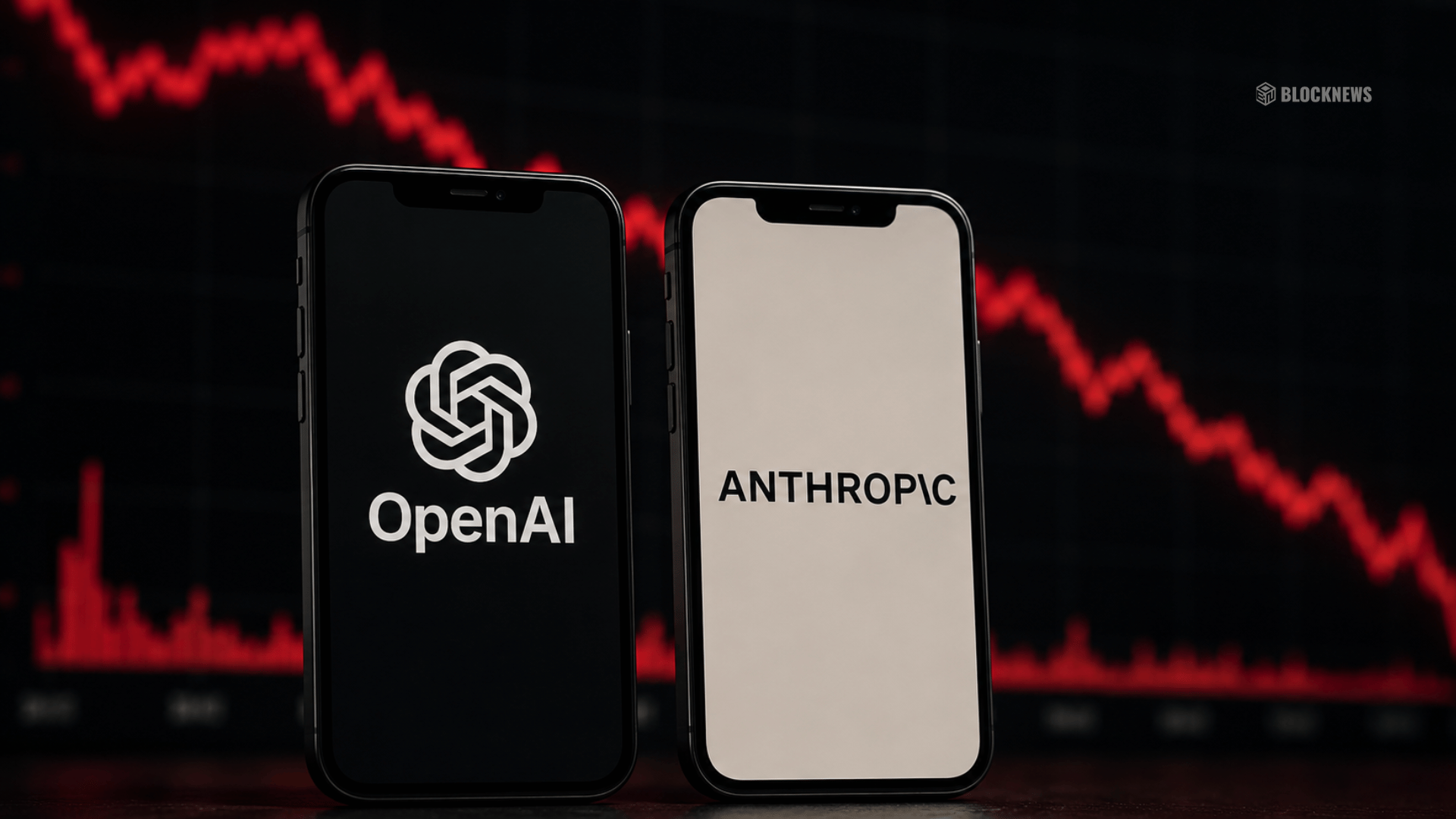
PreStocks tied to OpenAI and Anthropic plunged this week after both companies publicly declared unauthorized equity transfers invalid and warned investors the products were not recognized by the companies themselves.
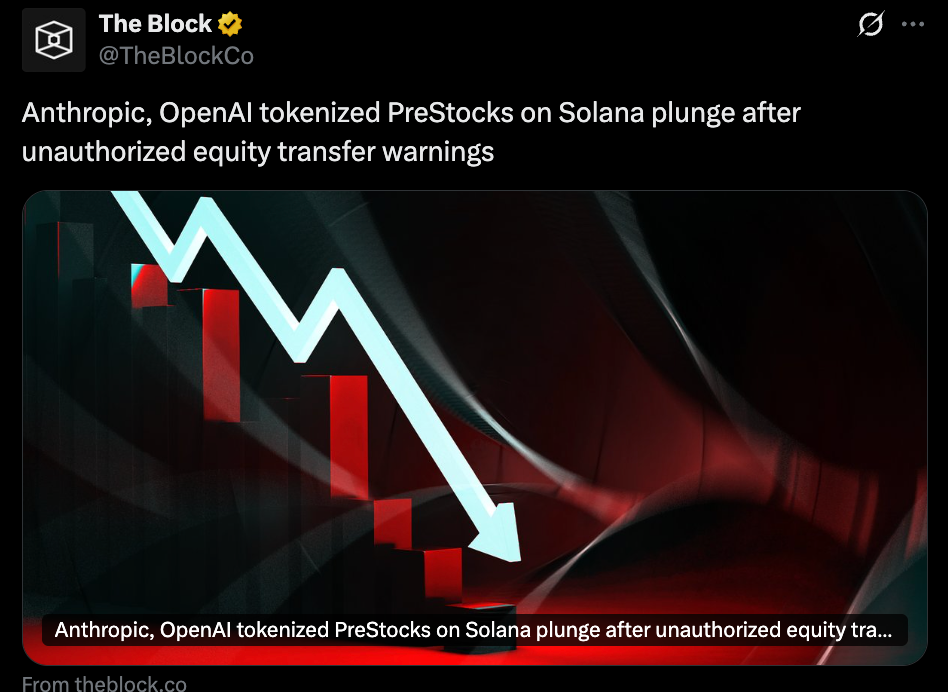
According to CoinGecko data, Anthropic PreStocks dropped roughly 38% while OpenAI-linked tokens collapsed around 46% following the statements.
The Companies Drew A Hard Line
Both OpenAI and Anthropic specifically called out unauthorized secondary market activity involving their private shares.
Anthropic stated bluntly that any third party claiming to sell Anthropic shares to the public was “likely either engaged in fraud or offering an investment that may have no value.” That’s about as direct as corporate legal language gets.
The companies also reportedly identified platforms including Forge, Hiive, and Open Door Partners as entities not authorized to facilitate transfers of their shares.
The Tokens Were Never Real Equity
The important detail many traders appear to have overlooked is that these tokenized PreStocks were designed only to track implied private market valuations — not grant actual ownership in the companies themselves.
In practice, buyers were purchasing economic exposure linked to perceived valuations rather than legally recognized equity stakes.
That distinction suddenly became very expensive once the underlying companies publicly rejected the structure.

Legal Experts Say The Situation Is Serious
Crypto attorney Gabriel Shapiro noted that Anthropic used especially aggressive legal framing under Delaware corporate law by describing the transfers as “void” rather than merely “voidable.”
That difference matters because void transfers may provide buyers with far fewer legal protections or claims later on. In simpler terms, some investors may have discovered they effectively bought nothing enforceable at all.
The situation highlights one of the biggest unresolved problems around tokenized private equity products: blockchain liquidity does not automatically override traditional corporate ownership laws.
The AI Token Gold Rush Just Hit Reality
Interest in tokenized pre-IPO AI exposure exploded over recent months as investors searched for ways to gain indirect exposure to companies like OpenAI and Anthropic before any eventual public listings.
But this week’s collapse showed how fragile those structures can become when the actual companies involved decide they do not recognize the products being traded.
And honestly, the broader lesson here is pretty brutal: just because something trades onchain and tracks a company’s valuation doesn’t necessarily mean you legally own any part of that company at all.
The blockchain can tokenize almost anything. Ownership rights are a very different conversation.