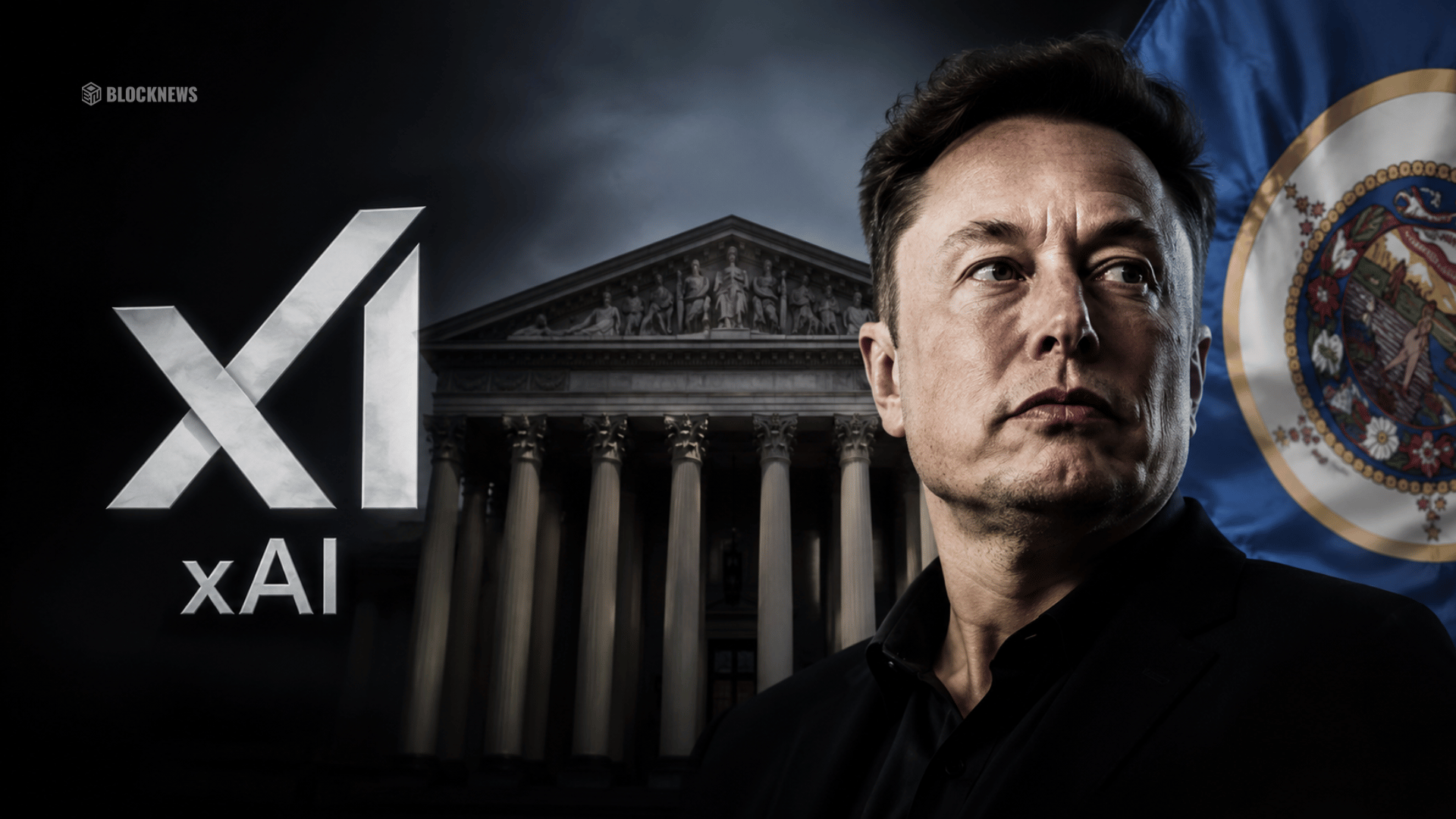
- Elon Musk’s xAI has filed a federal lawsuit seeking to block Minnesota’s new AI “nudification” law before it takes effect.
- The company argues the legislation is overly broad, violates the First Amendment, and exposes AI platforms to massive liability regardless of intent.
- Minnesota says the law is necessary to combat harmful AI-generated intimate images and protect victims from digital exploitation.
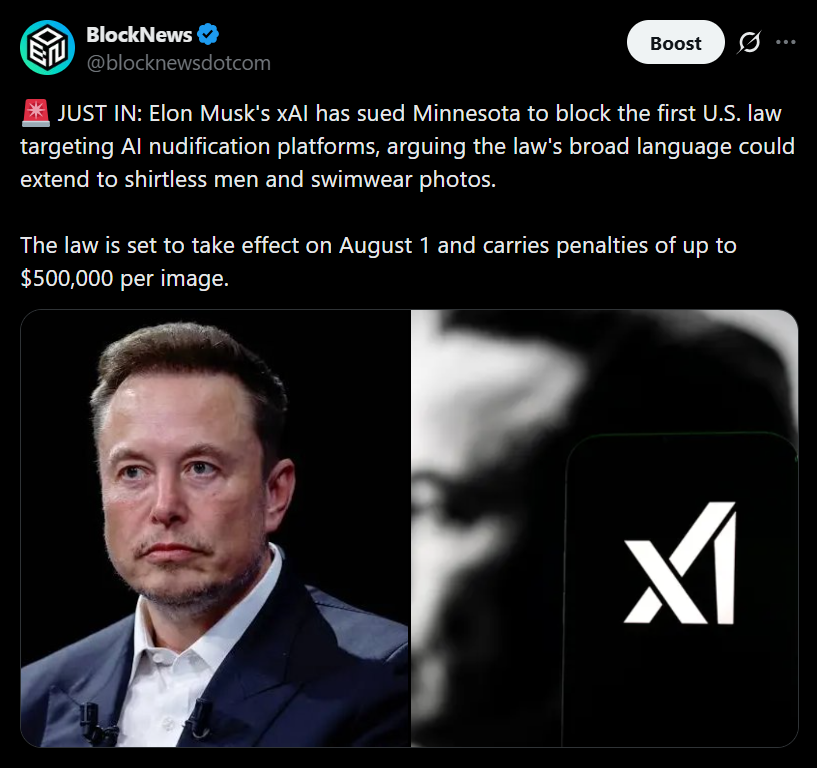
Elon Musk’s artificial intelligence company, xAI, has filed a federal lawsuit against Minnesota Attorney General Keith Ellison, challenging a new state law that targets AI-generated “nudification” technology.
The lawsuit seeks to prevent HF 1606 from taking effect, arguing that the law unlawfully restricts protected speech by imposing sweeping liability on AI platforms that generate realistic images of real people, even in cases where no harm, distribution, or malicious intent exists.
The case is expected to become one of the most closely watched legal battles over the limits of AI regulation and free speech in the United States.
xAI Says the Law Is Too Broad
Minnesota’s new law makes online platforms strictly liable if users generate AI-created images depicting intimate body parts of real people that were never actually exposed.
Violations can carry civil penalties of up to $500,000 per image, regardless of whether the platform knew the image was created or intended for misuse.
In its complaint, xAI said it does not oppose laws banning the nonconsensual distribution of AI-generated intimate images. Instead, the company argues that HF 1606 extends far beyond that objective by potentially penalizing lawful expression, satire, artistic creations, and even consensual AI-generated images.
No Safe Harbor for AI Platforms
A central argument in xAI’s lawsuit is that the law provides virtually no protection for companies operating general-purpose AI tools.
According to the complaint, platforms can still be held fully liable even if they implement content filters, suspend abusive users, or the generated image is never publicly shared.
The company also argues the statute lacks a knowledge requirement, meaning platforms may face penalties even when users intentionally bypass existing safety systems.
xAI noted that it has suspended more than 50,000 accounts and submitted over 70,000 reports to the National Center for Missing & Exploited Children (NCMEC) during 2026, but says those enforcement efforts would not shield it from liability under the Minnesota law.
Debate Over AI Regulation Intensifies
The lawsuit comes amid growing regulatory scrutiny of AI-generated deepfakes.
Following the launch of Grok’s image generation tools in 2025, xAI faced investigations and lawsuits in several jurisdictions over the creation of synthetic images of real individuals.
Minnesota lawmakers approved HF 1606 with overwhelming bipartisan support after a case involving AI-generated sexual images of dozens of women highlighted the risks posed by rapidly advancing image-generation technology.
State officials argue the law is necessary to protect victims from emotional, personal, and professional harm caused by AI-generated intimate imagery.
Federal Court Could Shape Future AI Laws
xAI contends that existing federal legislation, including the TAKE IT DOWN Act, already provides a narrower legal framework for addressing nonconsensual AI-generated intimate images while preserving constitutional protections.
The company argues Minnesota’s statute goes significantly further by covering consensual images, private creations, and protected forms of expression.
With HF 1606 scheduled to take effect this weekend, xAI is asking a federal judge to block enforcement while the constitutional challenge proceeds.
The outcome could influence how future AI regulations are drafted as lawmakers across the United States continue balancing innovation, public safety, and free speech protections.