

- Mainstream viewers reacted with boos and mockery, not curiosity
- The ad became a proxy for crypto distrust rather than brand awareness
- Public perception, not marketing execution, is the real obstacle
When Coinbase’s Super Bowl ad aired, a karaoke-style sing-along built around a Backstreet Boys classic, the response wasn’t excitement or nostalgia. It was groans, boos, and visible discomfort, captured in clips that spread faster than the ad itself. The dominant narrative wasn’t what Coinbase was trying to say. It was how people felt when they saw the logo appear on screen.
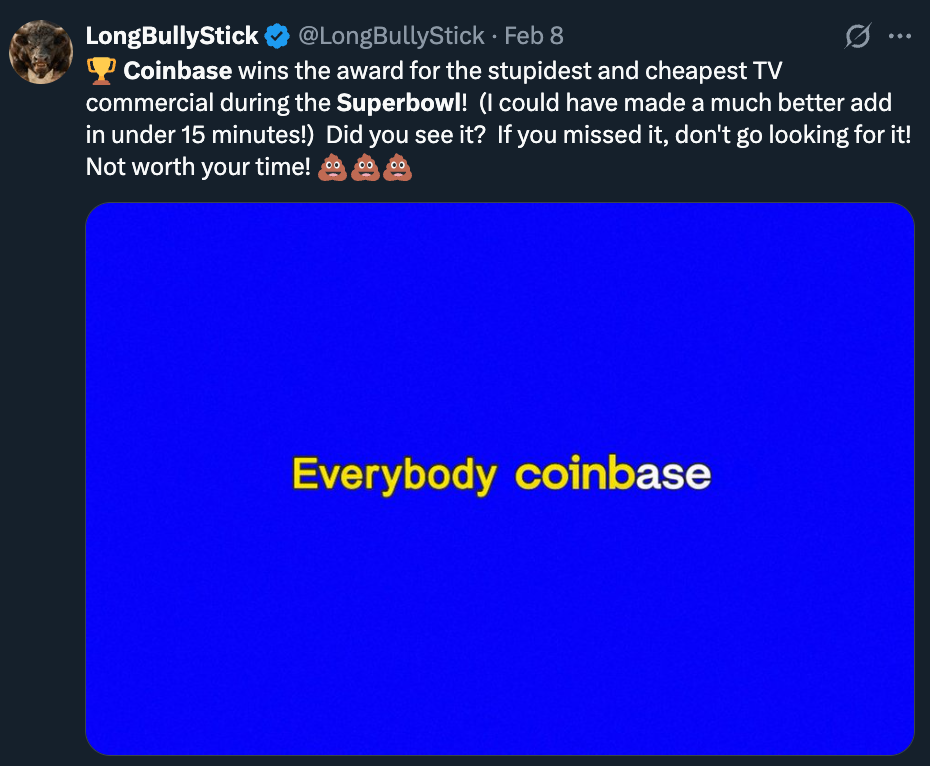
That reaction matters more than ad metrics. Super Bowl ads are designed to spark conversation, but this one sparked rejection. For many viewers, the brand didn’t feel playful or approachable. It felt intrusive, like an industry reminder people weren’t asking for.
This Wasn’t About Creative Taste
Some ad industry voices argued the spot was at least memorable, maybe even clever. But that misses the core issue. People weren’t judging the quality of the ad. They were judging crypto. The sing-along didn’t land because the underlying subject still carries baggage for most mainstream audiences.
To a lot of everyday viewers, crypto isn’t fun or futuristic. It’s associated with price crashes, confusing technology, and promises that didn’t work out for friends, family, or themselves. In that context, nostalgia doesn’t soften the message. It amplifies the disconnect.
The Ad Became a Symbol of Skepticism
Instead of onboarding curiosity, the commercial turned into a symbol of how skeptical the public remains. The boos weren’t really aimed at Coinbase. They were aimed at what crypto represents in the collective mind right now. Volatility. Hype. Risk without reward.
That’s uncomfortable, especially for an industry that believes it’s moved past its early mistakes. But perception lags reality, and in this case, the lag is wide. Retail audiences aren’t neutral anymore. Many are actively turned off.
This Is a Mirror, Not a PR Flop
The harsh truth is that this wasn’t just a bad night for one brand. It was a reflection of where crypto stands culturally. If the biggest advertising stage in the world triggers mockery instead of interest, the problem isn’t messaging polish. It’s trust.
Until crypto is associated with usefulness, stability, and outcomes people can actually feel in their lives, marketing will keep running into the same wall. You can’t sing your way past skepticism. And right now, onboarding isn’t just uphill. It’s fighting gravity.