- Trump-linked accounts executed more than 3,700 stock trades in early 2026
- JD Vance defended the activity by saying independent advisors control the accounts
- Critics argue the timing of several trades raises deeper conflict-of-interest concerns
Vice President JD Vance found himself defending one of the more politically uncomfortable stories currently circling Washington after new ethics filings revealed over 3,700 stock trades tied to President Donald Trump during the first quarter of 2026. The filings estimated transaction values somewhere between $220 million and $750 million, immediately triggering renewed questions about conflicts of interest inside the White House.
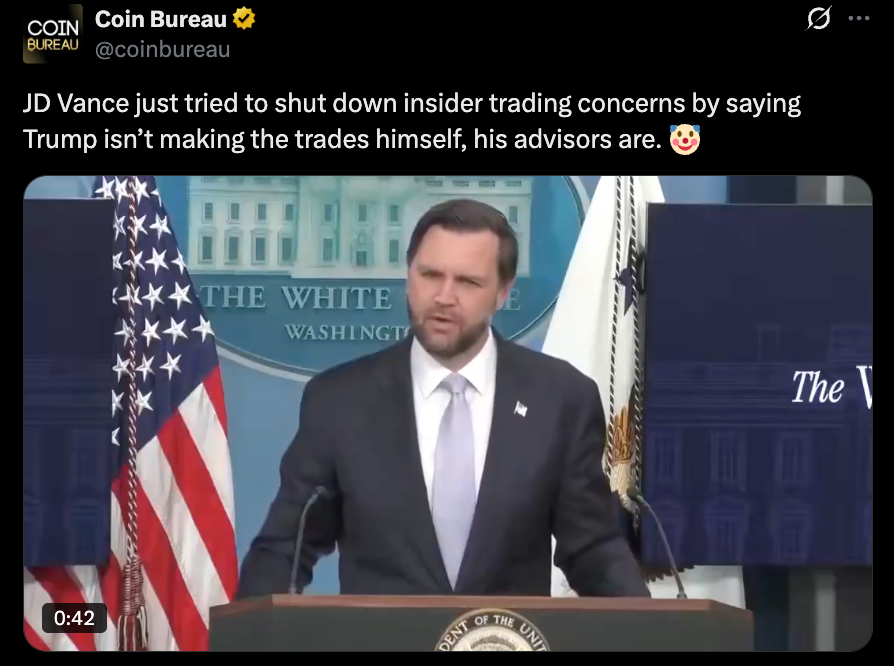
Vance’s defense was straightforward, at least on paper. According to him, Trump does not personally manage the accounts or execute trades himself, instead relying entirely on outside financial advisors operating independently from the administration.
Technically, that explanation follows standard blind trust practices. Politically, though, it’s proving much harder to sell cleanly.
The Scale Of The Trading Activity Is Raising Eyebrows
The filings show roughly 3,600 trades occurring between January and the end of March alone, with major exposure concentrated in large technology and artificial intelligence companies. Several of the reported purchases included names like Palantir, Nvidia, and Axon, companies closely tied to sectors heavily impacted by government policy decisions.
What’s making critics especially uncomfortable is the timing. Some of the purchases reportedly happened shortly before significant company announcements or government-related developments tied to those industries.
Trump also aggressively bought into the market during the S&P 500’s roughly 8% pullback in March, a period where the administration itself was simultaneously influencing economic expectations and policy direction. That overlap is where the accusations of potential conflicts start getting much louder.
Trump’s Public Stock Commentary Adds Another Layer
Part of the controversy stems from Trump’s own public communication style. Critics pointed out that some of the companies appearing inside the filings were also publicly promoted on Truth Social, occasionally with ticker symbols directly included in the posts themselves.
That’s where the “blind trust” argument becomes much harder for opponents to accept comfortably. Even if Trump isn’t physically placing the trades himself, public endorsements tied to companies held inside accounts linked to him naturally create the appearance of overlap between political influence and financial benefit.
Vance attempted to dismiss concerns by saying Trump isn’t sitting in the Oval Office actively trading stocks on Robinhood. Which, to be fair, is probably true. But the broader ethics concern isn’t really about whether Trump personally clicked the buy button. It’s about whether presidential influence and financial interests are becoming too closely intertwined.
The Insider Trading Irony Isn’t Helping
The situation also carries a pretty awkward political contradiction. During his February State of the Union address, Trump publicly called on Congress to pass the Stop Insider Trading Act aimed at limiting stock trading activity among government officials.
Vance himself recently said he strongly supports banning congressional stock trading altogether, adding that “so is the president.” That stance now sits somewhat uncomfortably beside reports showing hundreds of millions of dollars in trading activity tied to Trump-linked accounts during the exact same period.
Again, defenders argue independent advisors managing a trust is completely standard practice. Critics counter that the scale, timing, and public promotion overlap make the arrangement look far less “blind” than advertised.
Washington’s Ethics Debate Is Only Getting Louder
The broader issue here goes beyond just Trump or Vance specifically. Public trust around financial conflicts in politics has already been deteriorating for years as lawmakers, officials, and government-connected individuals repeatedly face scrutiny over trading activity connected to sensitive information or policy influence.
That’s why this story is gaining traction so quickly. It touches directly on questions many voters already feel skeptical about, whether political power and private financial interests can realistically stay separated once massive amounts of money are involved.
The “advisors handled it” defense may ultimately hold up procedurally. But politically, the optics surrounding thousands of trades tied to a sitting president while markets react to his administration’s decisions are likely going to remain very difficult to explain away cleanly.