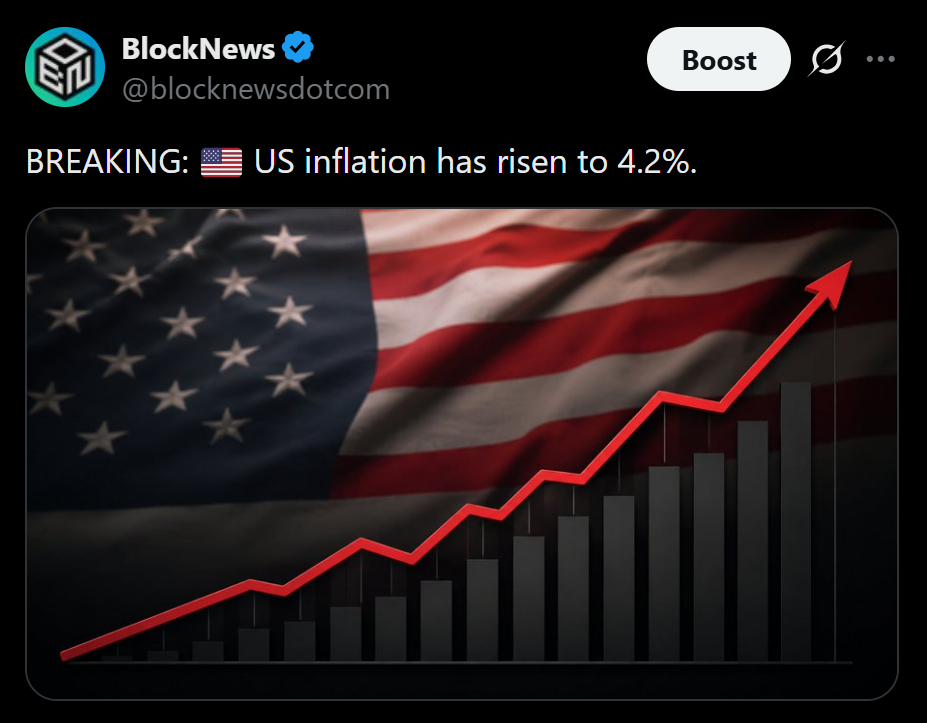
- U.S. inflation accelerated to 4.2% year-over-year in May, marking the highest reading since April 2023.
- Energy prices surged as geopolitical tensions and supply disruptions pushed fuel costs sharply higher.
- Rising inflation is increasing pressure on the Federal Reserve and weighing on Bitcoin and other risk assets.
Inflation is moving in the wrong direction again, and financial markets are taking notice. The latest Consumer Price Index (CPI) report showed prices rising 4.2% year-over-year in May 2026, up from 3.8% in April and marking the fastest pace of inflation the United States has experienced in more than three years.
The increase arrives at a difficult time for investors who had hoped inflation was finally moving closer to the Federal Reserve’s long-term 2% target. Instead, the latest data suggests that price pressures remain stubbornly elevated, forcing markets to reconsider expectations for interest rates and economic growth.
Energy Prices Are Driving Inflation Higher
The biggest contributor to the latest inflation surge was energy. Energy prices climbed 23.5% compared to a year ago, delivering another reminder of how quickly geopolitical events can impact the broader economy.
Gasoline prices jumped 40.5% year-over-year, while fuel oil surged an even more dramatic 58.9%. Much of the pressure has been linked to ongoing tensions involving Iran and the resulting disruptions to global energy supply chains. As energy costs rise, the effects spread throughout the economy, increasing transportation expenses, manufacturing costs, and ultimately consumer prices.
Even households that don’t closely follow commodity markets are beginning to feel the impact through higher fuel and utility bills.
Core Inflation Remains Stubborn
Perhaps more concerning for policymakers is the continued strength in core inflation. Core CPI, which excludes food and energy prices, rose to 2.9% year-over-year, reaching its highest level since September 2025.
This measure is closely watched because it provides insight into underlying inflation trends beyond temporary commodity fluctuations. The increase suggests that inflation pressures are not limited to energy alone and may be becoming more deeply embedded across the economy.
For Federal Reserve officials, that creates a more complicated challenge. Temporary inflation spikes are often easier to manage. Persistent inflation is not.
The Federal Reserve Faces a Tough Decision
The latest data puts additional pressure on the Federal Reserve as it evaluates future monetary policy. Markets had been hoping that cooling inflation would create room for interest rate cuts later this year. Those expectations now look far less certain.

The Fed may ultimately be forced to keep rates elevated for longer than previously anticipated. Some analysts have even begun discussing the possibility of additional rate hikes if inflation continues accelerating and inflation expectations become harder to control.
Either scenario would likely tighten financial conditions and increase pressure on risk assets.
Bitcoin and Crypto React to Inflation Fears
Cryptocurrency markets have already begun reflecting those concerns. Bitcoin traded below the $80,000 level during the period, as investors weighed the possibility of a more hawkish Federal Reserve and a longer period of restrictive monetary policy.
Historically, higher interest rates tend to reduce liquidity and make speculative assets less attractive relative to safer investments. As a result, cryptocurrencies often face additional selling pressure when inflation remains elevated and central banks signal tighter policy.
Some market forecasts have suggested that Bitcoin could face further downside if inflation continues moving higher and the Fed responds aggressively. While such scenarios remain speculative, investors are clearly becoming more cautious.
The Next CPI Report Could Be Critical
For now, markets will be closely monitoring upcoming economic data and Federal Reserve commentary. If energy prices remain elevated and core inflation continues climbing above current levels, expectations for future rate cuts could be pushed even further into the future.
The path back to 2% inflation suddenly looks much longer than many investors expected only a few months ago. Until clearer signs of moderation emerge, both traditional markets and crypto assets may continue facing volatility as traders attempt to price in the next move from the Federal Reserve.