- US will allow NVIDIA to export H200 AI chips to China, marking a policy pivot
- NVIDIA remains unsure whether China will accept the hardware despite the shift
- The move signals a broader recalibration in US tech and geopolitical strategy
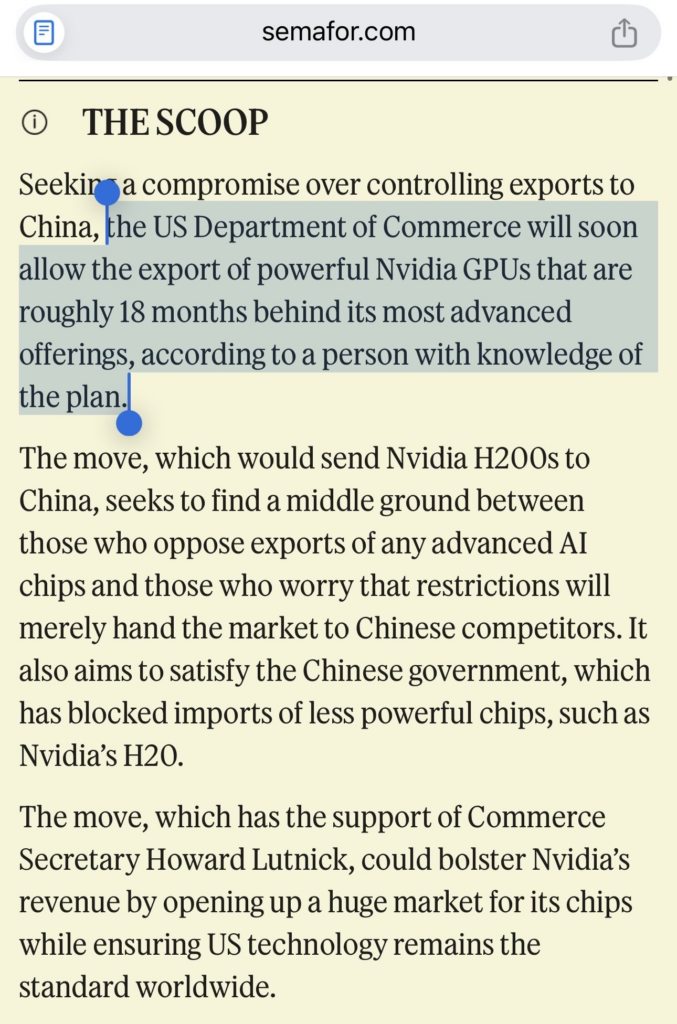
The US government is preparing to let NVIDIA ship its high-end H200 AI chips to China, marking a noticeable pivot in America’s export policy under President Donald Trump. After years of tightening restrictions around advanced chip technology, this move suggests the administration is trying to recalibrate the balance between national security concerns and economic leverage.

It’s not a full green light, but it’s definitely a loosening of the grip that defined earlier policy. Behind the scenes, officials appear to be weighing economic incentives more heavily as US–China negotiations continue shifting week by week.
NVIDIA’s uncertain reception in China
While the policy update technically opens the door for H200 exports, NVIDIA’s CEO has been surprisingly cautious about whether China will even accept them. The company is unsure if the chips meet China’s needs or if buyers might interpret the US shift as temporary or politically fragile.
That uncertainty highlights the awkward middle ground these chips sit in. They’re advanced enough to raise security flags, but also crucial to global AI development. NVIDIA’s hesitation is basically a reminder that geopolitical shifts don’t always translate into straightforward business wins.
Why the H200 matters
NVIDIA’s H200 chip is part of its newest generation of AI processors, built for major data-center workloads and next-gen compute performance. These chips are the backbone of training and deploying large AI models, powering everything from advanced language systems to large-scale cloud infrastructure.
Allowing them into China again could open commercial pathways that have been frozen since the export crackdown began, but it also raises questions about how the US will define “acceptable” AI hardware going forward.
What this shift really signals for US–China tech relations
This move doesn’t mean the US is easing controls across the board. Instead, it seems like a controlled adjustment — enough to maintain economic influence without risking sensitive breakthroughs.
Still, the timing speaks volumes. With AI moving faster than regulation can keep up, Washington appears to be testing a strategy that blends commercial alignment with selective guardrails, trying not to fall behind while also keeping China from gaining too many advantages at once.
Whether China actually buys the H200 chips is only half the story. The bigger signal is that the US is open to recalibrating — something markets, chipmakers, and global AI builders will be watching closely.