- A $10,000 XRP buy at $1.40 equals roughly 7,142 XRP, requiring ~$70 for $500K and ~$140 for $1M
- Triple-digit XRP prices would imply multi-trillion market caps and likely require long timelines and global adoption
- Strategy matters: DCA, risk management, and exit planning often decide outcomes more than price alone
The idea of turning a $10,000 crypto buy into a six or even seven-figure portfolio still pulls people in, especially in the XRP community. And yes, it’s technically possible. But it’s not a magic trick, and it’s definitely not something that happens just because the market “feels bullish.” The truth is, outcomes like that depend on price, time, and the kind of discipline most investors don’t realize they’ll need until it’s too late.
XRP has always been one of those assets where the long-term story is bigger than the day-to-day chart. That’s why people keep running these portfolio scenarios. But if you’re going to talk about $500,000 or $1 million targets seriously, you have to deal with the boring part: the numbers, and the constraints.
What $10,000 Buys You Today, and What the Targets Actually Require
At roughly $1.40 per token, a $10,000 allocation gets you about 7,142 XRP. From that point forward, everything depends on future valuation. If XRP were to trade at $70, that position would be worth around $500,000. If XRP ever reached $140, the same holdings would cross $1 million.
That’s the clean math, no fluff. But it also highlights the problem. Those price levels are not just “a bit higher” than history. They are massively above XRP’s prior all-time highs, meaning any realistic discussion has to move beyond hype and into feasibility. If the price needs to go 50x or 100x, then the conditions required matter just as much as the chart.
The Long-Term Bull Case Is Utility, Not Just Speculation
Supporters of XRP’s long-range upside usually lean on utility, not meme-driven speculation. XRP was designed for fast, low-cost cross-border payments, and it’s tied closely to Ripple’s strategy of building settlement infrastructure. On top of that, development on the XRP Ledger continues, and some investors see that as a foundation for future demand, especially if institutions lean harder into blockchain-based settlement.
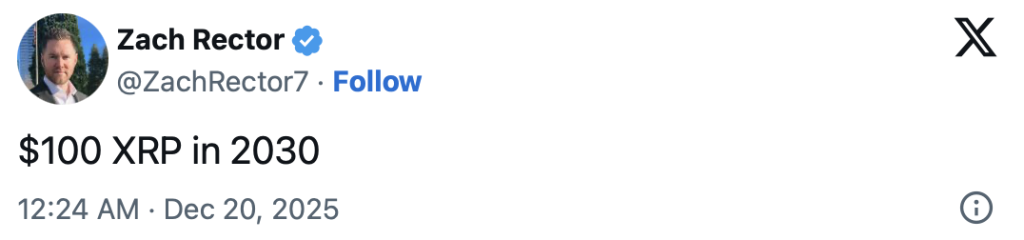
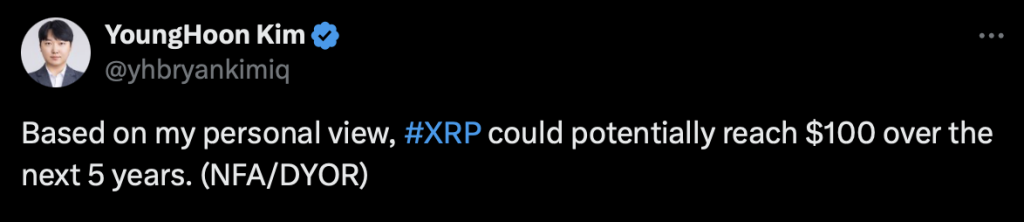
A few well-known XRP commentators have argued that triple-digit prices are possible over time, often referencing the explosive 2017–2018 cycle. But that comparison is messy. The market today is bigger, more liquid, more regulated, and honestly, harder to move in the same way. What happened back then doesn’t automatically scale to now.
Market Cap Reality Puts a Ceiling on “Quick Million” Narratives
One of the biggest limits skeptics point to is market capitalization. If XRP reached $140, the network valuation would exceed $8 trillion, which is larger than most publicly traded companies on Earth. That kind of number would require broad global adoption, sustained regulatory clarity, and years of real network growth, not just speculation.
This is why most forecasting models that try to stay grounded place the $70+ scenario much later. Some estimates push that into the mid-to-late 2030s, while more aggressive takes stretch into the 2040s. So if the goal is turning $10,000 into $500,000 or $1 million, the more realistic framing isn’t “soon.” It’s “maybe over a long horizon, if everything goes right.”
Strategy Matters as Much as Price, Maybe More
Even if XRP does reach those levels one day, investor outcomes will vary wildly depending on approach. Long-term holding requires surviving years of volatility without panic-selling or getting chopped up by emotions. That’s harder than people think. Many investors reduce timing risk by dollar-cost averaging, spreading buys over time instead of trying to nail the bottom.
Some XRP holders also look for incremental ways to grow their position while waiting, like exploring yield opportunities through related ecosystems such as Flare. That can increase token holdings, but it also adds risk, and it’s not “free money” no matter how it gets marketed. It needs careful evaluation, otherwise you end up losing the very stack you were trying to build.
The Real Problem Isn’t Getting Rich, It’s Keeping It
One of the most overlooked parts of these wealth scenarios is what happens after success. Big gains can vanish fast without profit-taking rules, secure custody, and planning around taxes and legal obligations. This is where a lot of investors get wrecked, even after being right. They watch unrealized profits grow, then they freeze, then the market dumps, and suddenly the dream evaporates.
An exit plan doesn’t have to mean selling everything. It can be a gradual reduction at predefined levels, paired with diversification into other assets. But having no plan at all is basically gambling on perfect timing, and historically, that ends badly.
XRP Million-Dollar Portfolios Are Possible, But They’re Not Simple
Turning $10,000 into $500,000 or $1 million with XRP is mathematically possible, sure. But it requires XRP to trade in ranges that carry major economic implications, and it likely demands a long timeline. Utility-driven adoption, real-world usage, and a disciplined strategy matter just as much as bullish predictions.
For long-term XRP believers, the real question may not be whether these valuations can happen. The harder part might be whether they can manage that wealth responsibly if it ever does.