
- Trump says he will announce the next Fed chair early next year, shifting the timeline later.
- Powell remains under heavy criticism for what Trump calls slow and insufficient rate cuts.
- Markets now expect leadership politics to play a major role in shaping 2026 monetary policy.
President Donald Trump said Tuesday that he will announce his nominee for the next Federal Reserve chair early next year, shifting the timeline after previously suggesting the pick would come by Christmas or before the end of 2025. The updated timeframe adds another layer of uncertainty to the already-charged debate surrounding Fed leadership and the direction of U.S. monetary policy.
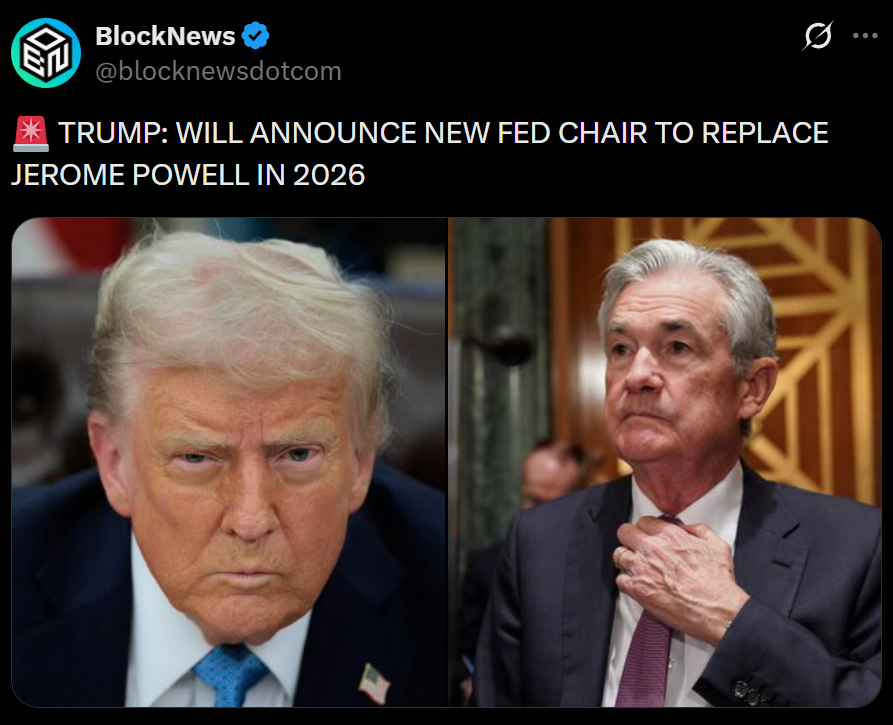
Trump Confirms New Timeline for Naming Powell’s Successor
During a Cabinet meeting, Trump told reporters, “We’ll be announcing a new Fed chair early next year,” noting that Treasury Secretary Scott Bessent — who has been closely involved in the selection process — “doesn’t want the job.” Trump has made no secret of his dissatisfaction with Jerome Powell, repeatedly criticizing him for not cutting interest rates quickly enough. Powell’s term officially ends on May 15, 2026, but Trump’s comments strongly suggest he plans to name a replacement as soon as the window opens.
Powell Remains Under Pressure as Rate-Cut Debate Heats Up
Trump’s ongoing frustration with Powell has been one of the dominant themes of his second term. He has publicly criticized the Fed chair more than any president in modern history, calling for faster and deeper rate cuts as inflation moderates and the labor market cools. Powell, however, has consistently emphasized a cautious approach, arguing that the Fed must ensure inflation continues to trend toward its 2% target before committing to aggressive easing. That tension is now spilling into markets, which are trying to balance high rate-cut expectations with the political pressure shaping the Fed’s next chapter.
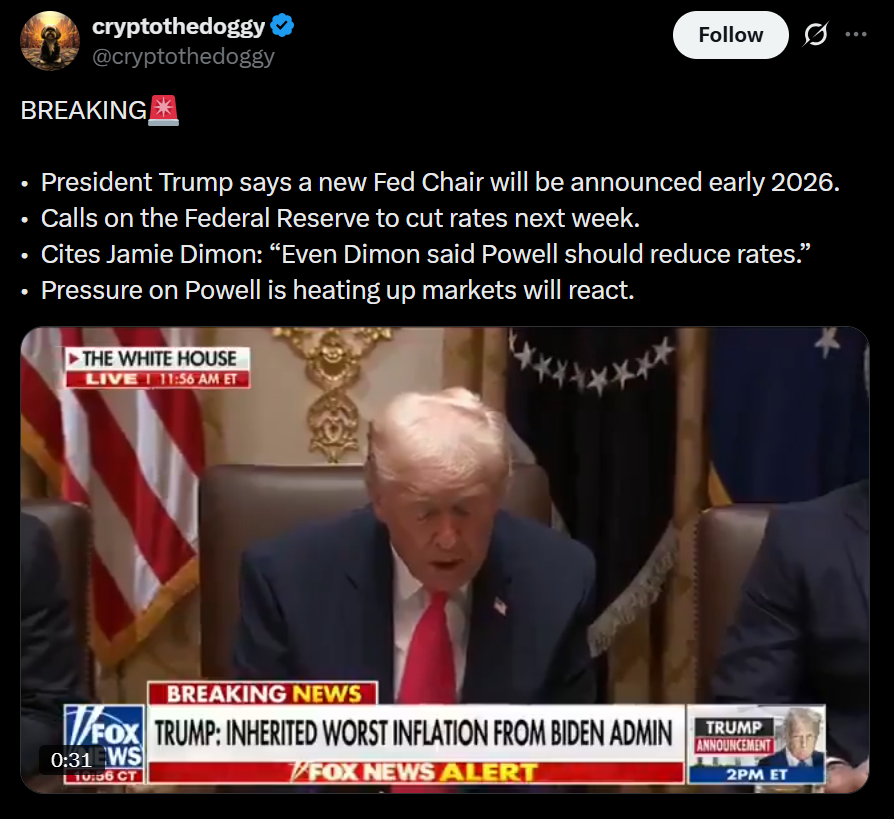
What the New Timeline Signals for Monetary Policy
While Trump hasn’t confirmed a nominee, several names — including Kevin Hassett — have been widely discussed as frontrunners. A new Fed chair could imply a more dovish reaction function, especially in 2026, when economic conditions may require more flexibility. Investors are now weighing the possibility that leadership changes could accelerate rate cuts or reshape long-term policy strategy, depending on who Trump ultimately selects.